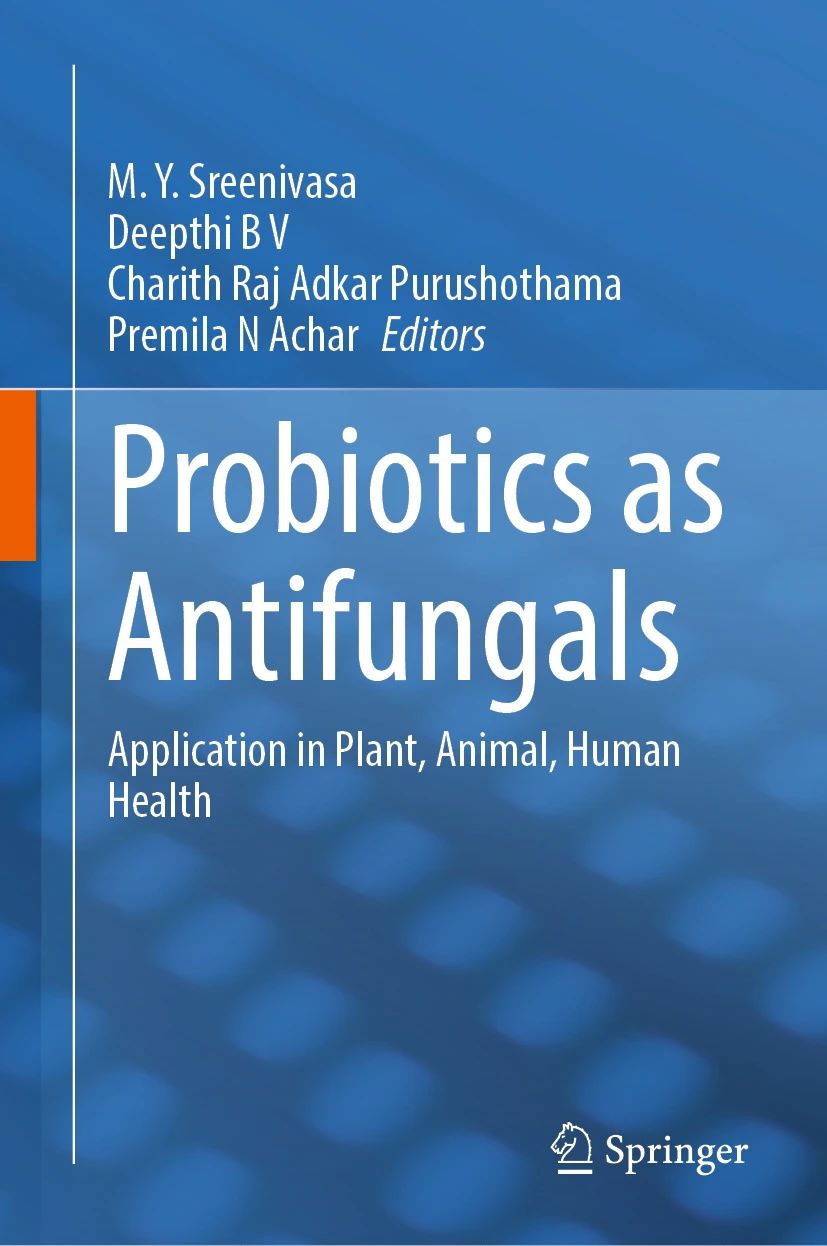
Probiotics as Antifungals: Application in Plant, Animal, Human Health brings together research on the use of probiotics as tools against fungi and mycotoxins. The book covers their applications in plants and plant products, animals and human health, as well as their mechanisms of action, biocontrol strategies and emerging research areas
Probiotics as Antifungals: Application in Plant, Animal, Human Health explores the potential of probiotics for developing new control strategies against fungal diseases and related toxic effects.
The book covers different applications of these microorganisms in plants, animals and human health, with particular attention to their potential antifungal activity and their use as biological control tools.
In the plant sector, the book examines the use of probiotics against different fungal pathogens and diseases affecting fruits, vegetables and other plant products. Topics include the control of Aspergillus, Fusarium and Alternaria, as well as postharvest diseases such as anthracnose and different types of mould. It also examines the ability of certain probiotic bacteria to stimulate plant defence mechanisms.
The book then expands its scope to animal production, with chapters addressing fungal diseases and mycotoxicosis in livestock, poultry and aquatic organisms.
In the field of human health, it explores the relationship between the microbiome and fungal infections, including different types of mycoses and the potential use of probiotics as a complementary tool.
The book also addresses mycotoxin detoxification, regulatory aspects, the combination of probiotics with other antifungal strategies, the development of genetically engineered probiotics, challenges associated with probiotic therapy and emerging research trends.
Chapters
Probiotics against Aspergillus in Plants and Plant Products
Tackling Fusarium: Probiotics in Action
Harnessing Probiotics Interactions to Mitigate Alternaria Pathogenicity
Probiotics: An Innovative Approach to Combat Postharvest Anthracnose
Bacterial Probiotics to Control Gray, Green and Blue Molds in Postharvest Fresh Produce
Probiotic Measures: Mildews, Smuts and Rots
Plant Defence Mechanisms Triggered by Probiotic Bacteria
Decoding the Gut Microbiome and Its Interactions in Animals: Mechanisms of Action
Probiotics against Mycoses and Mycotoxin-Related Illness in Livestock and Other Domestic Animals
Probiotics Against Fungal Diseases and Intoxications in Poultry and Other Avian Species
Fungal Diseases and Mycotoxicosis in Aquaculture: Probiotic Measures
Beyond Basics: Human Microbiome and Fungal Balance
Exploring Probiotics for Managing Cutaneous Mycoses
Probiotic Efficiency in Fighting Subcutaneous Mycoses
Navigating the Challenge of Opportunistic Fungal Infections: Probiotics in Action
Probiotics Tackling Other Fungal Infections and Intoxications
Probiotics in Gastrointestinal Mycotoxin Detoxification: Innovative Approaches for Managing Fungal Toxicity
Regulatory Perspectives: Integrating Probiotics into Clinical Practice Against Mycoses and Mycotoxin Risk Management
Synergistic Approaches to Antifungal Management: Integrating Probiotics with Other Control Strategies
Development and Applications of Genetically Engineered Probiotics to Combat Pathogenic Fungi and Fungal Toxins
Challenges and Considerations in Probiotic Therapy
Case Studies: Success Stories of Probiotics in Fungal Defence
Innovations and Emerging Trends in Probiotic Antifungal Research
We use our own and third-party cookies to offer our services and collect statistical information. You can accept all cookies by pressing the "Accept" button or configure them or reject their use by clicking on the
Cookies policy
They are those that allow the user to navigate through a web page, platform or application and use the different options or services that exist on it.
poscosecha.com
avis-cookies
1 year
Cookie necessary for the use of the options and services of the website.
poscosecha.com
PHPSESSID
12 hours
Cookies generated by applications based on the PHP language. This is a general purpose identifier used to hold user session variables. This is typically a randomly generated number, how it is used can be site specific, but a good example is maintaining a logged in state for a user between pages.
poscosecha.com
XSRF-TOKEN
12 hours
It is an encrypted cookie that is used to control that all form submissions are made by the user currently logged in, avoiding CSRF (Cross-Site Request Forgery) attacks.
They are those that allow their manager to control and analyze the behavior of the users of the websites to which they are linked.
poscosecha.com
_ga
2 years
The _ga cookie, installed by Google Analytics, calculates visitor, session and campaign data and also keeps track of site usage for the site's analytics report. The cookie stores information anonymously and assigns a randomly generated number to recognize unique visitors.
poscosecha.com
_ga_*
2 years
Google Analytics sets this cookie to store and count page views.
youtube.com
CONSENT
2 years
YouTube sets this cookie via embedded YouTube videos and records anonymous statistical data.
They are those that allow the management, in the most effective way possible, of the advertising spaces that, if applicable, the publisher has included in a web page, application or platform from which it provides the requested service based on criteria such as the content edited or the frequency with which the ads are shown.
youtube.com
yt-remote-connected-devices
never
YouTube sets this cookie to store the video preferences of the user using the embedded YouTube video.
youtube.com
yt-remote-device-id
never
YouTube sets this cookie to store the video preferences of the user using the embedded YouTube video.
youtube.com
VISITOR_INFO1_LIVE
5 months
A cookie set by YouTube to measure bandwidth that determines whether the user gets the new or old player interface.
youtube.com
YSC
session
The YSC cookie is set by Youtube and is used to track views of videos embedded on Youtube pages.
We use our own and third-party cookies to offer our services and collect statistical information. You can accept all cookies by pressing the "Accept" button or configure them or reject their use by clicking on the
Cookies policy



.jpg)


.jpg)