News
Belgium’s potato sector maintains its global position despite market challenges
Belgium’s potato processing industry maintains its international position with around six million tonnes processed annually, despite rising costs, international competition and geopolitical uncertainty. Innovation and adaptability are among the key factors helping the sector face new challenges
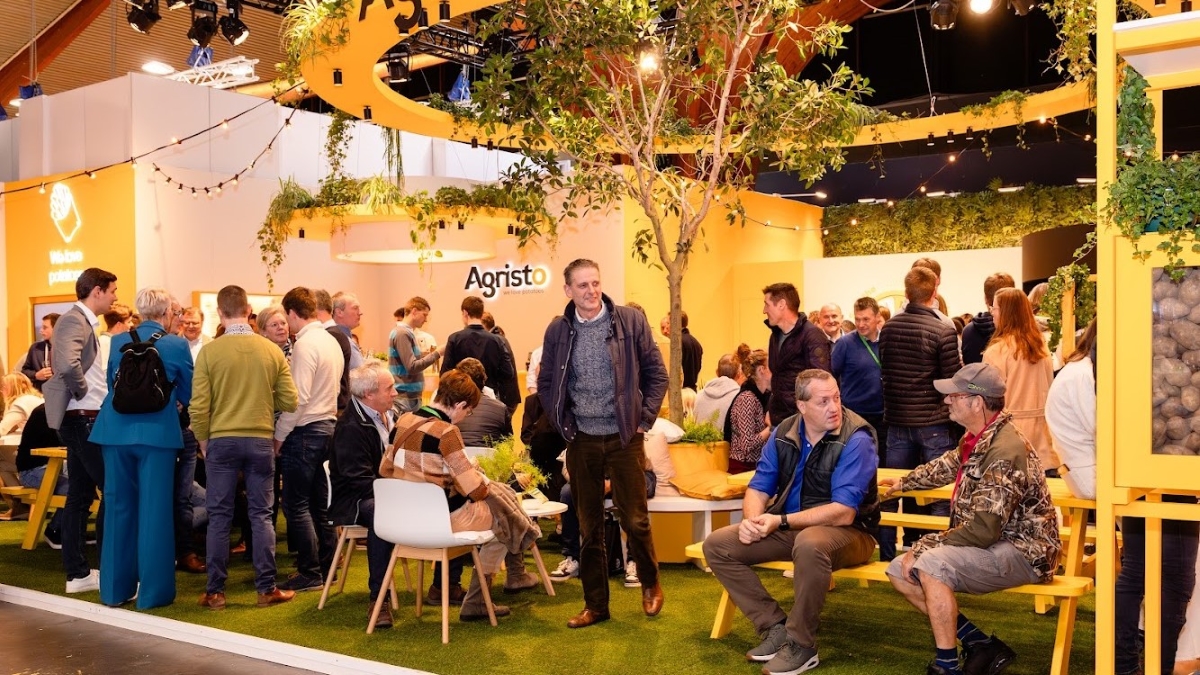
From 29 November to 1 December 2026, Kortrijk Xpo will once again welcome leading players from across the global potato industry for INTERPOM, the biennial trade fair organised in partnership with Belgapom. This year’s theme, ‘Growing resilience in a changing world’, puts the resilience of the potato supply chain in the spotlight, with a particular focus on how the Belgian sector is demonstrating its ability to withstand challenging economic conditions.
The previous record-breaking edition came close to the 24,000-visitor mark, and expectations are high for another strong turnout in Kortrijk this year. Why? Because Belgium’s potato sector continues to be a leading force on the international stage – and is keen to showcase its strengths.
Christophe Vermeulen, CEO of Belgapom, explains: “INTERPOM is unique within the food industry. Nowhere else in Europe can you find every aspect of the potato supply chain brought together under one roof. Innovation and new developments have always been at the heart of the exhibition. Anyone who wants to keep up with the latest developments in the potato industry needs to be here, whether as an exhibitor or a visitor. The strength of the exhibition also reflects the strength of our sector, particularly our processing industry, which processes millions of tonnes of potatoes into fries and speciality products every year.”
Previous editions focused primarily on the sector’s tremendous growth over the past decade and how to combine this growth with a sustainability agenda. Since the last edition of INTERPOM, however, the sector has faced increasingly difficult conditions: a perfect storm of fierce competition from Asia, US protectionism, sharply rising labour costs and the severe economic repercussions of both the conflict in Ukraine and the devastating war in Iran, which have taken a heavy toll on the entire West European economy – including our potato processors.
Vermeulen continues: “The entire supply chain took a collective hit. After years of uninterrupted growth and high potato prices, we suddenly found ourselves facing declining exports and a free market that had come to a complete standstill. This had a significant impact on some players in the sector. The industry needed a reset, and in doing so, it demonstrated both its resilience and its ability to adapt. Pessimism became the order of the day, but Belgapom never went along with that narrative. Setbacks can also be seen as challenges. A downturn can pave the way for a fresh start. At Belgapom, we are firmly choosing the latter. This is also why we have stepped up our focus on innovation at INTERPOM more than ever, with this year’s theme placing resilience and the ability to adapt centre stage. INTERPOM has always been a barometer for the sector, and given the enthusiasm surrounding this edition, I believe success is all but guaranteed.”
In 2025 and 2026, the Belgian potato processing industry managed to maintain its position as a global leader despite fierce competition and a highly uncertain geopolitical climate. The volume of potatoes processed remains at around six million tonnes, of which approximately 2.8 million tonnes are turned into frozen fries. Crisps production remains strong and stable at 80,000 tonnes. Production of chilled fresh fries has also remained steady at around 180,000 tonnes. Speciality potato products, such as croquettes and hash browns, continue to be a strong growth segment, with production now reaching 400,000 tonnes of finished products. This evolution demonstrates how innovation is enabling Belgium’s potato industry to maintain its competitive position on the international market.
This is also reflected in employment figures. In 2024, the number of workers and employees in the sector exceeded 6,500 for the first time. The industry directly employed 6,709 people, representing an increase of 7%. The recently announced closure of Simplot Europe’s factory in Mouscron, on the former Mydibel site, has not yet been reflected in these figures.