Measurements
Advances in artificial intelligence, robotics, and agricultural metrology lead horticultural agenda in Germany
An international workshop featuring over a hundred presentations in Potsdam examined the convergence of sensor technology, digital twins, and postharvest quality, ahead of the upcoming Science Symposium at Fruit Logistica 2027
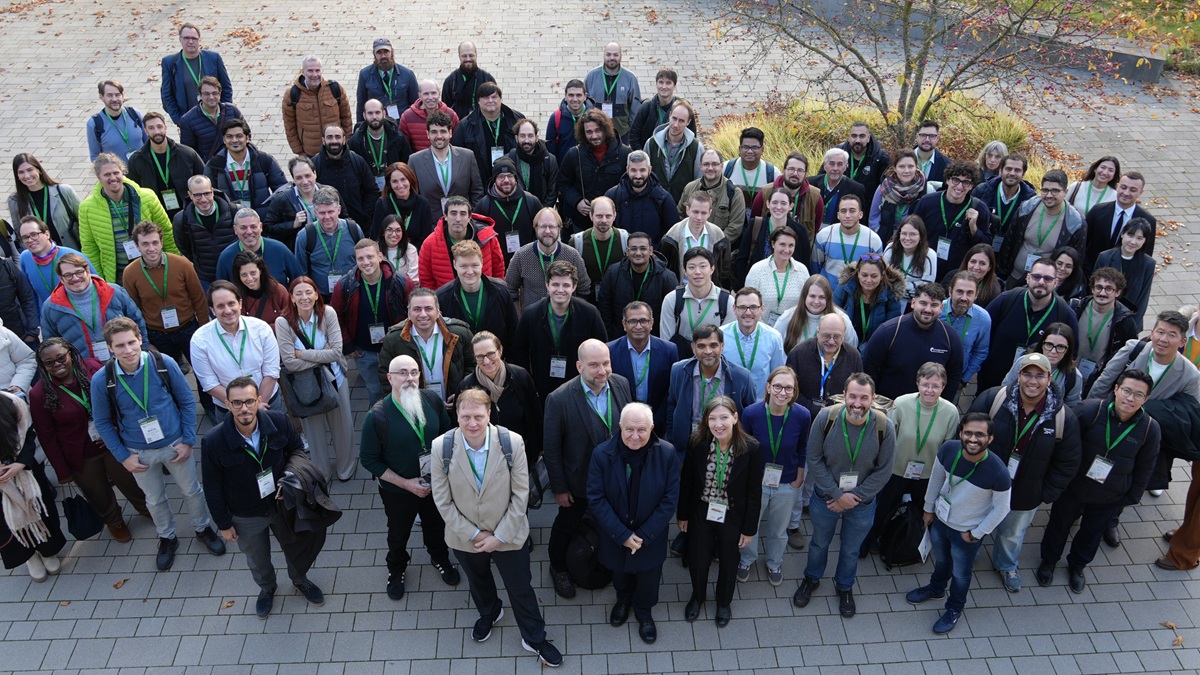
The international IEEE Workshop METROAGRIFOR was held from November 9 to 11, 2026, at the Leibniz Institute for Agricultural Engineering and Bioeconomy (ATB) in Potsdam, Germany. Featuring 103 presentations, this annual event provided a comprehensive overview of cutting-edge metrology in agriculture, forestry, and food production, driven by the challenges of climate change, digitalization, and the need for sustainable practices. The research showcased a clear convergence of sensor technology, artificial intelligence (AI), and robotics to create data-driven, precise, and automated solutions.
Artificial intelligence, IoT, and robotics in the field
A central theme of the workshop was capturing AI, the Internet of Things (IoT), and robotics. Numerous approaches featured machine learning models such as Long Short-Term Memory (LSTM) networks for soil moisture prediction, Convolutional Neural Networks (CNNs) for fruit maturity assessment, and You Only Look Once (YOLO) architectures for detecting pests, diseases, and fruit, as well as monitoring honeybee colonies. Advanced methods like deep reinforcement learning for irrigation optimization, explainable AI (xAI) to enhance model trustworthiness, and AI agents in the agronomic context were also increasingly explored.
Data connectivity was facilitated by low-cost IoT nodes, often using LoRaWAN, for real-time environmental data acquisition. Autonomous systems, ranging from unmanned aerial vehicles (UAVs or drones) to unmanned ground vehicles (UGVs), were deployed for tasks such as orchard mapping, high-throughput phenotyping of crop stands, and plant-specific treatments. Emerging data infrastructures, including digital twins for orchards and federated learning for geospatial data, enabled collaborative use of information while preserving data privacy.
Modern soil analysis and remote sensing
Modern soil analysis focused on non-destructive methods such as Vis-NIR spectroscopy and Laser-Induced Breakdown Spectroscopy (LIBS) for robust, in-field measurement of properties including soil organic carbon (SOC), moisture, and pH. Satellite data from Sentinel, Landsat, and PlanetScope were fused for in-season yield forecasting, vegetation health monitoring, and assessing land-use changes, for instance in post-conflict regions.
At the plant level, UAV-based multi- and hyperspectral imaging was used to create 3D point clouds for high-resolution phenotyping that went beyond traditional vegetation indices. This was complemented by ground-based remote sensing, such as scatterometers for monitoring crop phenology and mobile sensing platforms for mapping blossom density in orchards.
Climate resilience and postharvest fruit quality
A strong focus was placed on research addressing resilience to climate change. Contributions ranged from modeling water demand and optimizing irrigation systems to detecting leaks in drip irrigation lines and developing mobile apps for farm-level decision support. Concurrently, methods to mitigate frost and heat stress risks, such as forecasting apple fruit surface temperature, were investigated alongside approaches for restoring degraded agroecosystems and assessing the climatic suitability of specific crop varieties.
Food quality was addressed with a focus on non-destructive quality assessment of fruit to optimize harvest timing and postharvest storage conditions. Technologies such as NIR spectroscopy, optical sensors, and millimeter-wave radar were employed to determine the firmness, soluble solids content, and ripeness of apples, pears, and nectarines. Alongside the presentations, networking and hands-on sessions in digitalized soil and plant analysis highlighted a clear trend: the fusion of multi-modal data from diverse sources, analyzed by explainable AI models and operationalized through automated systems.
Upcoming event: Science Symposium at Fruit Logistica 2027
Looking ahead, on February 5, 2027, the Science Symposium will once again take place on the Farming Forward Stage at Fruit Logistica in Berlin. This edition will follow a refreshed concept: rather than focusing solely on bringing international horticultural research to the trade fair, it will bring local research from the Berlin and Brandenburg area to the international participants of Fruit Logistica. The event will feature speakers from five regional research institutions presenting their latest research findings, alongside opportunities for internships, study programs, and joint research projects with the industry.
Source: Leibniz Institute for Agricultural Engineering and Bioeconomy (ATB)