Phytosanitaries
RNAi against white rot
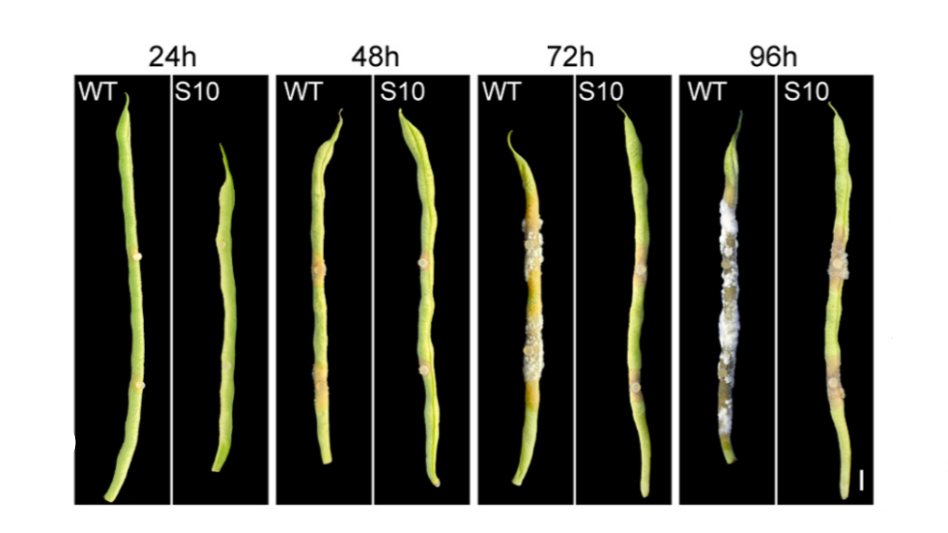
Researchers at Shenyang Agricultural University have unravelled the gene-level mechanisms underlying both sclerotium formation by S. sclerotiorum and the defence response in the common bean, Phaseolus vulgaris.
.jpg)
Phaseolus vulgaris, or common bean, is a key crop for global nutrition and is considered the most economically important legume worldwide. One of the main biotic stresses affecting it is white rot, caused by the necrotrophic fungus Sclerotinia sclerotiorum.
S. sclerotiorum poses a problem for a wide range of species and is characterised by the formation of sclerotia – dormant structures that enable the fungus to survive under adverse environmental conditions, whilst also playing a role in the infection of host plants. These structures can devastate crops not only in the field but also during post-harvest storage.
A research group at Shenyang Agricultural University, Shenyang, China, investigated the role of sRNAs as agents of interest in the management of white rot through gene interference. Their objective was to identify endogenous sRNAs in Phaseolus vulgaris that would interfere with the fungal development of S. sclerotiorum.
sRNAs (small RNAs) are non-coding RNAs whose function is to regulate various biological processes, including those involved in plant–fungus interactions. In such cases, plant-specific sRNAs are key to regulating fungal infection and pathogenicity.
Gene interference is a process by which the plant’s cellular machinery recognises certain RNAs (which may result from incorrect DNA transcription or originate from microbial RNAs) and captures them before the ribosome can translate them into proteins that are potentially harmful to the plant.
In other words, it is a defence mechanism that prevents a microorganism, such as a fungus, from spreading once plant tissue has been infected.
Several plant-endogenous sRNAs were identified, amongst which ath-miR5658 was highlighted as a particularly important sRNA for sclerotium development. Although it is plant-endogenous, this sRNA is vital for the sclerotium to develop correctly; without it, the fungus is unable to form this structure even when inoculated into susceptible plants. This finding was validated using the STTM (short tandem target mimics) technique, which, for all practical purposes, neutralises the activity of the target sRNA. ath-miR5658 was designated as the target sRNA, and in the S. sclerotiorum samples to which STTM was applied, the loss of the ability to develop sclerotia was permanent.
Based on this information, the research team speculates that ath-miR5658 could be used as the basis for developing a gene interference strategy, or for the application of mimics based on the STTM technique, to curb the development of white rot during post-harvest storage, and save a substantial amount of food in the process.
Related news
3-MA, a new potential naturally-derived post-harvest fungicide