The updated Regulation (EC) No. 2073/2005 introduces a major shift in microbiological food safety management. From July 2026 onwards, food producers must demonstrate that ready-to-eat products remain safe throughout their entire commercial shelf life rather than only at the time of manufacture.
This requirement is particularly relevant for the fresh produce sector, where minimally processed fruits and vegetables are consumed without further heat treatment.
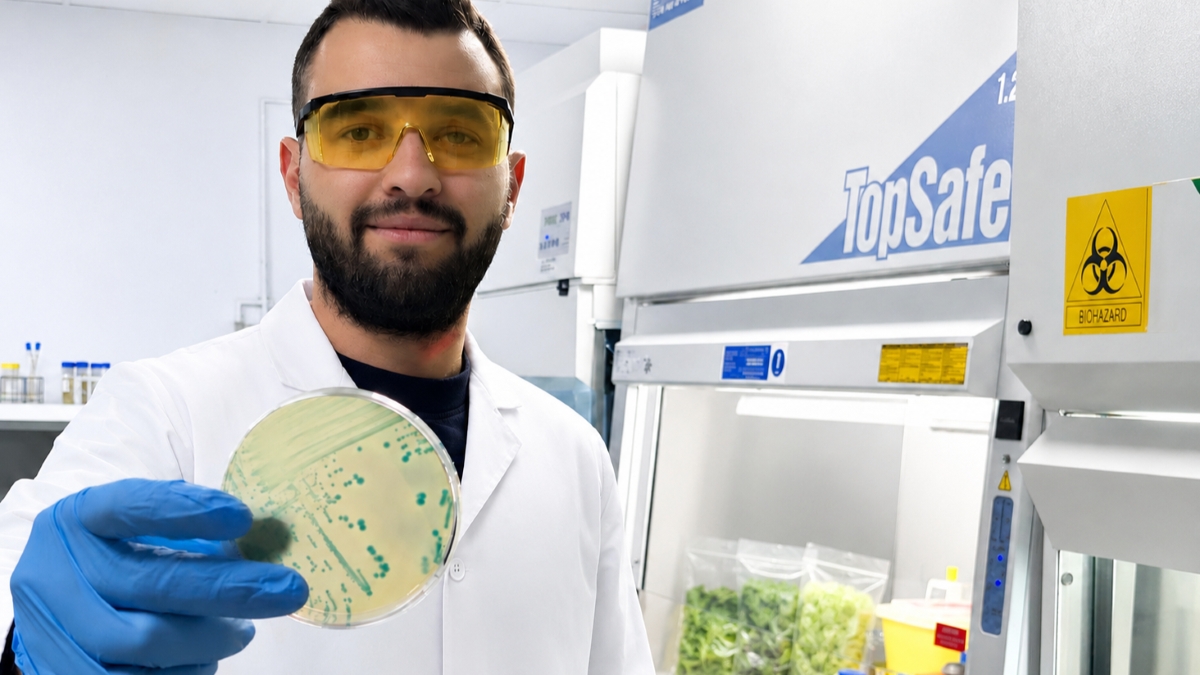
Listeria monocytogenes is especially difficult to control because it survives under harsh environmental conditions. It can grow at refrigeration temperatures, persist for long periods inside processing facilities and form biofilms that reduce the effectiveness of cleaning and disinfection procedures.
Processing equipment, conveyor belts, drains and other damp areas often become contamination hotspots if preventive measures are not properly implemented.
Under the new legislation, food business operators must provide scientific evidence showing that Listeria monocytogenes will remain below 100 CFU/g throughout the product's shelf life.
If this evidence cannot be demonstrated, the stricter requirement of absence in 25 g before the product leaves the manufacturer's control will automatically apply. Shelf-life studies and challenge tests therefore become essential validation tools.
Environmental monitoring programmes now play a central role in identifying contamination sources before they reach the final product.
Sampling plans, analytical methods and corrective actions must be carefully designed to detect persistent contamination and improve microbiological control throughout the processing facility.
The article concludes that effective control of Listeria monocytogenes requires combining multiple preservation strategies rather than relying on a single intervention.
Natural antimicrobials, plant extracts, bioprotective cultures and advanced technologies such as cold fogging are emerging as promising solutions. Research projects including InnoSol4Med and CENTINELA are helping validate these approaches to improve food safety while extending shelf life and supporting clean-label food production.
More information at Domca