News
An Edible Coating for Cucumbers Is Tested as an Alternative to Plastic Film
The solution, applied directly to the product, is being evaluated in a retail pilot as part of efforts to reduce plastic packaging.
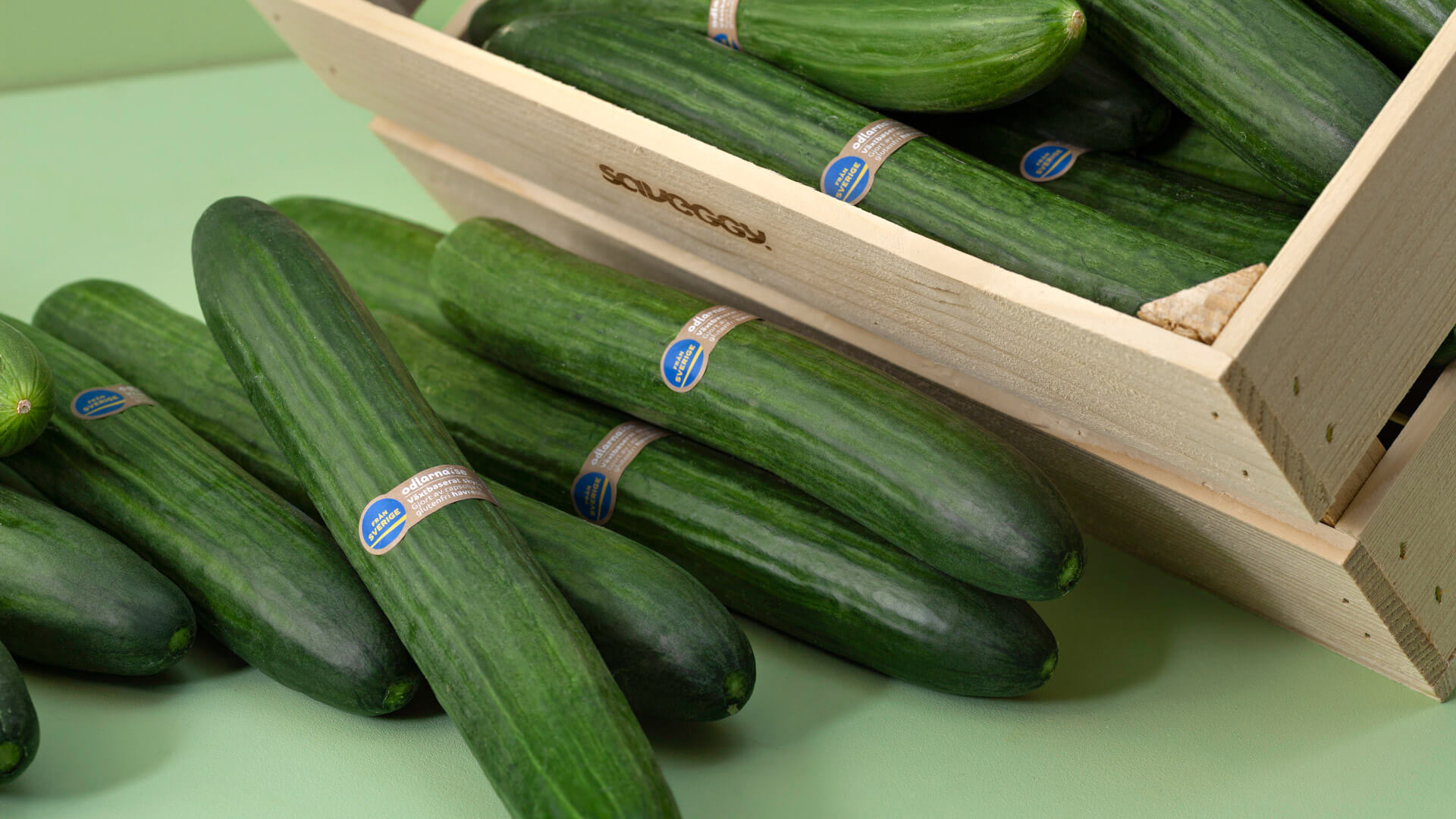
A plant-based edible coating applied directly to fresh produce is being tested as an alternative to plastic packaging for cucumbers, one of the products most commonly marketed with plastic film. The initiative takes the form of a retail pilot, marking the transition of this solution from technological development to validation under real market conditions.
The edible coating is formulated using two plant-based ingredients, rapeseed oil and oat oil, without additives. Applied after harvest, it acts as a surface barrier that allows plastic film to be removed without interfering with the commercial handling of fresh cucumbers.
From technological development to the point of sale
The pilot, initially planned to run for one month, focuses on cucumbers and is being carried out in collaboration with actors along the value chain in Sweden. The trial represents a significant step in the evolution of the technology, as it involves commercial-scale application using industrial equipment already installed in production facilities.
Cucumbers were selected as the first use case due to their long-standing reliance on plastic packaging. However, the solution has been designed with scalability in mind and is currently being assessed for potential application to other fresh fruit and vegetable products.
Postharvest alternatives in a changing regulatory context
The trial takes place against a backdrop of increasing regulatory pressure in the European Union to reduce the use of single-use plastics in fresh fruit and vegetables, within the framework of ongoing revisions to packaging and packaging waste legislation. In this context, plastic-free postharvest protection solutions are attracting growing interest from producers, operators and retailers.
According to figures provided by the initiative, plastic film used for cucumbers represents several thousand tonnes of plastic per year across the EU. In this setting, edible coatings are being explored as a way to reduce packaging materials while maintaining product protection during commercial distribution and potentially contributing to food waste reduction.
Technical validation and potential future applications
With this first retail pilot, the technology enters a phase of validation under real commercial conditions, allowing its operational performance and compatibility with standard postharvest workflows to be assessed.
The outcome of these trials will be key in determining its potential extension to other fresh products, as well as its viability across different production, packing and distribution contexts, at a time when the sector is actively seeking alternatives to plastic packaging.