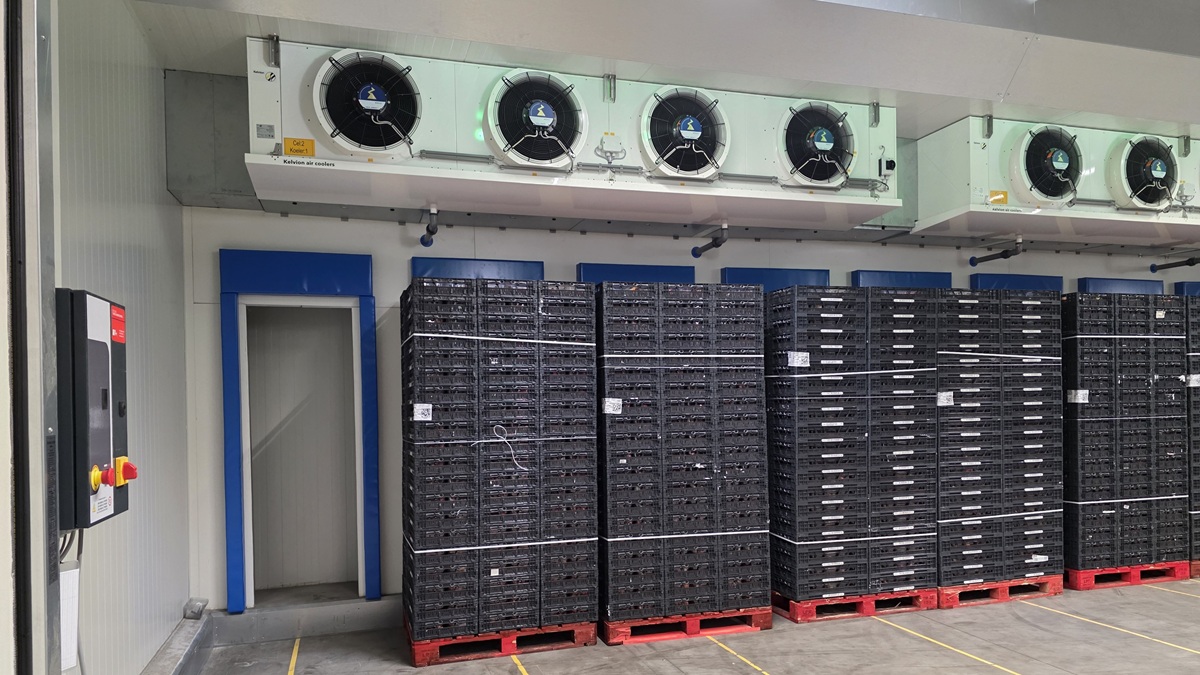


In a fruit and vegetable packhouse, final quality is not defined only by the condition in which produce enters the line, but also by the facility’s ability to maintain stable conditions across reception, handling, packing, temporary storage and dispatch. Along that route, the internal separation of zones with different thermal requirements becomes a critical point. When cold and temperate areas share the same volume, the outcome is well known: air mass mixing, condensation, temperature fluctuations, higher workload for refrigeration equipment and, in some cases, operational incidents that ultimately affect shelf life and presentation.
Against this backdrop, BG DOOR proposes a dedicated solution for separation and compartmentalisation in temperature-controlled units, aimed at dividing large spaces and separating warm and cool air zones in high-throughput agri-food environments—particularly in fruit and vegetable postharvest operations.
SEPA: flexible compartmentalisation for temperature-controlled areas
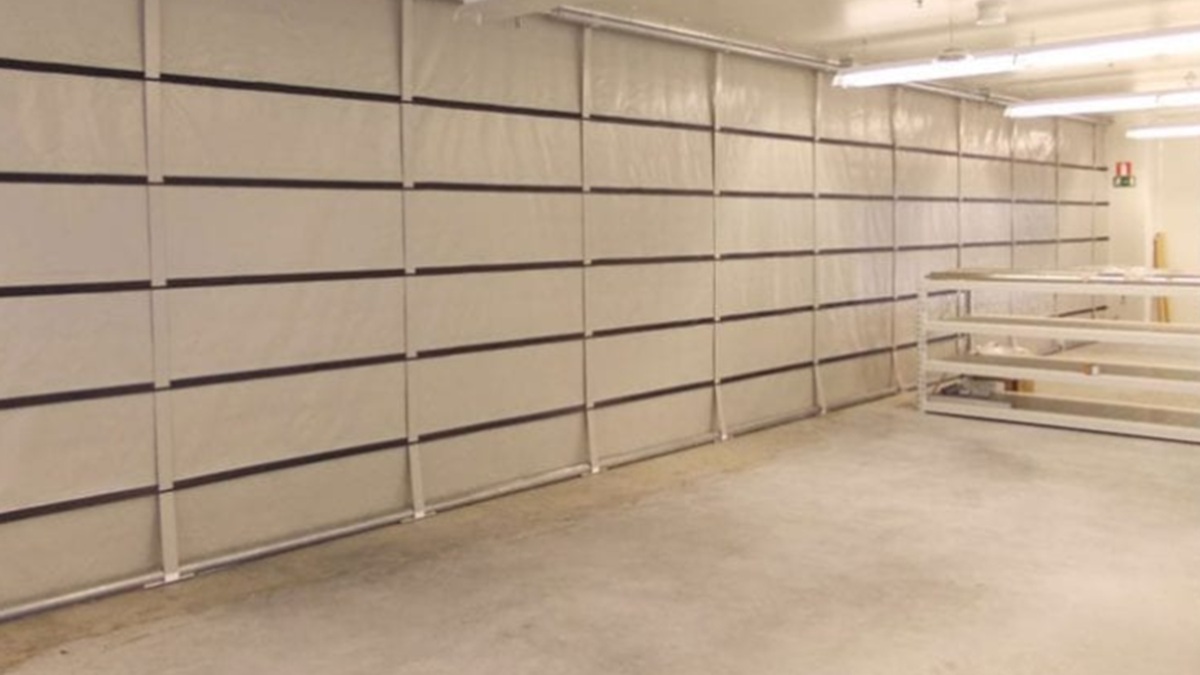
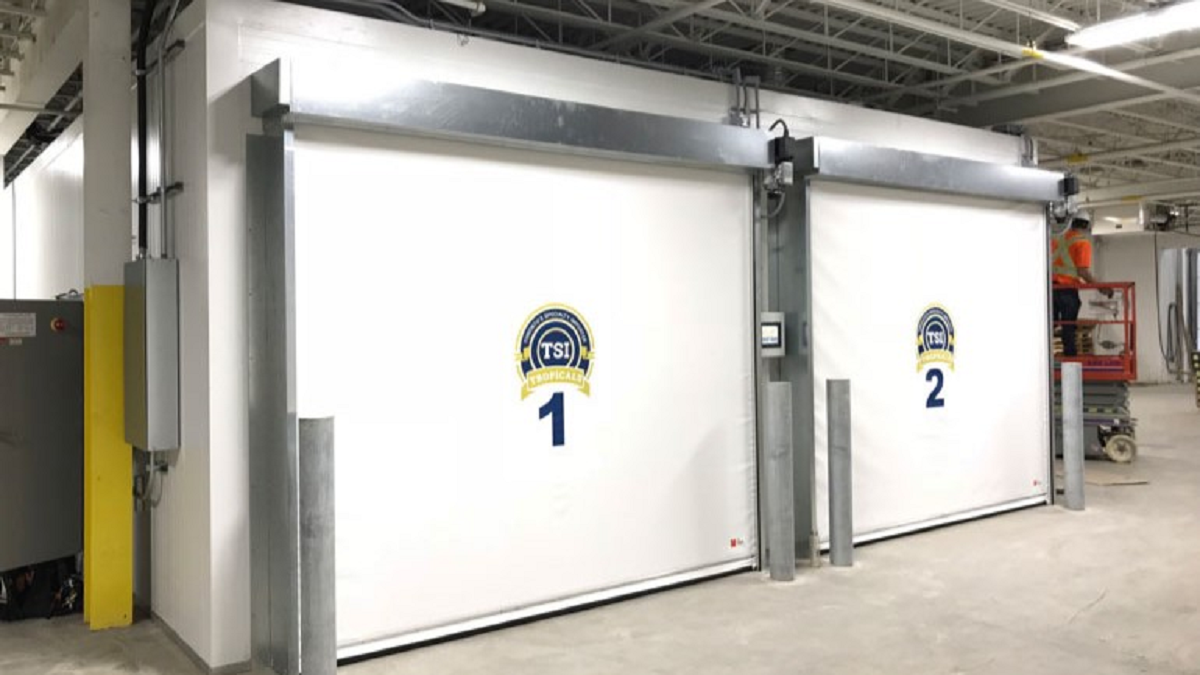
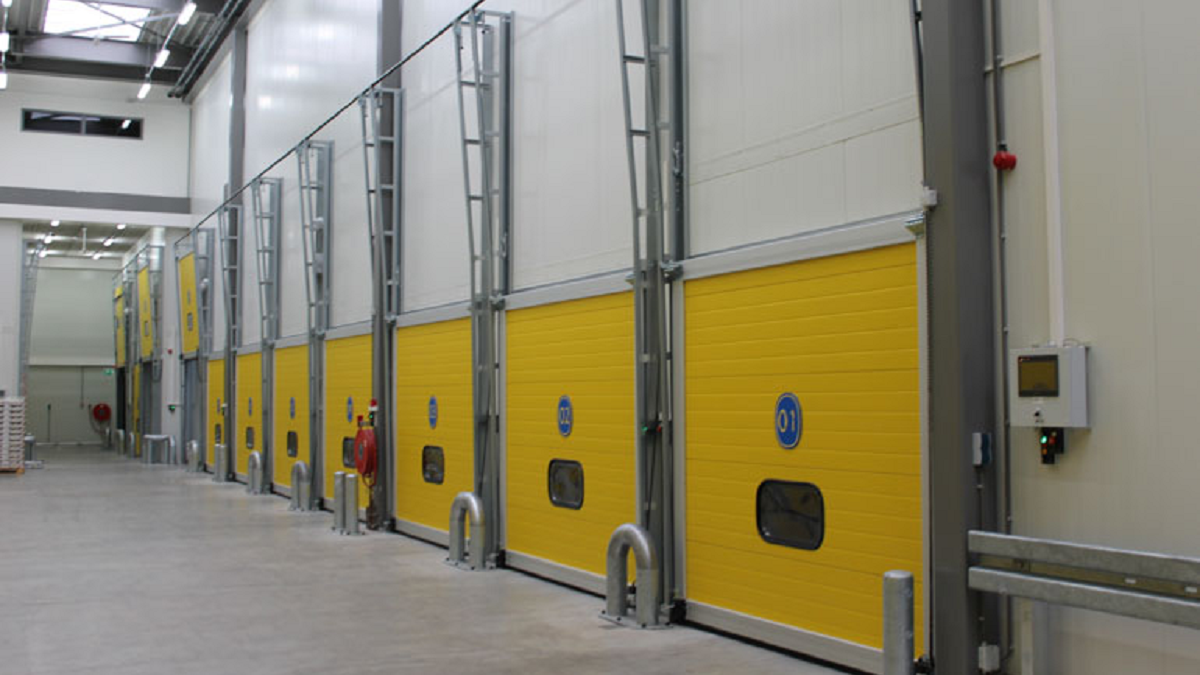
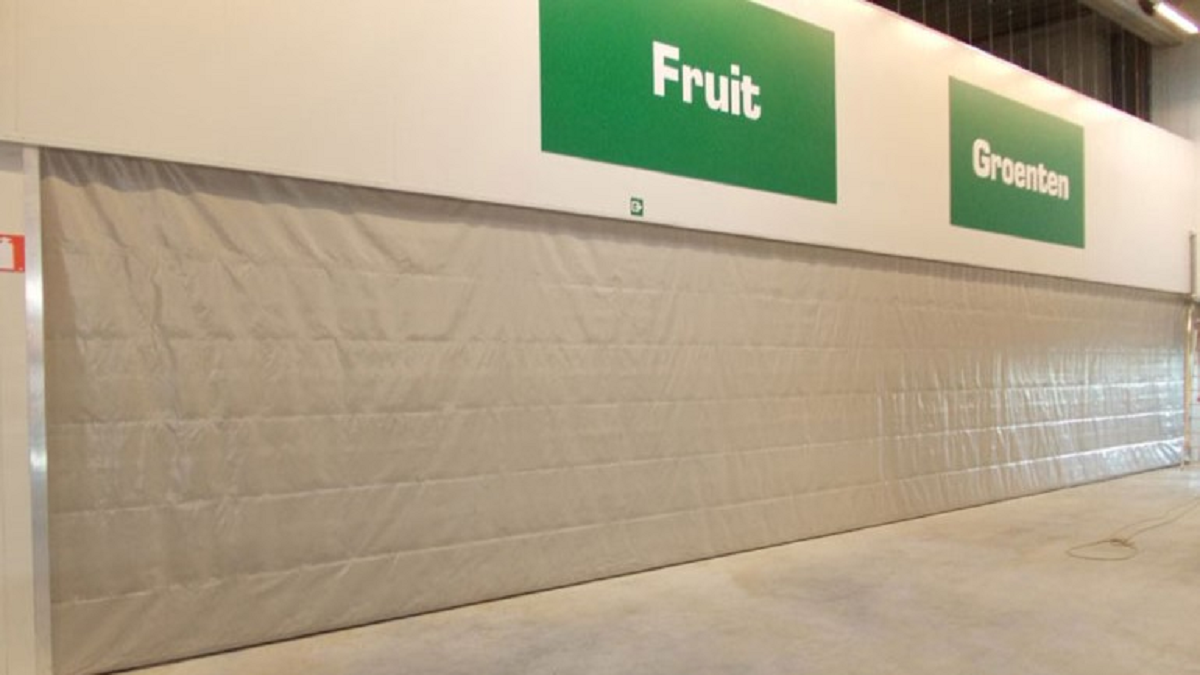
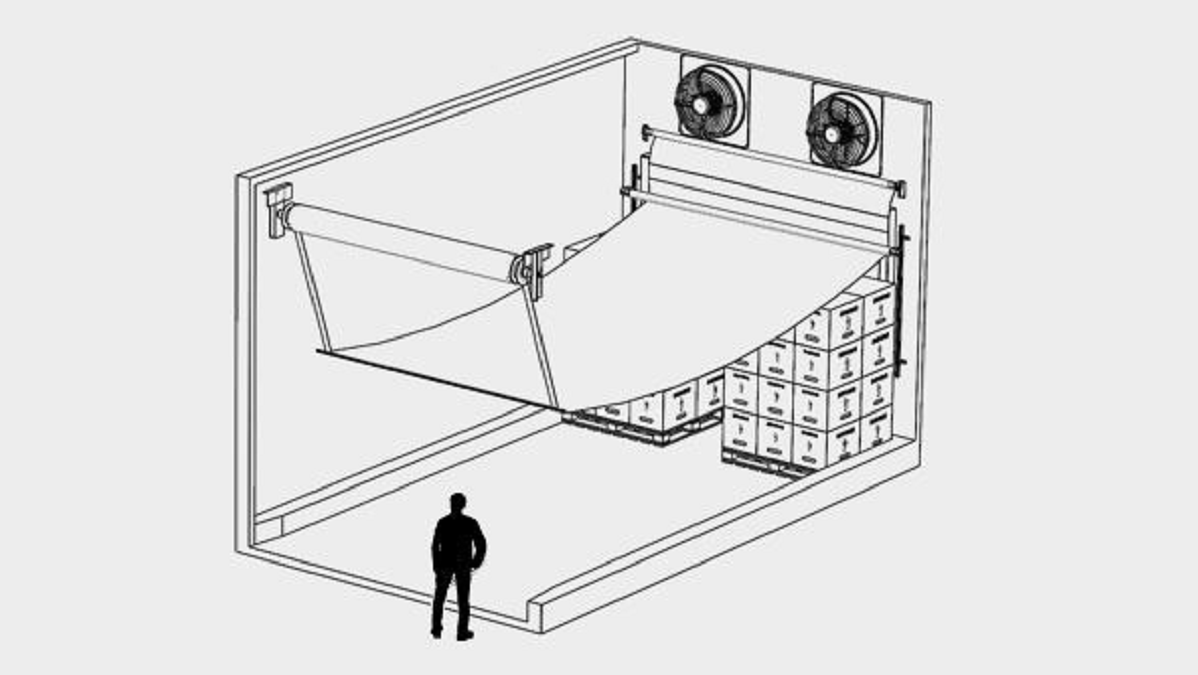
The proposal takes shape through the SEPA flexible doors, designed to act as a partition wall in production rooms or logistics areas. The goal is to create an internal barrier that helps zone the environment, limiting the impact of traffic and frequent openings between areas with different temperature regimes. In fruit and vegetable facilities, this type of compartmentalisation becomes a practical support to keep sensitive processes more stable—from packing and palletising in cool areas to movement towards cold rooms or loading docks.
From a technical standpoint, SEPA consists of a single curtain with vertical lifting straps every 1,500 mm. These straps wind around a steel winding shaft, allowing the curtain to rise like a folding drape. The side attachment hangs freely at approximately 10 mm from the wall, and two steel receiving guides are fitted in the floor at both ends to secure the bottom bar, providing stability in large-span applications.
Performance and configuration for large openings
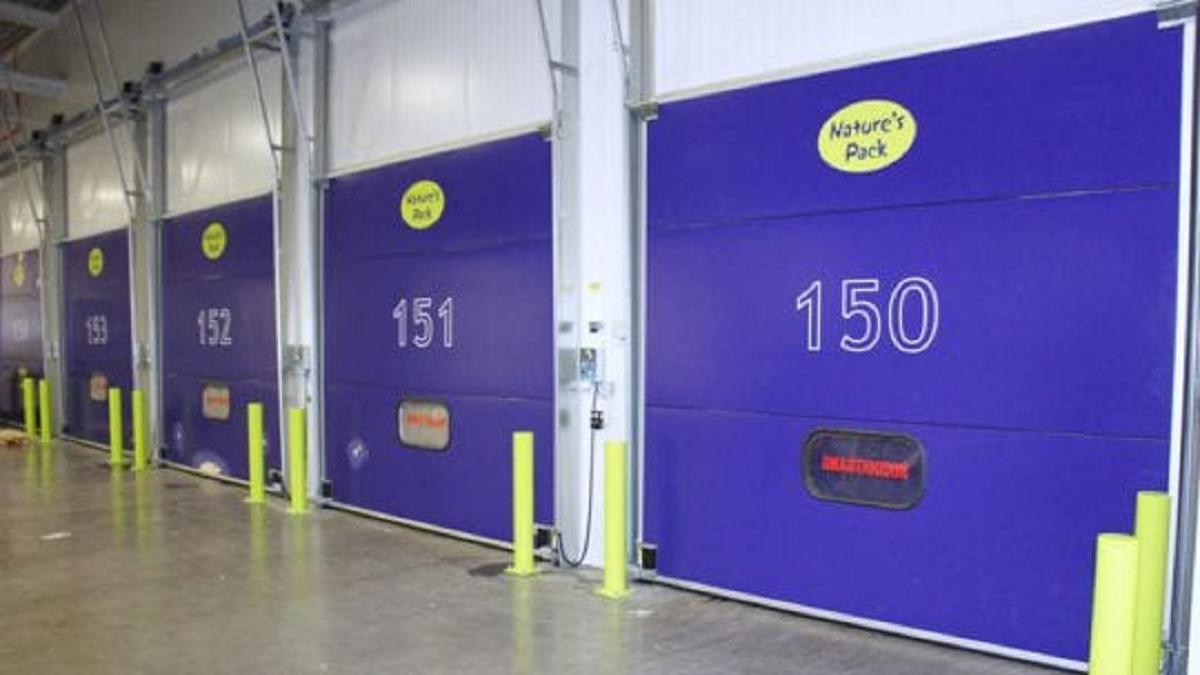
BG DOOR specifies electric operation via a 220 V / 50 Hz tubular motor, with manufacturing dimensions of up to 50 m in width and 8 m in height. For very large bays, multiple SEPA doors can be joined together to achieve virtually unlimited width. The solution is available in 46 standard colours, a useful detail when facilities use colour coding for zoning (cold/temperate, hygiene, flows) or seek visual integration with corporate identity.
Practical application in fruit and vegetable postharvest
Operationally, compartmentalisation adds value when it is used to:
-
Zone packing and handling areas from transit zones, loading docks or access points.
-
Maintain a thermal boundary between cool processing areas and support zones (materials, pallets, dispatch).
-
Reduce exposure of critical areas to humidity, dryness and drafts caused by frequent openings.
-
Improve process predictability by reducing environmental variations that can affect product stability.
Without replacing refrigeration design or operational discipline, internal separation solutions such as SEPA function as a practical tool to organise space, minimise interference between zones and sustain more consistent conditions in an industry where every degree—and every fluctuation—matters.
About BG DOOR
BG DOOR develops solutions for temperature-controlled installations, with a focus on environment separation and the organisation of industrial spaces. In the agri-food sector—and particularly in fruit and vegetable postharvest—its approach aligns with typical packhouse needs: zoning large buildings, managing flows between areas with different thermal requirements, and supporting operations with intensive traffic and high turnover, where environmental stability is essential to preserve quality and shelf life.