
Citrosol
Phytosanitaries
Solutions for decay control and fungicide resistance presented at the Chilean Phytopathology Congress
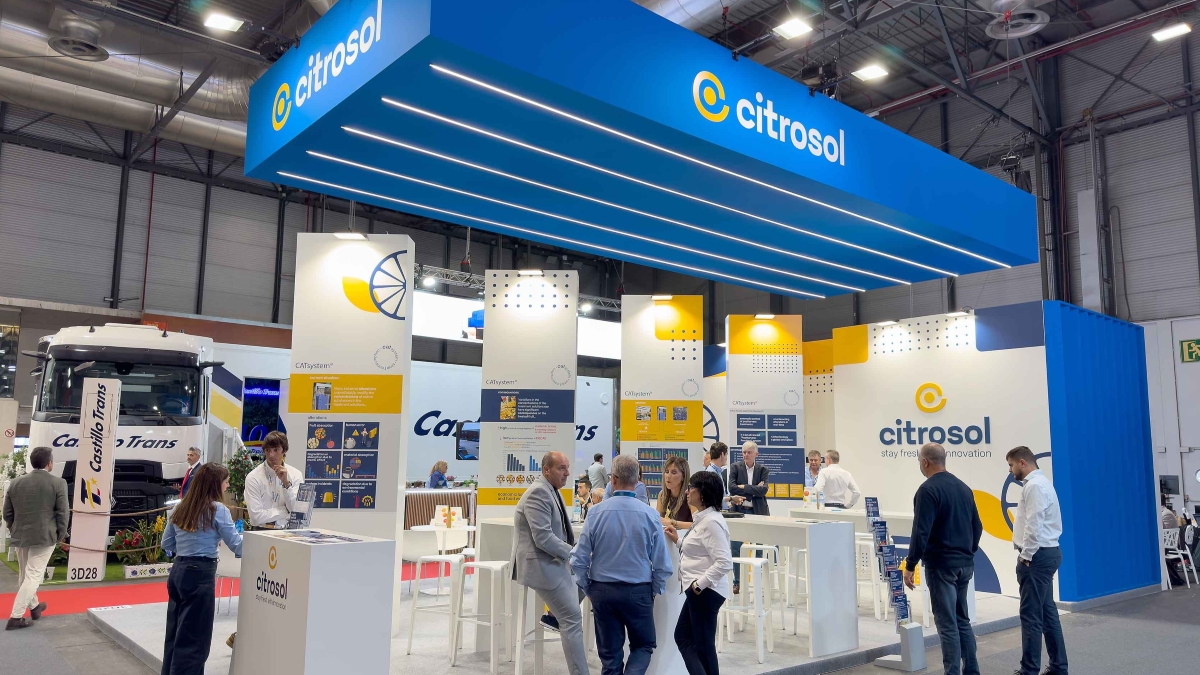
Citrosol and Innoprint participated as Gold Sponsors at the XXXIII National Congress of Phytopathology and the X Postharvest Conference of Chile, held at the University of Talca, where the Valencian company showcased the implementation of its Zero Discharge® System in Chilean packinghouses
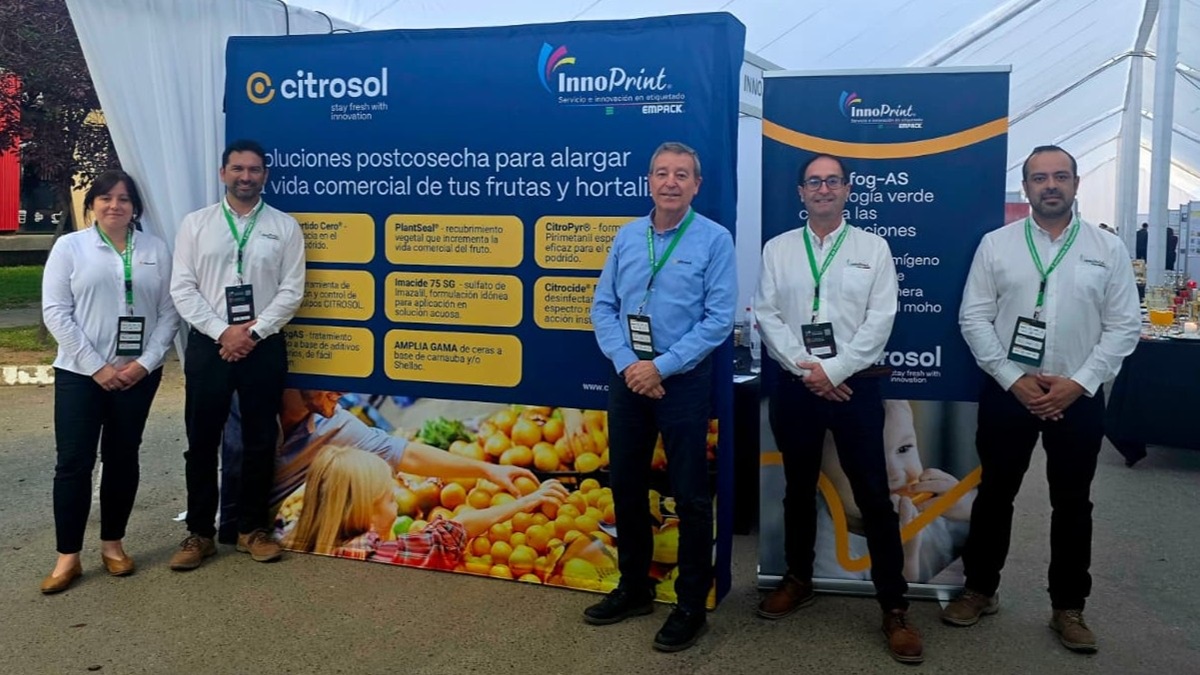
The Valencian firm Citrosol and Innoprint (Empack Group) participated as Gold Sponsors in the XXXIII National Congress of Phytopathology and the X Postharvest Conference of Chile, held jointly from November 3 to 5 at the University of Talca. The event brought together researchers, academics, students, and agri-food professionals to share the latest advances and address key challenges related to plant health and preserving fruit quality.
Organized by the Chilean Society of Phytopathology (SOCHIFIT) and the Faculty of Agricultural Sciences of the University of Talca, both events connected two closely related fields: crop protection against diseases and the preservation of produce quality during postharvest, storage, and transport to destination markets.
Decay control and resistance take center stage in the presentation
Citrosol's delegation consisted of Juanjo Ferrandis, Postharvest Service Executive, and Celia Murciano, R&D Microbiology Manager. Representing Innoprint were Andrés Vejares, Head of Postharvest, and the company's Postharvest team.
During the conference, Dr. Celia Murciano delivered the presentation 'Postharvest decay control and the problem of fungicide resistance', reviewing the development and spread of fungal diseases in packinghouses, as well as the factors that favor the emergence and selection of resistant strains. Among these, she highlighted inoculum buildup in facilities, suboptimal dosages, and deficiencies in treatment application and cleaning and disinfection protocols.
The presentation also addressed various tools to improve decay control and tackle fungicide resistance, including alternative solutions to active ingredients as a complement to conventional treatments.
Among the solutions presented was Fortisol Ca Plus, a formulation that helps stimulate the natural defenses of fruits and is effective in controlling decay. Fung-Cid GRAS SP, a potassium sorbate-based formulation for decay control, including resistant strains, was also introduced.
Another solution showcased was Greenfog-AS®, a sorbic acid smoke generator treatment that allows rapid, uniform, dry application without the need for water or wastewater generation. It is a dual solution with high disinfecting efficacy that can also be used for treating fruits in cold rooms and containers. Greenfog-AS® demonstrates high efficacy against various fungi causing decay and/or stem-end rot in fruits and vegetables, including Penicillium sp., Geotrichum sp., Cladosporium sp., Fusarium sp., Rhizopus sp., and Aspergillus sp. Its active ingredient is a green chemistry compound approved for postharvest citrus treatment, classified as a GRAS substance by the US FDA and a 'minimum risk' fungicide by the US EPA.
Additionally, the use of orthophenylphenol was discussed—a broad-spectrum, multi-site active ingredient that represents a valuable option for controlling Penicillium, including strains resistant to other fungicides, as well as other pathogens such as Geotrichum.
The Zero Discharge® System optimizes postharvest treatments
The presentation also highlighted the contribution of the Zero Discharge® System (Sistema Vertido Cero®) in Chilean packinghouses. This Citrosol technology is designed to optimize postharvest treatments through constant dosing, maintaining treatment solution hygiene, and continuous hydrodynamic filtration. Its implementation in numerous Chilean postharvest processing facilities has improved treatment bath control and contributed to more effective and uniform application, preventing the development of fungicide resistance.
In conclusion, the presentation emphasized that sustainable decay control requires a comprehensive strategy combining properly applied treatments, reduction of environmental inoculum, facility cleaning and disinfection, and periodic monitoring of Penicillium populations.
By participating as a Gold Sponsor at this gathering, Citrosol reaffirms its commitment to research, innovation, and knowledge transfer to the sector, as well as collaboration among companies, researchers, and professionals to address current postharvest challenges.
Source: Citrosol
News of Citrosol