Cooling and CA
Better cold-chain control helps sweet cherries stay fresh for longer
The research shows that sweet cherry quality after harvest depends on the interaction between cultivar, harvest timing, season and storage system. Well-managed cold-chain conditions, together with suitable storage atmospheres, can help maintain firmness, reduce weight loss and better preserve stem quality
Sweet cherry is a high-value fruit, but also a highly perishable one. Maintaining firmness, texture, colour, stem freshness and eating quality during storage and distribution remains one of the main challenges in postharvest management.
The thesis “Extending postharvest quality of sweet cherries: cold chain regimes and fruit texture components”, submitted by Gabriela Paola Bolaños Pabón at Washington State University, examines how sweet cherry quality can be extended through better cold-chain management and a deeper understanding of fruit texture.
Harvest maturity also matters
The study evaluated four cultivars, ‘Rainier’, ‘Bing’, ‘Skeena’ and ‘Sweetheart’, harvested at two maturity stages during the 2024 and 2025 seasons. After hydrocooling, the fruit was stored at 0.5 ºC and more than 95% relative humidity under different conditions: regular atmosphere, modified atmosphere packaging and two controlled atmosphere treatments, one with high CO₂ and another with low O₂ and CO₂ levels.
The results show that harvest maturity had a clear influence on initial fruit quality. Cherries harvested at commercial maturity generally showed greater fruit weight, more advanced colour development and higher soluble solids concentration. However, this greater maturity could also be associated with lower stem force retention and lower titratable acidity, two relevant aspects for storage performance and market acceptance.
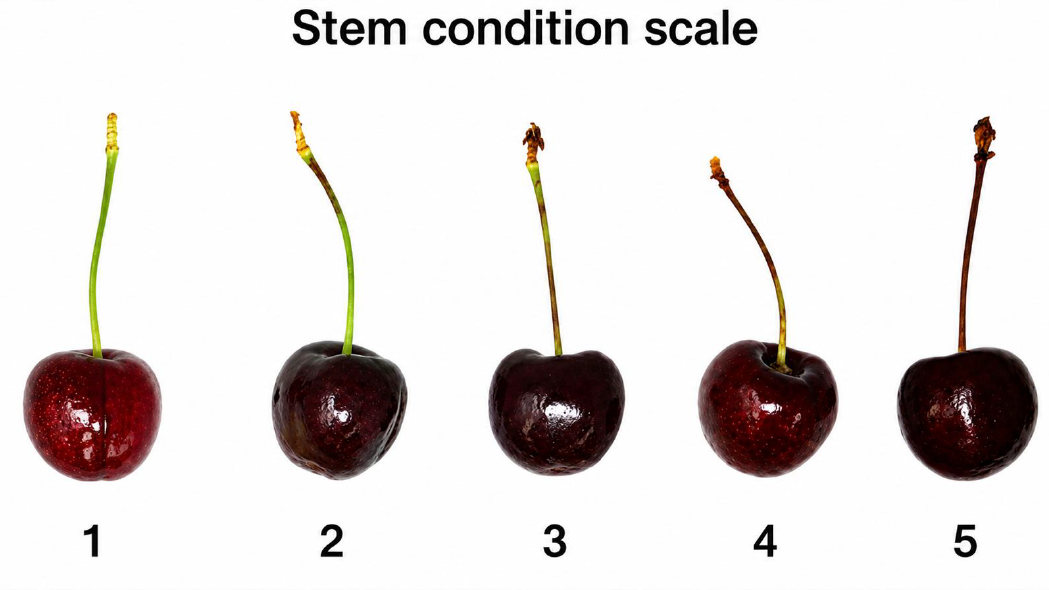
Modified atmosphere packaging generally maintained higher firmness and helped reduce weight loss. Low-O₂ and low-CO₂ controlled atmosphere storage tended to better preserve stem condition, a key visual attribute in sweet cherry because it is directly associated with freshness. By contrast, high-CO₂ controlled atmosphere storage was linked to a higher incidence of internal browning, especially during extended storage.
The thesis also includes a second study focused on fruit texture. In this case, sweet cherry breeding selections from the Washington State University programme were analysed, evaluating internal and external mesocarp tissues, cell wall composition and anatomy. The results indicate that texture changes with harvest maturity, although responses were not the same across all selections or seasons.
Overall, the thesis concludes that there is no single storage strategy suitable for all cultivars. Final sweet cherry quality depends on the interaction between cultivar, harvest maturity, season and storage system. For this reason, effective postharvest management should adapt cold-chain conditions and storage atmospheres to the characteristics of each variety and harvest stage.
Source: Bolaños Pabón, Gabriela Paola. Extending postharvest quality of sweet cherries: cold chain regimes and fruit texture components. Master of Science in Horticulture thesis, Washington State University, Department of Horticulture, August 2026.
https://hdl.handle.net/2376/43456
Related news

ANGEL MIR strengthens its production capacity with new technological investment
AGROSTA strengthens two decades of presence in international postharvest research