News
Evaluation of heat treatments in dates to maintain the postharvest quality
The research by Mustapha Khali and Mohamed Marouf Aribi show that 55°C/20 min treatment offered the best pH stability, which is key for preventing enzymatic and microbial degradation; when combined with passive Modified Atmosphere Packaging (pMAP) using PET film, this protocol ensured long-term preservation
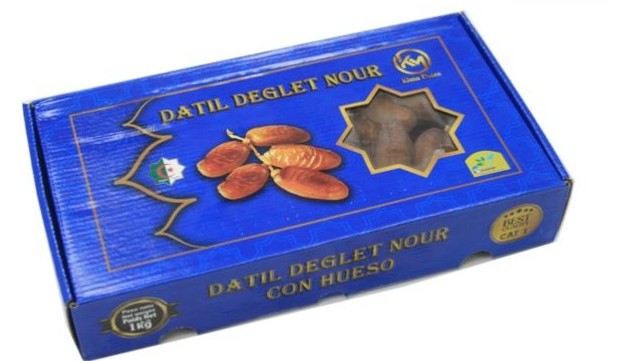
This study provides a comprehensive evaluation of four heat treatment protocols,
- 45°C for 30 minutes,
- 50°C for 25 minutes,
- 55°C for 20 minutes, and
- 60 °C for 10 minutes,
for the disinfestation of Deglet Nour dates (Phoenix dactylifera L.) while ensuring postharvest quality preservation and consumer acceptability.
Research Method
The effectiveness of these heat treatments was assessed in terms of larval and egg mortality, physicochemical parameters (moisture, pH), sensory quality (texture, color, flavor, aroma), and microbiological stability, with additional storage trials using passive Modified Atmosphere Packaging (pMAP) based on PET film at 10±1°C for 5 months.
Findings
Higher-temperature and shorter-duration heat treatments (notably 55°C/20 min and
60°C/10 min) proved most effective for insect disinfestation, with the 55°C/20 min treatment achieving 88.40% larval mortality while preserving the sensory qualities of the dates.
Most treatments led to a noticeable reduction in moisture content, potentially affecting shelf-life and texture, except for the lowest temperature protocol.
The 55°C/20 min treatment offered the best pH stability, which is key for preventing enzymatic and microbial degradation. When combined with passive Modified Atmosphere Packaging (pMAP) using PET film, this protocol ensured long-term preservation by maintaining both the physical quality and microbiological safety of the dates during cold storage.
Research limitations
Further research could explore its applicability to other date varieties and dried fruits under different storage conditions.
Originality/Value
This method provides a non-chemical, scientifically validated disinfestation solution, reducing reliance on fumigants and pesticides while ensuring product safety and marketability.
Introduction
Deglet Nour dates are prized for their superior quality and widespread use in the food
industry, yet they remain highly vulnerable to insect infestations, particularly from pests like Ectomyelois ceratoniae (Zeller) that threaten their preservation and market value (Zinhoum et al., 2025). This vulnerability underscores the critical need for effective disinfestation methods that maintain quality while ensuring food safety.
Heat treatment has emerged as a promising alternative to chemical fumigation, offering effective pest control through precise temperature applications while aligning with growing demands for sustainable food processing (Hazbavi et al., 2015a; Ali & Hama 2016).
Recent advances demonstrate that optimized heat treatments can significantly reduce pest populations, including eggs and larvae, without compromising the dates' sensory and nutritional properties (Ben‑Amor et al., 2016; Al-Mutarrafi et al., 2019).
However, treatment efficacy varies substantially depending on temperature (45-60 °C) and exposure duration (10-30 minutes), requiring careful calibration to avoid adverse effects on texture, flavor, and physicochemical characteristics (Ben‑Amor et al., 2016; Marouf Aribi & Khali, 2020).
The current study addresses these challenges by systematically evaluating four heat
treatment protocols for their disinfestation efficiency and impact on quality parameters.
Building on previous work (Marouf Aribi & Khali, 2020), we examine how different thermal scales affect moisture content, pH, acidity, and sensory attributes while validating their industrial applicability.
Furthermore, we investigate the synergistic effects of passive Modified Atmosphere Packaging (pMAP) using Polyethylene Terephthalate (PET) films during extended storage under two temperature regimes (10±1 °C and 22±1 °C).
This dual approach not only advances pest management strategies but also provides actionable insights for extending shelf life without compromising quality - a critical consideration for producers and consumers alike (Huang et al., 2016; Adeyeye, 2022).
By integrating disinfestation protocols with optimized packaging solutions, this research bridges the gap between laboratory-scale findings and commercial implementation, offering a comprehensive framework for sustainable date preservation.
Sources
Validation of four heat treatment protocols for disinfestation, insect control, and assessment of quality parameters in stored dates
Mustapha Khali and Mohamed Marouf Aribi
Journal of Horticulture and Postharvest Research 2026, VOL. 9(1), 191-208
https://jhpr.birjand.ac.ir/article_3797_ea1824b3d5a47690fcdb1e3100856360.pdf
Picture, Mercado del paraíso