
Kelvin Solutions
Measurements
Thermal traceability strengthens cold logistics against losses, incidents and claims
Continuous temperature monitoring and data recording throughout transport are gaining ground as tools to support the preservation of sensitive products, incident management, and logistics chain documentation
In the logistics of sensitive products, maintaining appropriate thermal conditions throughout the entire journey has become an increasingly important factor. Beyond meeting control requirements, temperature traceability has a direct impact on product preservation, incident management, and the ability to demonstrate that transport has been carried out under the intended conditions.
This is especially relevant in operations involving multiple transit points, vehicle changes, intermediate storage, or international shipments, where supervision becomes more complex and the risk of cold chain disruptions also increases. In this context, having accessible and verifiable records makes it possible not only to detect deviations, but also to support operational decisions and reduce subsequent disputes with customers or insurers.
Continuous visibility to reduce cold chain risks
One of the main challenges in temperature-controlled logistics is that a temperature variation that goes unnoticed can compromise product quality and lead to financial losses. This is compounded by the difficulty of reconstructing what happened when there is no objective data on the actual transport conditions.
For this reason, thermal traceability is evolving from a point-control function into a continuous monitoring system. Recording data throughout the entire journey makes it possible to understand what happened at each logistics stage and provides a documented basis for internal management, audits, verifications, or claims.
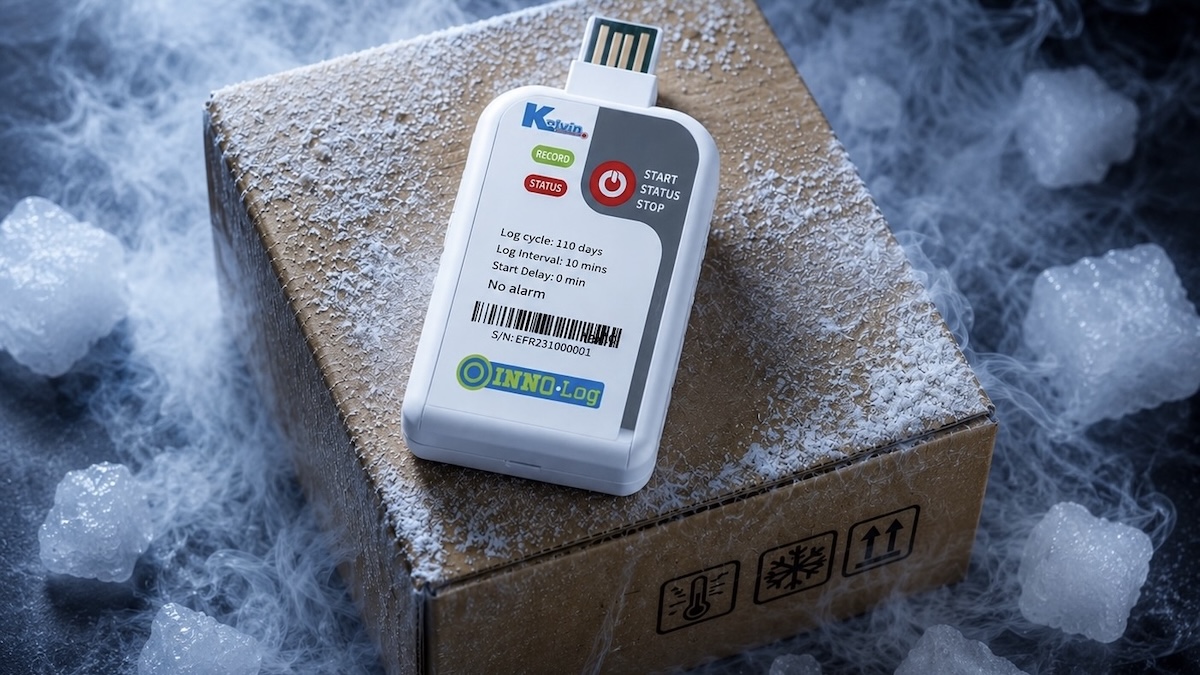
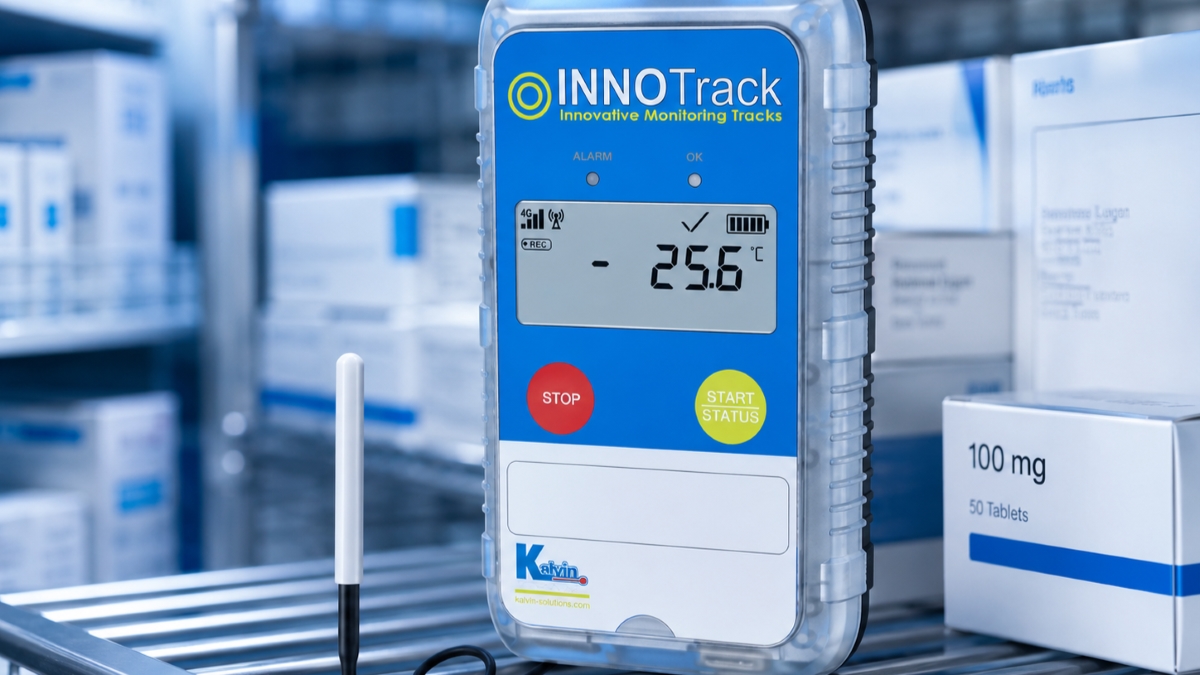
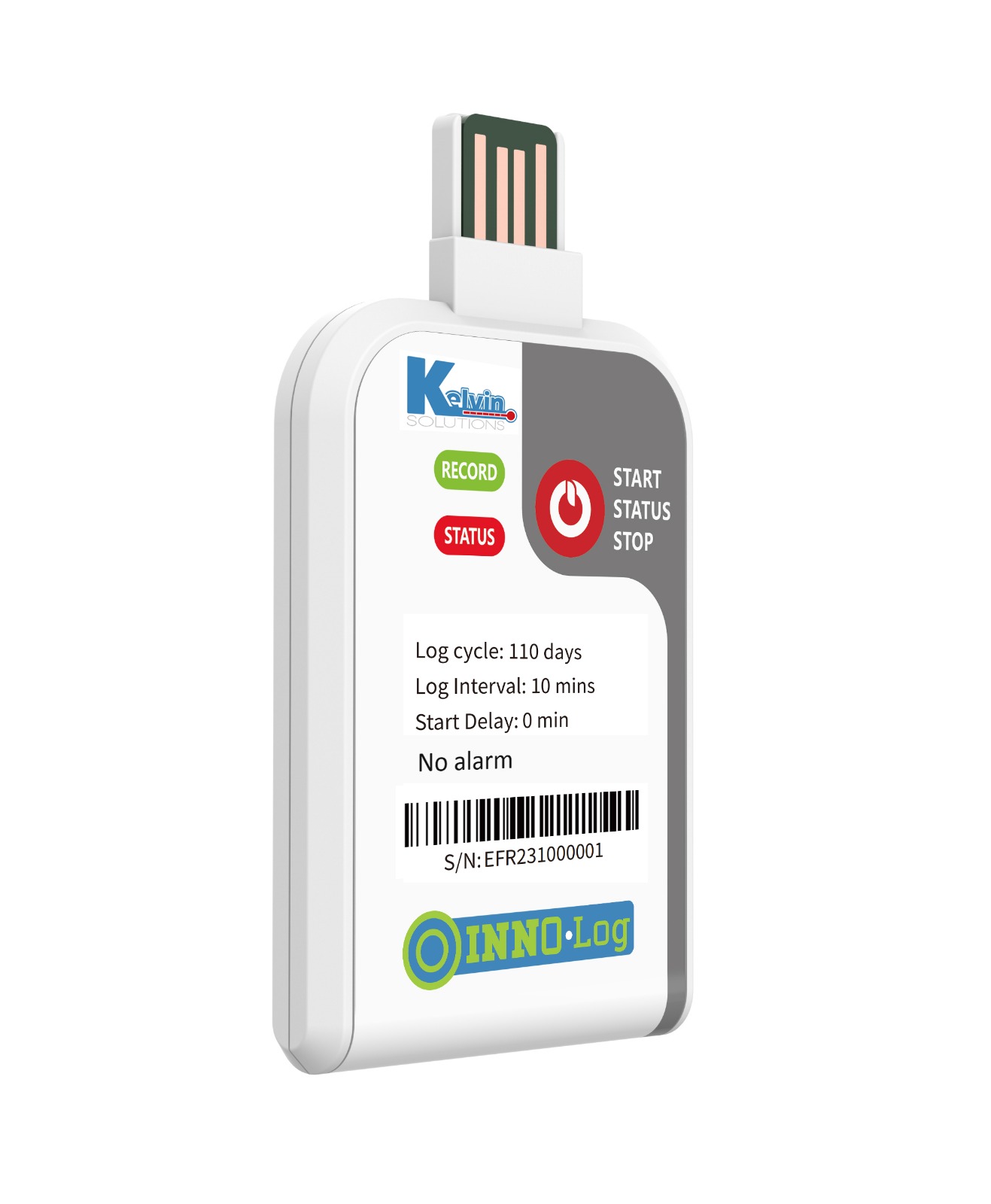
In this context, Kelvin Solutions offers an approach focused on monitoring and documenting transport conditions through different tools tailored to the logistics of sensitive products. These include Innolog, a data logger designed for road, sea, and air transport operations. This is complemented by Cloud, a platform that centralizes traceability information and facilitates data access, report generation, and the use of customized dashboards. The offering is completed by Innotrack, an onboard monitoring solution that combines geolocation, temperature tracking, shock detection, and light monitoring.
From transport documentation to operational improvement
Systematic data collection does not respond only to regulatory or contractual requirements. It can also become a resource for process optimization and better decision-making. Analyzing temperature records together with other transport indicators helps identify critical points, review procedures, and anticipate incidents before they affect the product.
From this perspective, the digitalization of traceability supports more agile logistics management. Centralizing information in cloud-based platforms makes it easier to generate reports, store evidence in an organized way, and share data with customers, quality managers, or control bodies. This helps strengthen service transparency and streamline processes linked to audits, certifications, or claims.
The possibility of integrating additional variables such as shipment location, shocks suffered during transit, or unauthorized opening of the load further expands analytical capacity and provides a more complete picture of the conditions to which the goods have been exposed.
Thermal traceability as a support for logistics competitiveness
In an environment where service reliability has become a differentiating factor, thermal traceability is gaining value not only as an operational tool but also as a commercial asset. Being able to clearly document how the transport of a sensitive product has been managed helps build confidence, facilitates incident resolution, and strengthens relationships with customers who demand greater visibility across the supply chain.
From this perspective, thermal control is no longer understood solely as a compliance obligation. It is increasingly seen as part of a broader strategy linked to loss reduction, process improvement, and responsiveness in an ever more demanding logistics environment.
News of Kelvin Solutions
How to prevent cold chain breaks in frozen fruit and vegetables