News
How potatoes maintain low sugar in cold storage with The Ecklonia maxima
The research demonstrates that postharvest immersion in Ecklonia maxima seaweed extract significantly mitigates cold-induced sweetening in potato tubers during cold storage.
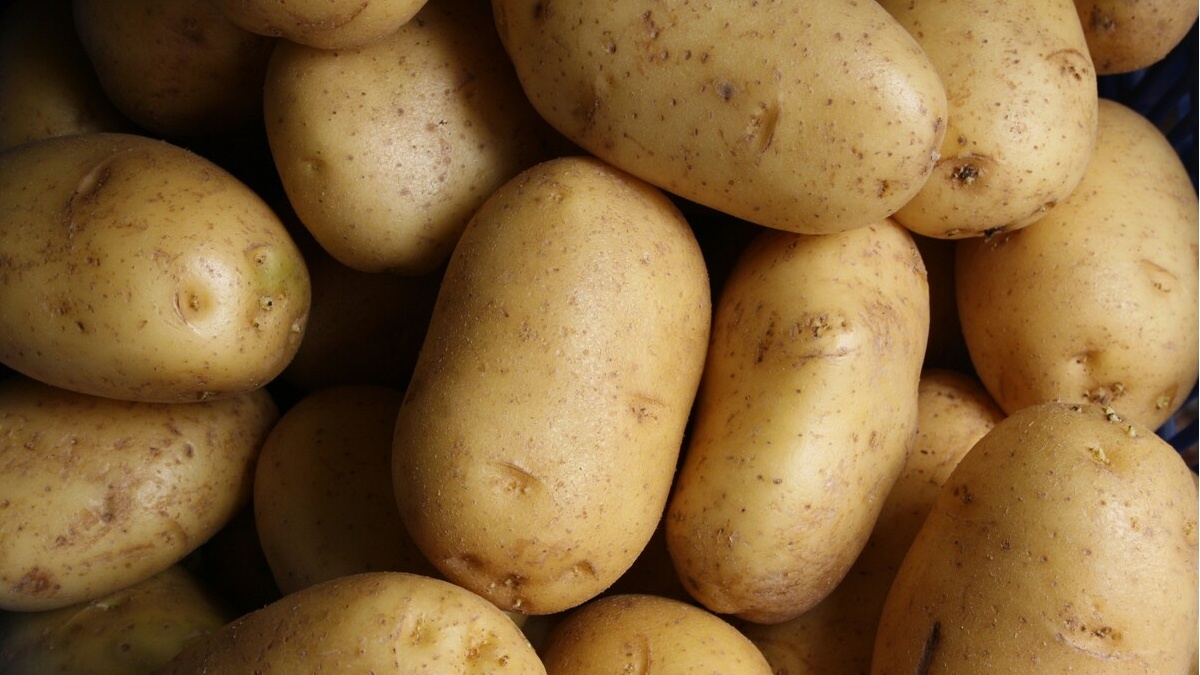
To prevent potatoes from sprouting prematurely and to extend their shelf life, they are typically stored in refrigerated chambers at low temperatures. The major drawback is that the cold stresses the tuber, triggering a chemical reaction that converts starch into simple sugars. This completely alters their flavor, making them excessively sweet, and ruins their quality for industrial use in making french fries or chips. Since there are almost no existing methods to curb this problem, a group of researchers decided to try their luck with an extract from the seaweed Ecklonia maxima, known for helping plants resist environmental stress conditions.
The seaweed experiment
To test its efficacy, the team took potatoes of the Mondial variety and submerged them for five minutes in different concentrations of this extract (0, 0.5, 1, 1.5, 2.0, 2.5, and 3.0%). After storing them at 4°C for 60 days, they used analysis of variance (ANOVA) for statistical analysis and the TOPSIS-Entropy model to determine the optimal concentration of the seaweed extract to mitigate cold-induced sweetening. They also employed advanced mathematical and statistical models to evaluate which dose yielded the best results.
The analyses demonstrated that the potatoes that did not receive the treatment accumulated a massive amount of sugars (glucose spiked by 137% and fructose by 175%). In contrast, the potatoes treated with the 3% extract bath controlled this surge impressively, limiting the increase to just 39% and 22%, respectively.
 Ecklonia maxima
Benefits for the food industry
The results of this study open a massive door for the agricultural and food sectors. Beyond preventing the potatoes from turning sweet, the seaweed extract achieved higher contents of starch, dry matter, and amylose, as well as starch granules. This means that applying this extract before storing the potatoes works as a sustainable and fully eco-friendly post-harvest technology, ensuring the product maintains its ideal quality and the shelf life required by the market for processing.
Introduction
The potato Solanum tuberosum L. is a powerhouse of global food security and agricultural economics, with the market projected to soar toward $138 billion by 2029. Yet, this booming industry faces a critical post-harvest bottleneck. While chilling potatoes at 4–8°C successfully prevents premature sprouting and decay, it triggers an unintended physiological crisis: cold-induced sweetening. This stress response accelerates starch degradation, causing a massive surge in simple sugars like glucose and fructose. Beyond ruining the sensory profile by making the tubers excessively sweet, these accumulated sugars react with amino acids during high-temperature frying, generating acrylamide—a known carcinogen that severely compromises food safety and product quality for the booming French fry and snack sectors.
The Search for a Sustainable Shield
While current mitigation strategies span physical reconditioning, high-energy UV irradiation, and various chemical suppressants, they are frequently bottlenecked by prohibitive electrical costs, safety anxieties, or high chemical volatility. Enter the green frontier of sustainable agriculture: biostimulants. A pioneering study has turned to the commercial extract of the seaweed Ecklonia maxima. Naturally rich in stress-modulating phytohormones such as abscisic acid, brassinosteroids, and polyamines, this marine extract acts as a biochemical shield. By immersing Mondial variety potatoes in SWE prior to cold storage, researchers aimed to fortify the plant’s internal defense mechanisms, effectively putting the brakes on cold-induced starch breakdown without the heavy ecological or financial footprint of traditional treatments.
Decoding the Sweet Spot with Data
To pinpoint the exact culinary and industrial sweet spot, researchers deployed an advanced multi-criteria decision-making framework: the TOPSIS-Shannon entropy model. By objectively weighting and balancing complex variables, this mathematical approach revealed that a 3% SWE bath acts as a powerful post-harvest defense, dramatically capping glucose and fructose spikes to just 39% and 22%, compared to the massive 137% and 175% surges seen in untreated potatoes. Furthermore, the optimized seaweed treatment preserved higher concentrations of starch, dry matter, and amylose. This data-driven breakthrough marks the first time a marine biostimulant has been integrated with advanced algorithmic ranking to deliver an eco-friendly, cost-effective post-harvest technology—ensuring that potatoes maintain the flawless, crisp-ready quality demanded by global markets.
Conclusions
In a scientific first, this study demonstrates that a 3.0% post-harvest immersion in the hormone-rich seaweed extract Ecklonia maxima acts as a powerful, eco-friendly shield against cold-induced sweetening in 'Mondial' potatoes over 60 days at 4°C. Validated by the advanced TOPSIS-Shannon Entropy model, this sustainable treatment drastically suppressed glucose and fructose spikes while preserving vital industrial qualities like starch, dry matter, and amylose. Although currently limited by its laboratory scale, single-cultivar focus, and an unresolved biochemical mechanism, this breakthrough positions Ecklonia maxima as a highly promising, cost-effective technology to revolutionize potato food safety and quality, paving the way for future commercial validation across diverse varieties.
Sources
Postharvest Application of Seaweed-based Biostimulant to Control Cold-induced Sweetening in Potato Tubers: A TOPSIS-shannon Entropy Model Approach. 2026.
Sophia Koka, Ramadimetja; Mathaba, Nhlanhla; Paulus Mafeo, Tieho and Kenneth Satekge, Thabiso
Food and Bioprocess Technology, 19, Artículo 332 https://doi.org/10.1007/s11947-026-04427-6
Picture, Unsplash and floresyplantas.net