Measurements
Determining physicochemical parameters just from a photograph
Researchers at Hokkaido University conducted a study to determine the amount of soluble solids and anthocyanins in haskap berries in a surprising way: without even touching the fruit
.jpg)
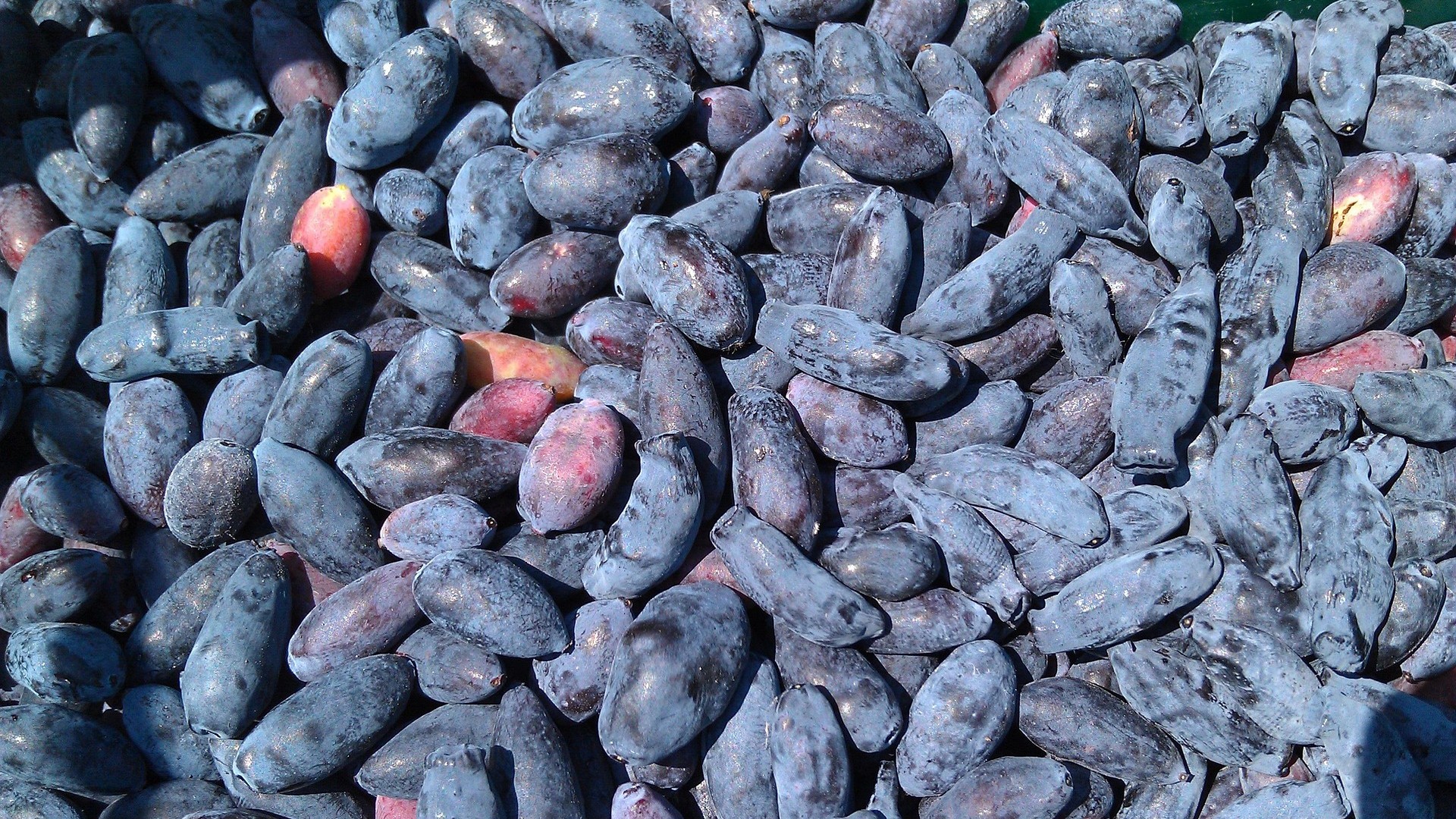
Lonicera caerulea, also known as haskap berry, is a small, cylindrical fruit with a deep bluish-purple color. It is found primarily in the colder regions of the Northern Hemisphere: Japan, China, Russia, Canada, and the United States.
If there’s one thing that sets haskap berries apart from other berries, it’s not its striking appearance—it’s its ability to tolerate extreme stress, such as very low temperatures.
Not only that, but it also has remarkable antioxidant properties, as its fruits are packed with bioactive compounds: anthocyanins, polyphenols, vitamin C…
The distribution of these bioactive compounds is also of interest; rather than being concentrated in the skin (as is typical for most berries), they are distributed throughout both the skin and the pulp.
For these reasons, the haskap berries is a promising fruit for the market of the future, with anticipated uses in “healthy” foods, the nutraceutical industry, and more.
One of the challenges facing the haskap berries industry is the rapid, accurate, and non-destructive determination of anthocyanins and soluble solids. That is why researchers at Hokkaido University in Sapporo, Japan, set to work with the goal of finding a technique that would allow them to measure these two attributes without destroying the fruit.
They chose a prediction technique based on RGB images of the berries. This technique relies on taking images with everyday devices (an iPhone 8 was used to take the photos in the study), which a deep learning-based detection model will then use to predict the fruit’s attributes. The detection model is trained by correlating the physical attributes (measured in the laboratory using traditional techniques) with the photos of the fruits from which those measurements were taken.
At Hokkaido University, after taking the photos, determining soluble solids and anthocyanin content using traditional methods, and training the various detection/prediction models (they used three different models with the same function but slight differences in operation), it was determined that anthocyanin content was easier to predict than soluble solids content. The research team theorized that this was because the concentration of anthocyanins—being pigments—has a more direct relationship with the fruit’s appearance than the amount of soluble solids.
Looking ahead, the researchers recommend increasing the number of samples and cultivars analyzed to improve predictive accuracy for different varieties, as well as establishing a standardized photo-taking environment, particularly with a view toward integration into the postharvest industry.
Source: Zhang, J., Li, J., Meng, X., Yang, Y., Lyu, Y., & Hoshino, Y. (2026). Feature extraction based on RGB images for rapid and non-destructive estimation of haskap fruit quality attributes. Postharvest Biology and Technology, 240, 114416.
Related news
3-MA, a new potential naturally-derived post-harvest fungicide