Measurements
Real-time potato surface defect detection using computer vision
An AI-based algorithm enables high-speed potato sorting by identifying mechanical damage, greening, and diseases
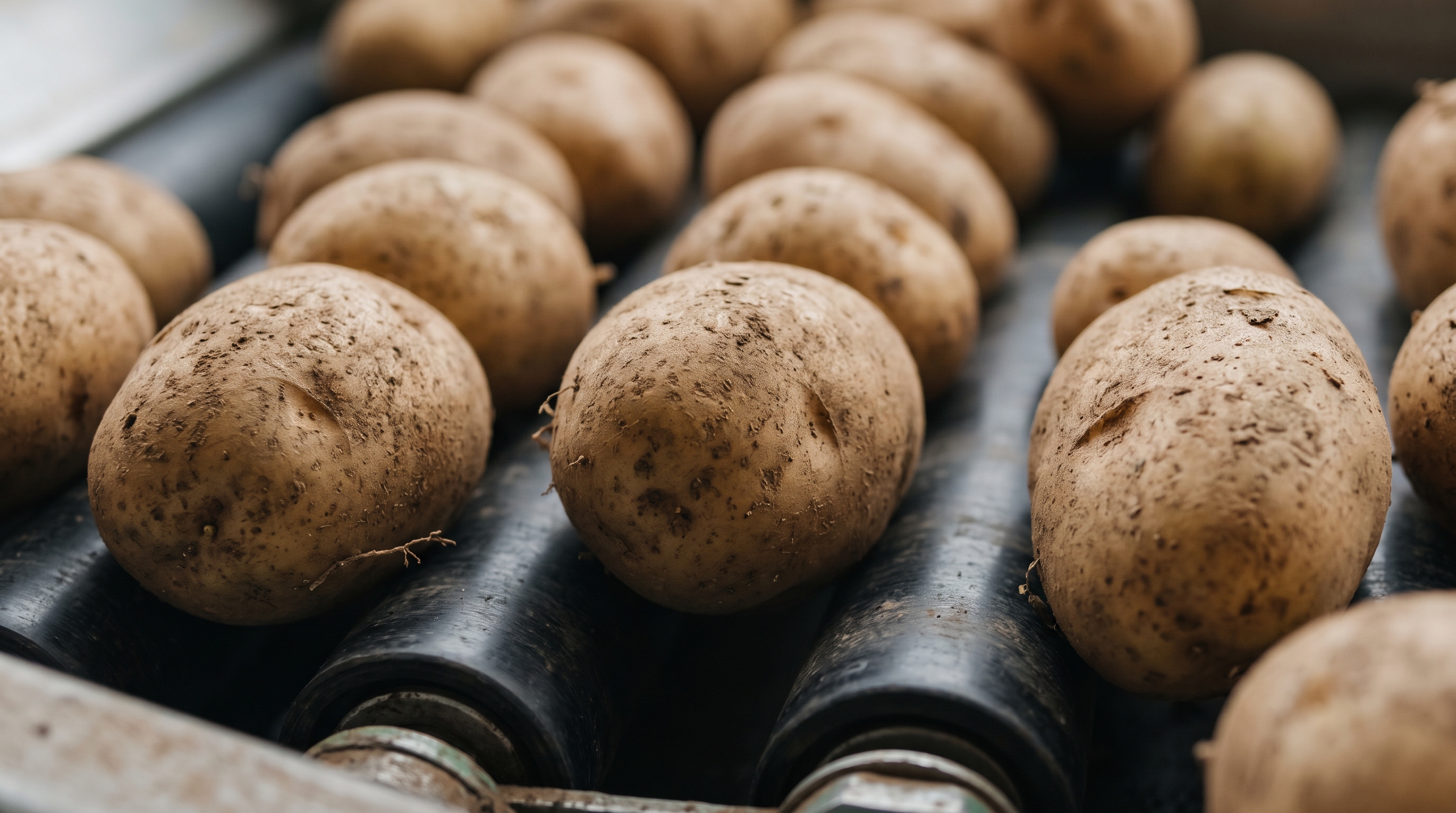
Automated potato sorting remains a major challenge in packing facilities due to the wide variety of surface defects and high-speed conveyor constraints. A team of researchers has developed YOLO-PSD, a lightweight artificial vision algorithm specifically designed for real-time inspection and grading of moving tubers.
360° Reconstruction and multi-defect detection
The system utilizes a dual-lane conveyor with rotating rollers that turn the potatoes while industrial cameras capture three consecutive phase frames. By stitching these frames together, the software constructs a complete 360° composite view of the potato surface.
The model simultaneously identifies and categorizes five critical defect types: mechanical damage, rot, greening, scab, and worm wounds, achieving a mean average precision (mAP) of 95.6%, outperforming conventional detection models.
Industrial efficiency and online deployment
By optimizing its internal components (C3k2-ConvFormer-CGLU modules and the LSCD-LQE detection head), the algorithm reduces computational costs by 15.6% compared to baseline architectures, processing each frame in just 12.6 milliseconds.
In real-world packing line trials, the intelligent sorting machine achieved an overall sorting accuracy of 94.7% under commercial conveyor speeds, delivering a robust, low-latency solution for postharvest automation.
Source
Zhu, R., Huang, J., & Wang, X. (2027). A lightweight real-time method for detecting irregular potato surface defects for sorting lines. Postharvest Biology and Technology, 243, 114717. https://doi.org/10.1016/j.postharvbio.2026.114717