Packaging
A bagasse-based paper releases ethanol and inhibits mold on strawberries
A shellac-coated bagasse-cardboard insert releases ethanol vapor in a controlled manner to reduce postharvest decay in strawberries.
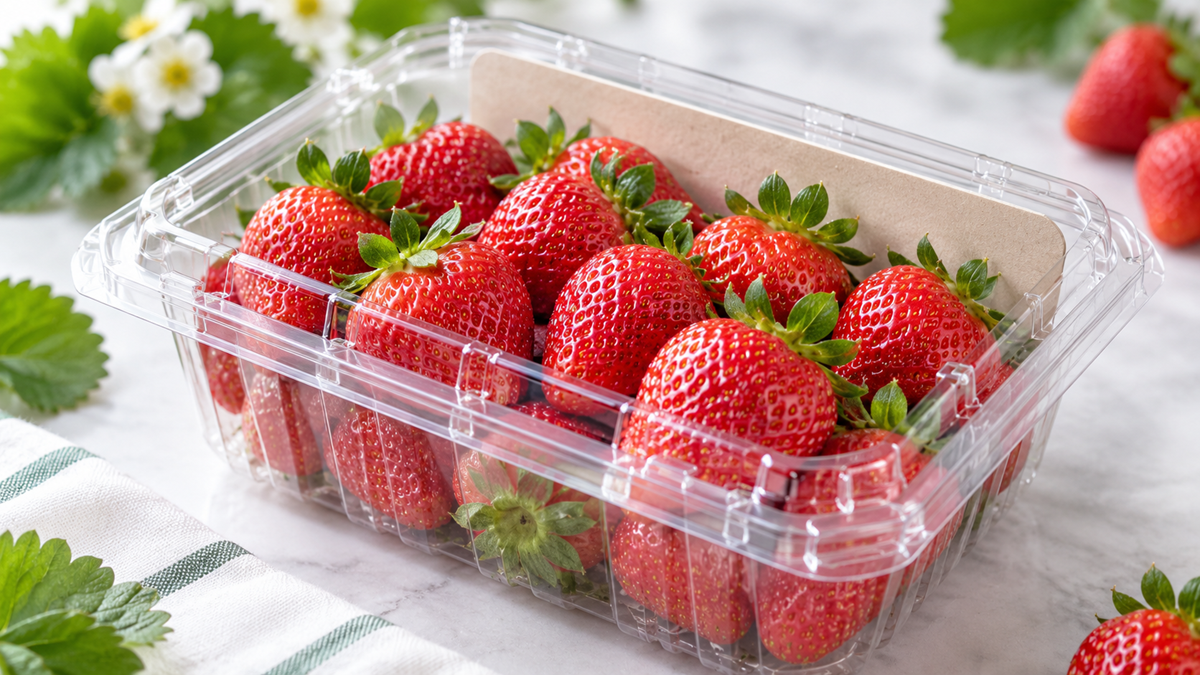
Researchers at the Michigan State University School of Packaging have developed an active insert made from sugarcane bagasse and shellac that serves as a replacement for traditional plastic bags.
This active insert, crafted from sugarcane bagasse paper and shellac, gradually releases ethanol vapor. In controlled tests, it reduced fungal growth and spoilage in strawberries inoculated with Botrytis cinerea.
Abstract
This study presents an ethanol emitter designed for postharvest packaging. Unlike conventional sachets, which may contain silica and plastic materials, the substrate developed here consists of sugarcane bagasse paper coated with one or more layers of shellac. These layers retain the ethanol and regulate its release within the package. The approach aims to control fungal growth during storage without applying the antimicrobial agent directly onto the fruit.
Fungal pathogens most notably *Botrytis cinerea* (gray mold) and *Penicillium* species pose one of the greatest challenges to maintaining the postharvest quality of strawberries (*Fragaria × ananassa*). Although commercial ethanol emitters—typically consisting of polyethylene/EVA plastic sachets containing silica gel have proven effective as antimicrobials, there is growing regulatory and social pressure to phase out petroleum-based plastics. A recent study, led by researcher Purva Khule and Dr. Eva Almenara, introduces an alternative that is entirely biodegradable, compostable, and free of microplastics.
Results
The authors evaluated the emitter against *Botrytis cinerea* and *Penicillium* in *in vitro* assays. The best-performing formulation, featuring four layers of shellac, released up to 14,179 µL/L of ethanol vapor. In these tests, it reduced *Botrytis* growth by more than 98% over seven days and *Penicillium* growth by 50% over four days.
Subsequently, they tested the system on strawberries inoculated with *Botrytis* and stored in sealed containers for five days. The treatment reduced surface spoilage by 30%; internal spoilage also decreased—with the effect being even more pronounced, according to the article’s abstract. Furthermore, the researchers observed that the emitter delayed the darkening of the strawberries and did not significantly affect their respiration, transpiration, firmness, or coloration (redness).
| Evaluated Parameter | Without Emitter (Control) | With Biodegradable Emitter | Postharvest Impact |
| Botrytis Incidence (5 days) |
82% of surface affected |
52% of surface affected |
Significant mold reduction (-30%) |
| Internal Fungal Invasion |
Severe pulp degradation |
Confined to wound site |
Preservation of tissue integrity |
| Fruit Firmness (N) |
1,6 ± 0,4 N |
1,7 ± 0,8 N |
No accelerated softening |
| Respiration Rate (mL CO₂/kg h) |
1,04 mL CO₂/kg h |
1,08 mL CO₂/kg h |
Unaltered physiology |
Authors' Conclusion
This work validates the feasibility of producing functional active packaging using standard paper industry processes. The combination of sugarcane bagasse (an agro-industrial residue) and shellac provides a controlled-release system that eliminates the use of fossil-based materials, opens pathways toward a circular economy in the berry sector, and addresses increasingly stringent global sustainability regulations.
Source:
Khule, P. et al. “Antimicrobial packaging based on an environmentally friendly ethanol emitter to reduce decay in strawberries”. Postharvest Biology and Technology, 243 (2027), 114716.
DOI: 10.1016/j.postharvbio.2026.114716.