News
Proposal of a new method for ripening bananas using oxygen and ethylene
By the proposed new method, by Jiangling Wang et al., bananas ripen and soften faster, and show better nutritional quality and flavor - The best results were 25% oxygen combined with 100 μl/L
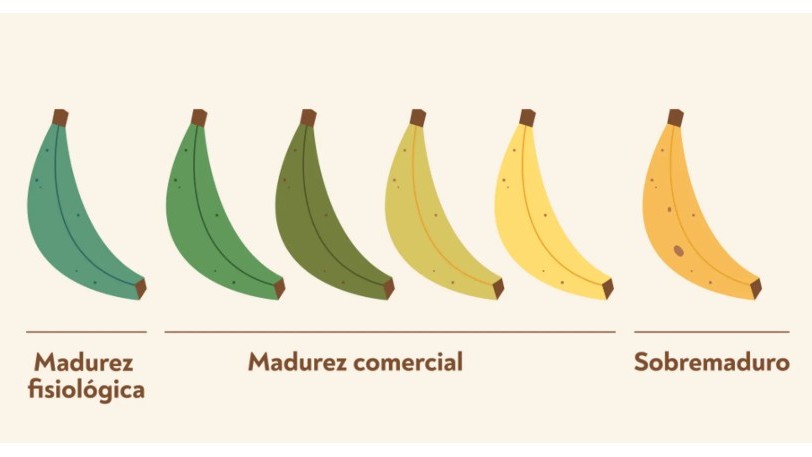
Bananas were typically harvested as green fruit during long - distance transport, then ripened after arriving at the sales location, and finally reached the consumers.
Traditional methods of ripening had irregularities, and the cost of ripening was high.
Banana fruits were divided into four groups and subjected to simultaneous 24-hour ripening treatment under sealed conditions at 18°C and 90–95% relative humidity, using 1500 ppm ethylene, 23%, 25%, and 27% oxygen concentrations, along with 100 μl/L ethylene.
This study investigated the effects of oxygen synergistic ethylene ripening on the physiology, nutrition and flavor of bananas. From the physiological changes observed during the ripening process of bananas, oxygen and ethylene accelerated the ripening process.
The polyphenol content in the 25+100 treatment group consistently exceeded that of other treatment groups (p<0.05), peaking at 2.2613 mg/g on day 5, and the vitamin C content in the 25+100 treatment group showed the smallest decrease, dropping only from 8.33 mg/100g on Day 1 to 5.90 mg/100g on Day 3.
From the electronic tongue analysis, the 25+100 group had better flavor.
According to SPME-GC-MS, the 25+100 group had better aroma quality.
Ultimately, principal component analysis (PCA) was used to select the best method of ripening.
This study explored the synergistic ethylene ripening with high oxygen to improve the quality of bananas and provided new possibilities for the development of ripening technology.
Introduction
Bananas belong to the Eumusa section of genus Musa, family Musaceae[1]. Bananas are popular around the world for their appearance, flavor, aroma and nutrition[2].
Bananas was a typical climacteric fruit and undergoes rapid ripening process after harvest(Zeng et al., 2023). In commerce, bananas are usually picked when they are green and full, then transported to the place of sale and ripened, and finally delivered to consumers. The ripening process was the conversion of bananas bunches from green or mature-green to bright yellow colored skin having characteristics of fruit such as flavors, consistency of pulp and starch-sugar transition[3].
Ethylene, the ripening gas
Common methods of ripening bananas include ethylene gas ripening, ethylene-based liquid ripening and ethylene-based package ripening[4,5]. Ethylene was often used to ripen bananas in commercial production.
Ethylene was a common ripening agent, was widely used, such as for melons, peaches, persimmons and so on[[6], [7], [8]]. Bananas fruit was susceptive to chilling injury (CI), resulting in quality deterioration, ethylene treatment alleviates bananas CI symptom[9].
Oxygen may influence postharvest physiology
Oxygen concentrations greater than 21 kPa (induced through high O2 atmospheres or hyperbaric atmospheres) may influence postharvest physiology and quality maintenance of fresh horticultural[10].
Research has already shown that high-oxygen treatment delays quality deterioration by suppressing the expression of genes such as ADT, PAT, and TST in fresh-cut broccoli, thereby reducing the accumulation of undesirable flavor compounds, maintaining membrane stability, and mitigating lipid peroxidation[11].
Research has also found that short-term 80% hyperoxia pretreatment can effectively delay surface browning during the storage of fresh-cut potatoes[12]. This is achieved by inhibiting polyphenol oxidase (PPO) activity and malondialdehyde (MDA) accumulation, while simultaneously enhancing para-aminophenol oxidase (PAL) and peroxidase (POD) activity and increasing phenolic compound content, thereby boosting antioxidant capacity.
Other research has already shown that SOD and CAT activities in peach fruits were induced to increase, but they did not demonstrate superiority over conventional CA storage in mitigating cold damage. The decline in SOD and CAT activities may be closely associated with the occurrence of cold damage[13].
Exogenous high-oxygen treatment helps maintain strawberry sensory quality and firmness while reducing rot rates. It also preserves high total phenolic content and antioxidant capacity. Strawberries stored in high-oxygen environments release more lipids, such as 4-methoxy-2,5-dimethyl-3 (2H)-furanone and γ-decanoic acid lactone [14].
High-concentration oxygen reduces substances that cause off-flavors in fresh fruit, such as acetaldehyde, ethanol, and ethyl acetate produced by anaerobic respiration, while also preserving the fruit's flavor[15].It was found that kiwifruit treated with 30 % O2 + 70 % N2 showed a significant increase in soluble solids content, a rapid decrease in hardness and titratable acid, and significant changes in flesh color and volatile compounds in a short period of time, which greatly shortened the ripening time of kiwifruit[16].
Oxygen for ripening and preservation
High oxygen can be used not only as a preservation technology but also as a ripening technology for fruits and vegetables.
The use of oxygen in combination with ethylene has rarely been applied to ripen bananas fruit.In this study, we determined the nutritional, physiological and flavor indicators of bananas under different ripening methods, and explored the effects of the synergistic effect of ethylene and oxygen on banana quality, with a view to screening a low-cost and efficient banana ripening technology.
Sources
Effect of oxygen synergistic ethylene ripening on the quality of postharvest banana
Jiangling Wang, Liwei Zhang, Song Pan, Heran Xu, Guanlin Qian, Dongsheng Xin, Meng Zhang, Guang Xin
Journal of Future Foods
https://doi.org/10.1016/j.jfutfo.2025.10.030
Picture
El plátano de Canarias, https://www.crowdfarming.com/blog/es/el-platano-de-canarias/?srsltid=AfmBOooUS7ORWPwiXnAjp-cCkCwO6vZr3bnYl5CnjpAA3IkxqKQ1766i
.png)