
Sorma Group
Packaging
PPWR opens new opportunities for innovation in fresh produce packaging
Sorma Group analyses the impact of the new European Packaging and Packaging Waste Regulation on the fresh produce sector and highlights packaging solutions focused on monomaterials, weight reduction, recyclability and compatibility with existing lines
The new Packaging and Packaging Waste Regulation, known as PPWR, in force since 12 August, could become an opportunity for innovation in the fresh produce sector, achieving the right balance between circular economy, product preservation and production efficiency. This is the vision of Sorma Group for the implementation of the new European regulation on packaging and packaging waste.
As a leading technical partner in postharvest processing and packaging, Sorma Group is ready to support producers and large retailers in the transition to the new regulations, with packaging and labelling materials and technologies that comply with legal requirements while also bringing value to the market.
Silvia Albanese, Marketing Specialist at Sorma Group, explains:
"PPWR represents a challenge, but also an important opportunity to rethink packaging, optimise processes, reduce waste and stand out in the market. Our role is to work with our partners to identify concrete solutions that promote the circular economy without sacrificing productivity, packaging quality, product enhancement or shelf life."

Silvia Albanese, Marketing Specialist at Sorma Group.
Materials and technologies in line with PPWR
For several years, the group has been investing in solutions aligned with the objectives of the European regulation on monomaterial packaging, packaging weight reduction and sustainable materials.
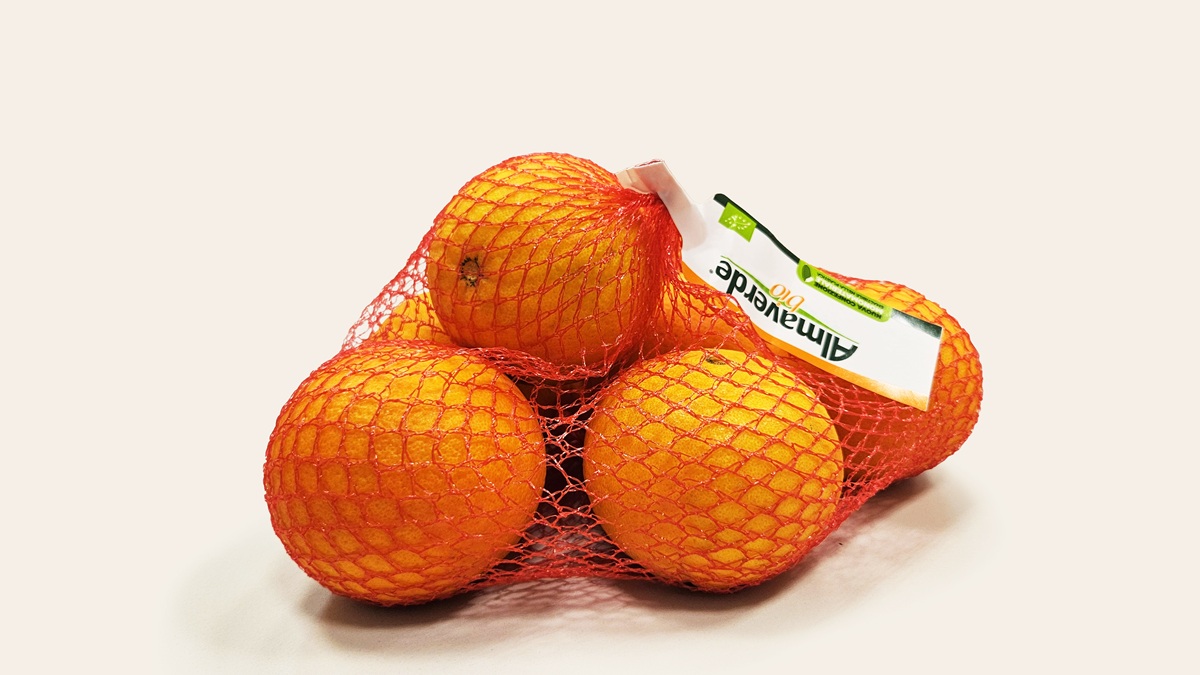
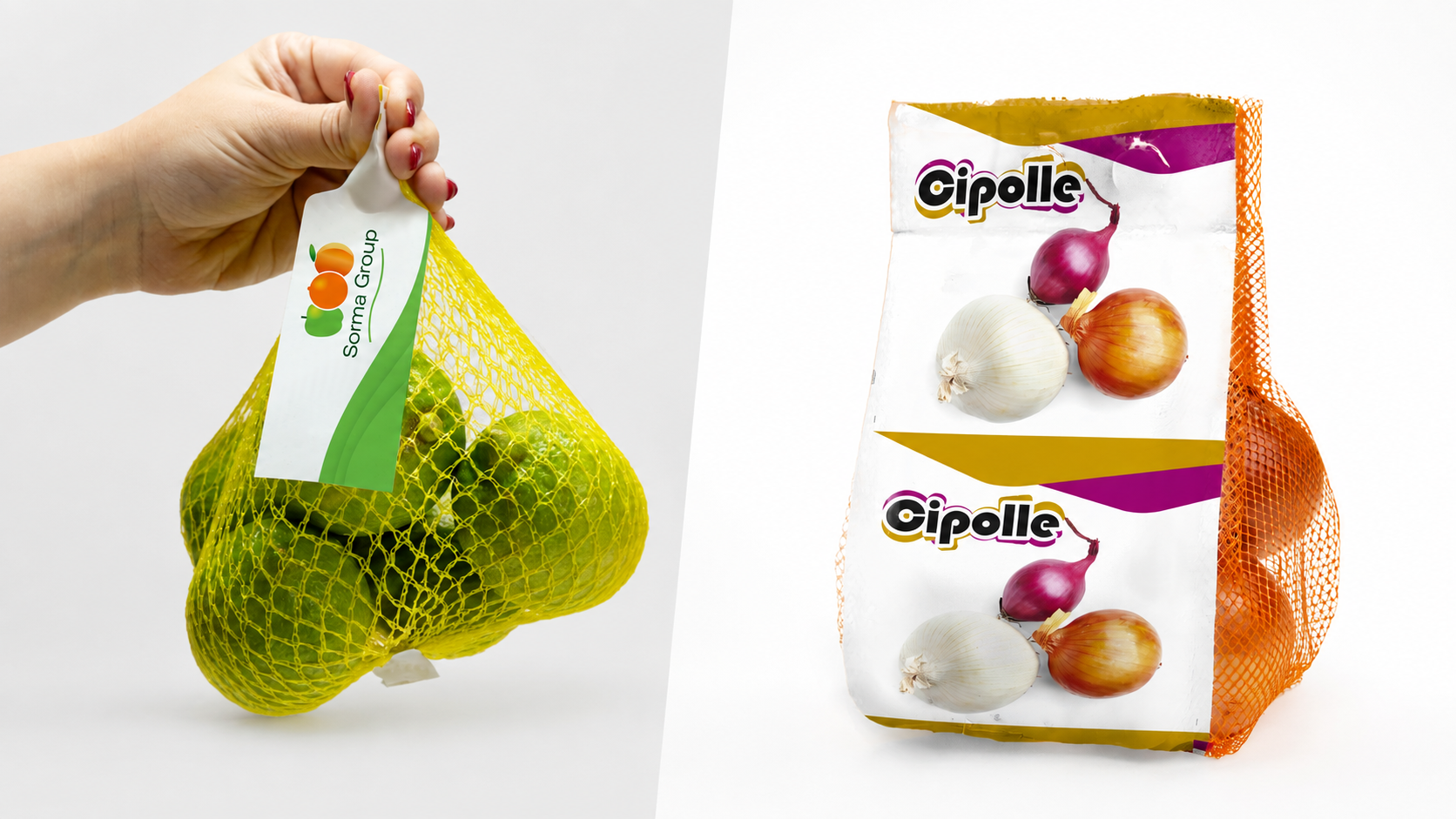
One of the most recent examples of innovation is Sorma Clipless, presented at the latest edition of Fruit Logistica. This mesh pack is made of HDPE2 polymer, both in its structure and in its label, and contains no staples. The use of a single material encourages responsible behaviour by the end consumer, allowing the entire pack to be disposed of in plastic without the need to separate its components. Clipless also combines sustainability with improved performance, streamlining the packaging process and ensuring greater resistance compared with traditional mesh packs.
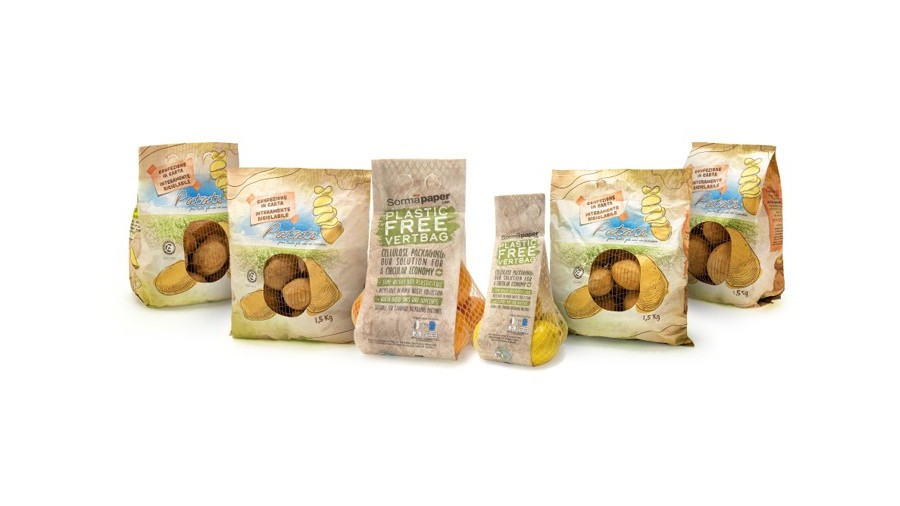
The group’s Research and Development department also works continuously on packaging engineering to reduce the weight and volume of packaging while maintaining its effectiveness. One example is the work carried out on Vertbag mesh, whose weight has been gradually reduced. It has gone from the initial 70-80 g/m² to the current 40 g/m², while the film thickness has been reduced from 70 to approximately 45 microns.
Materials research is also essential, through the progressive expansion of the use of cellulosic materials and recyclable plastics for nets and films, selected to improve sustainability without compromising the performance required during packaging, transport and shelf display.
Sorma Group already has a wide range of solutions developed according to these principles. The Research and Development department continues to work on materials and configurations capable of further increasing packaging sustainability while maintaining high standards of performance and reliability.
A challenge that goes beyond simple technologies
The challenge for fruit and vegetable producers is not only to find the right packaging, but also to comply with regulations in terms of production, organisation and bureaucracy. In these areas, Sorma Group’s unique capabilities allow the company to offer comprehensive and complete support.
One first issue concerns the costs of adapting production lines to meet the packaging requirements of the new regulation. In its innovations, Sorma focuses on the compatibility of new packaging with existing machinery, a practice that enables its partners to manage investments in innovation efficiently. Backward compatibility is a key design objective, as it allows for a gradual and economically sustainable transition, making use of existing investments and limiting the environmental impact of replacing lines.
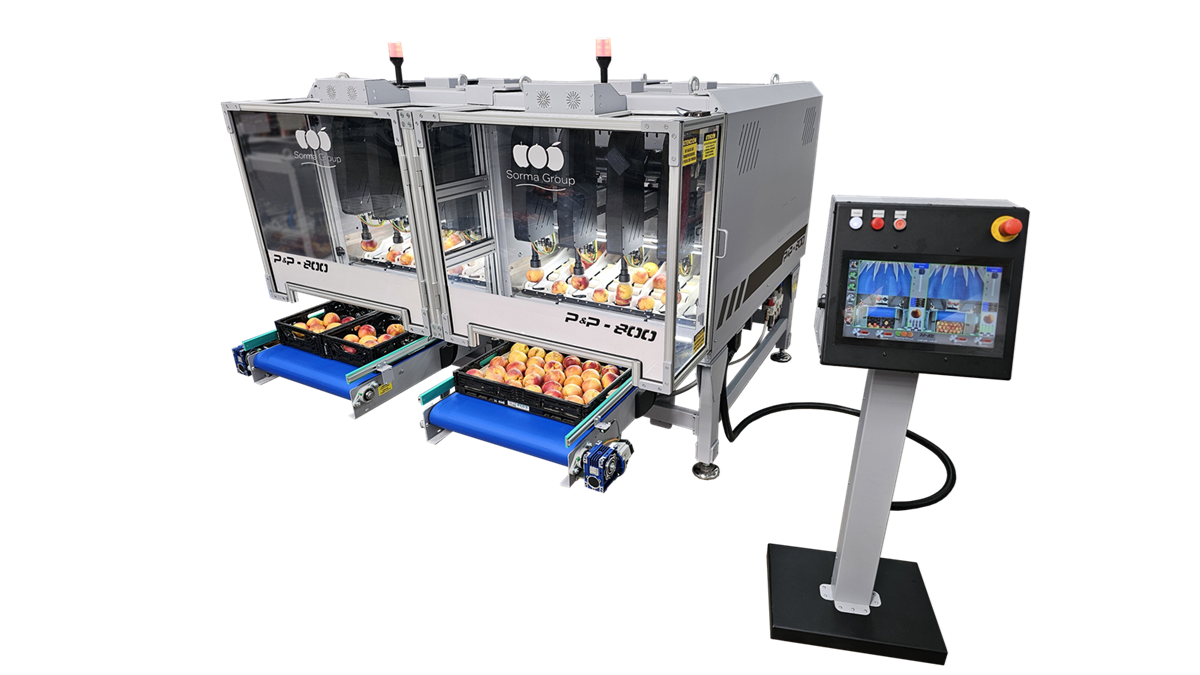
Bureaucratic requirements will also have a significant impact on company organisation, forcing businesses to generate new technical documentation and declarations of conformity. As an integrated technical partner —with a service covering machinery, packaging and labelling— Sorma represents a single point of contact for the collection of this material, simplifying the work of fruit and vegetable producers.
In an increasingly complex regulatory environment, understanding the entire packaging process enables faster compliance with the new regulations, reducing the risk of errors and meeting regulatory and market demands with greater confidence.
Fuente: Sorma Group
News of Sorma Group