News
Cold chain bottlenecks in long distance of pome fruit logistic
Delays in the initial cold chain stages, especially between weighbridge and pre-cooling and packhouse to re-cooling, are the primary drivers of fruit quality loss; hydrocooling is recommended as the fastest method to lower the pulp temperature
South Africa’s pome fruit industry serves over 60 international markets, competing with Chile, New Zealand, and the United States.
Inefficiencies in the beginning stages of South Africa’s pome fruit supply chain compromise competitiveness as global quality standards rise and consumers demand premium fruit with an extended shelf life.
This research identifies operational bottlenecks in the post-harvest handling and processing of pome fruit, focusing on
- temperature control,
- lead times, and
- infrastructure constraints.
A mixed-methods case study approach of Company X, combining on-site observations, semi-structured interviews, and analysis of Company X’s processing data.
Findings were triangulated with Hortgro and PPECB sources for validity.
Results indicate that prolonged ambient temperature exposure from packhouse processing bottlenecks resulted in increased fruit pulp temperatures, with congestion, inefficient practices, and poor communication exacerbating problems.
Pre-cooling proved most inefficient, with pulp temperatures averaging 1.9 °C (peak season: 3.2–3.5 °C), far exceeding the −0.5 °C industry standard required for international markets and resulting in a downgrade from Class 1 to Class 2 fruit.
This research identifies cold chain bottlenecks affecting South Africa’s global competitiveness.
Recommended solutions include
- hydrocooling,
- infrastructure upgrades, and
- enhanced stakeholder coordination
to strengthen the country’s position in international pome fruit markets.
Introduction
South Africa’s pome fruit industry ranks among the world’s leading apple and pear exporters, serving over 60 international markets and competing directly with major producing countries like Chile, New Zealand, and the United States.
This industry is critical to the country’s agricultural exports, employment, and economic growth. However, supply chain inefficiencies in the early stages compromise South Africa’s ability to maintain its competitive edge internationally, particularly as global quality standards continue to rise and consumers increasingly demand premium fruit with an extended shelf life.
South Africa (SA) is the leading fruit exporter in the Southern Hemisphere, contributing to approximately 36% of total fruit exports [1]. Deciduous fruit comprise a large percentage of these exports, with 72% of growth and production of pome fruit, i.e., apples and pears, concentrated in the Western Cape, where this study took place [2].
Despite their international relevance, the competitiveness of these commodities is increasingly constrained. Within a developing country such as SA, the infrastructure, technology, processes, and management skills within a cold chain display major inefficiencies [3,4].
It is further estimated that developing countries prescribe roughly 40% of their losses to inefficiencies found in the post-harvest and processing stages of the supply chain [5].
The physiological sensitivity of apples and pears to temperature and time is well established [6,7,8,9]. Apples and pears are extremely sensitive to temperature fluctuations in the 48 h following harvest.
Once harvested, the fruit continues to respire, necessitating rapid cooling to maintain quality. If pulp temperatures do not drop below 5 °C within 12–24 h after harvest, fruit respiration continues at a higher rate, reducing its firmness and overall shelf life [10].
Delays in the fruit reaching their optimal pulp temperature often result in the downgrading of fruit quality from Class 1 (required for export markets) to Class 2 (destined for local markets).
Limited research exists on the initial stages of the pome fruit supply chain, particularly the processing phase, which forms the focus of this study.
Pome fruit processing involves multiple sequential stages within processing facilities, influenced by interconnected factors, including handling practices, lead times, facility congestion, operational coordination, and cooling infrastructure.
This study conducts an in-depth analysis of Company X’s processing facility by systematically dividing the processing phase into four distinct stages:
- Weighbridge to Pre-cooling,
- Cold Storage to Packhouse,
- Packhouse to Re-cooling, and
- Re-cooling to Loading for Market.
While the research encompasses Company X’s overall fruit processing operations, particular emphasis is placed on the five highest-value apple and pear varieties based on monetary value and/or volume: Royal Gala, Golden Delicious, and Pink Lady apples, and Forelle and Packham’s Triumph pears.
Although cold chain research has highlighted operational inefficiencies in developed markets, limited studies within a developing-country context exist, particularly during the processing phase of pome fruit.
This study addresses this gap in the research by combining quantitative operational data with qualitative insights from observations and industry stakeholders:
- empirically, it provides one of the first systemic analyses of bottlenecks in South Africa’s pome fruit industry by linking operational processing challenges to impacts on fruit quality; and
- theoretically, it enhances supply chain resilience and perishable logistics literature by highlighting how infrastructure constraints and coordination inefficiencies influence outcomes in export-orientated agricultural countries.
Based on the identified gaps in the literature and the challenges experienced in South Africa’s pome fruit sector, this study aims to answer the following research questions (RQ):
- RQ1: How do lead times at key cold chain stages affect fruit temperature and firmness during handling and processing?
- RQ2: To what extent do pulp temperature variations effect the relationship between operational delays and fruit quality?
- RQ3: How does seasonality, especially during peak harvest periods, influence operational delays, temperature rises, and quality loss?
- RQ4: How can tracking firmness changes from fruit arrival to packing provide a practical way to monitor and improve cold chain performance at a pome fruit packhouse?
Contents
2. Research Design and Methodology
2.1. Research Design
2.2. Setting
2.3. Study Population and Sampling Strategy
2.4. Data Collection and Analysis
2.5. Strengths and Limitations of the Study
3. Literature Review
3.1. Cold Chain and Logistics Processes
3.2. Operational Factors and Best Practices Influencing Quality
3.3. Technological Innovations and International Practices
4. Results
4.1. Company X’s Market Overview
4.2. Key Insights from Key Company X Personnel
4.3. Lead Time Analyses per Cold Chain Stage
4.3.1. Weighbridge to Loaded-into-Pre-Cooling
4.3.2. Cold Storage/Pre-Cooling to Packhouse
4.3.3. Packhouse to Re-Cooling
4.4. Temperature Analyses per Cold Chain Stage
4.5. Logistical Operations Performed
4.6. Quality and Maturity Analyses
4.7. Inferential Analysis of Firmness, Temperature, Lead Times, and Seasonality
5. Discussion
5.1. Cold Chain Stages, Operations, and Lead Times
5.2. Fruit Temperature Profiles and Deviations
5.3. Fruit Maturity Index Changes
6. Implications and Recommendations
6.1. Theoretical Implications
Apart from the operational breakdowns observed at Company X, this study contributes to the cold chain literature in several ways.
First, it provides statistical confirmation of the cause-and-effect chain: delays leading to pulp temperature increases leading to firmness loss, extending previous findings [8,9,21], whilst supporting recent modelling studies that highlight time as the critical driver of temperature mismanagement [36].
Second, by identifying differences in firmness as a measurable indicator of quality loss at the processing facility, the study proposes a benchmarking metric across facilities and production seasons.
Lastly, the findings position Company X’s findings within broader industry debates on technology adoption.
Even though IoT, traceability, and predictive modelling show promise [33,34,35], the success of implementation is constrained when systemic bottlenecks at fruit intake and re-cooling are prevalent [32,37,38].
6.2. Practical Implications and Recommendations
To address the time–temperature inefficiencies identified across Company X’s cold chain, particularly during peak season, a series of targeted interventions are recommended to preserve fruit quality and maintain export standards.
First, specified lead time protocols should be established for all major cold chain stages, particularly between intake and pre-cooling, and from palletisation to re-cooling, reducing unnecessary delays exposing fruit to ambient conditions for extended periods.
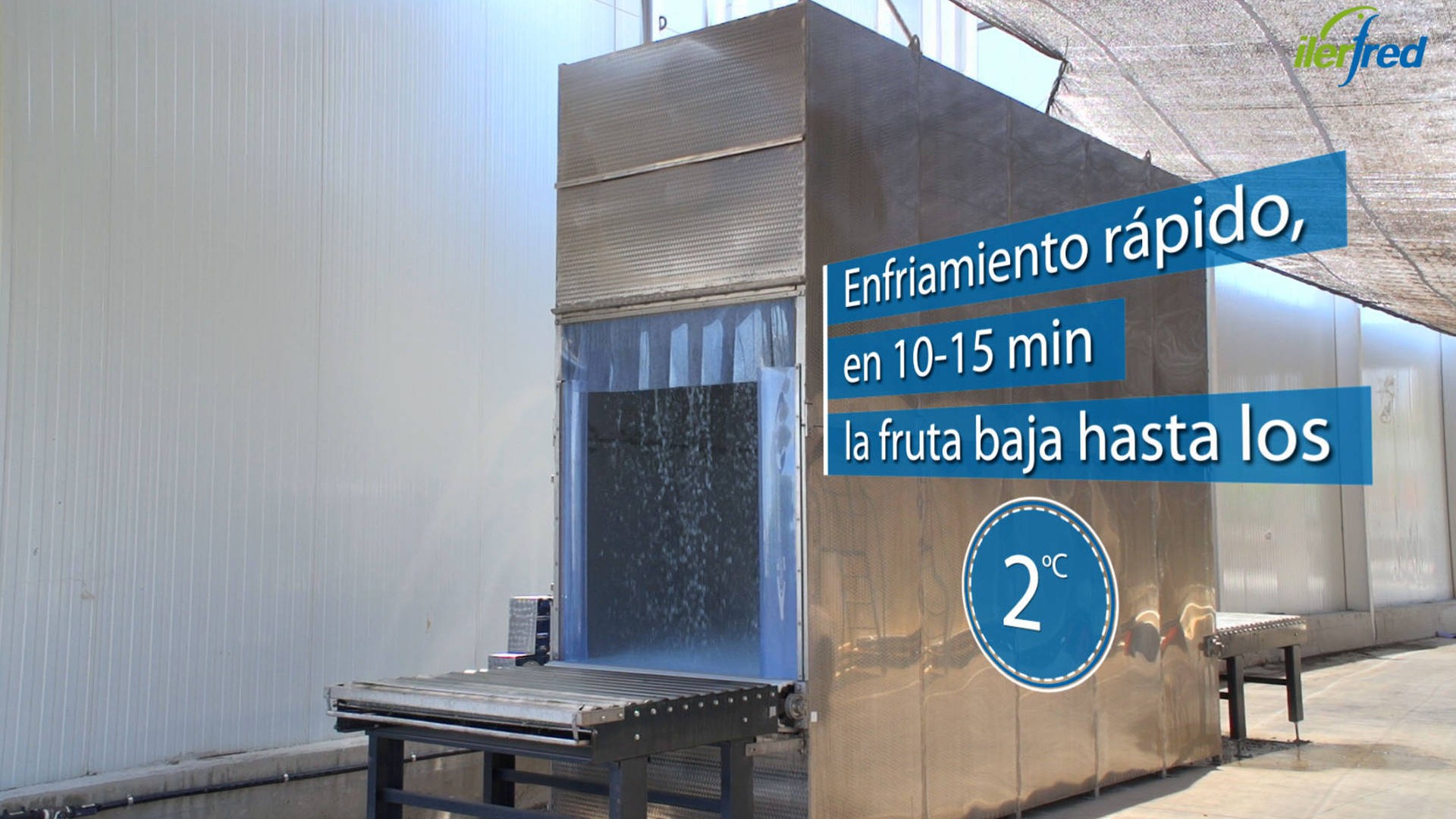
To enhance pre-cooling efficiency, it is recommended that hydro cooling be integrated with existing FAC, Forced-Air Cooling, infrastructure. Spraying bins with disinfected cold water before placing into pre-cooling can remove field heat significantly faster than FAC alone—up to 15 times faster—improving room humidity control, slowing respiration, and minimising firmness loss in sensitive cultivars such as Golden Delicious and Packham’s Triumph [21,25,26].
Due to high investment costs and financial constraints in the acquisition of cold storage capacity or higher-grade equipment, this option can address or compensate for certain infrastructure deficiencies [27].
For re-cooling of pallets, the installation of humidity sensors in RA rooms is strongly advised, as through regulating RH between the prescribed 85–95%, improved prevention of moisture loss and shrivelling can be achieved [14,17,27].
To improve cooling decision making, pulp temperature measurements should be taken at the weighbridge upon fruit arrival. Real-time data can enable proactive routing of warmer fruit to more efficient cooling rooms, improving operational flow and coordination.
Furthermore, Company X should expand temperature trials across all processing stages to enhance temperature visibility and traceability.
7. Conclusions and Research Opportunities
This study showed that delays in the initial cold chain stages, especially between weighbridge and pre-cooling and packhouse to re-cooling, are the primary drivers of fruit quality loss at Company X’s facility.
Triangulated analysis of operational data, interviews, and observational insights, further supported by inferential statistics, determined that prolonged lead times raised pulp temperatures, which in turn accelerated firmness decline during peak season congestion.
The ‘difference in firmness’ as a performance index
By introducing ‘difference in firmness’ as a performance index, the research provides managers with a simple tool to monitor onsite facility quality loss while contributing to broader discussions on cold chain resilience and technology adoption [8,9,21,32,33,34,35,36,37,38].
For South Africa’s pome fruit industry to sustain its global competitiveness, cold chain performance must become more resilient, responsive, and data driven. Following this, future research should extend the ‘difference in firmness’ benchmark across multiple facilities and harvests, integrating operational data with predictive modelling. In addition, research on how IoT monitoring and blockchain-related traceability can enhance managerial operations in resource-constrained environments could provide further insights into balancing technology adoption with systemic limitations.
Sources
Post-Harvest Cold Chain Efficiency in Pome Fruit Operations: Analysing Time and Process Bottlenecks
by Stefan Le Roux 1ORCID andLeila Louise Goedhals-Gerber
Logistics 2025, 9(4), 146; https://doi.org/10.3390/logistics9040146
https://www.mdpi.com/2305-6290/9/4/146
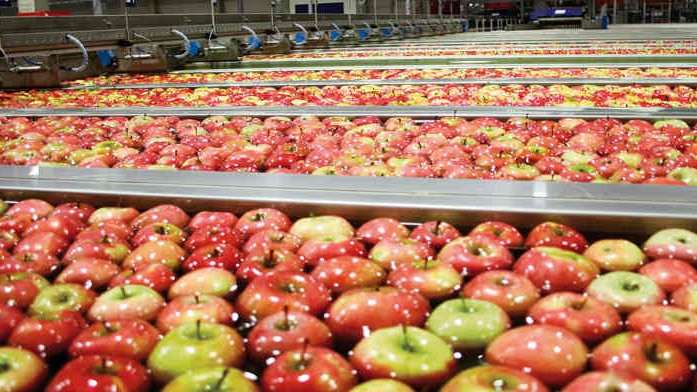
Picture, Ilerfred, Hydrocooling, The Ultimate Solution for Rapid and Efficient Cooling of Fruits and Vegetables
.png)