News
Nanotechnology options for potato production and potharvest improvement
Review by Ramasubramanian Sabarivasan et al. about potential of nanotechnology to improve potato productivity, stress resilience and postharvest quality
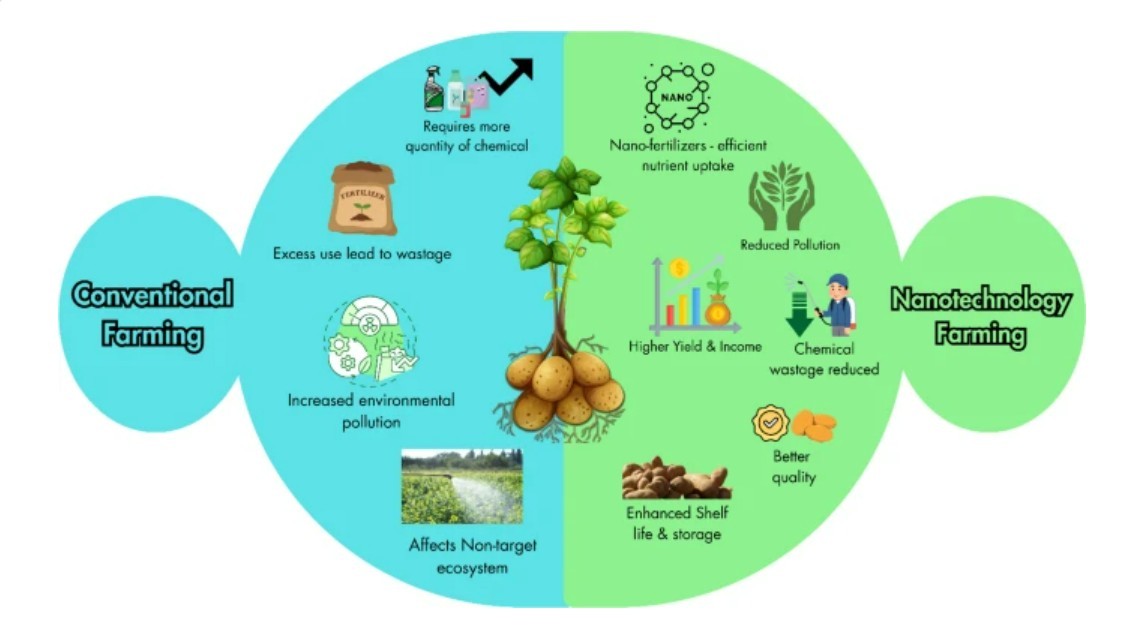
Potato (Solanum tuberosum L.) is the third most significant food crop in the world. Still, its yield is limited by climate change, soil erosion, ineffective use of agrochemicals, and multifaceted biotic and abiotic stresses.
Nanotechnology, with its unique physicochemical characteristics, is becoming a groundbreaking technology for sustainable crop management.
However, a comprehensive synthesis on its role in potato cultivation linking productivity, stress resilience, and post-harvest management remains limited, emphasizing the need for this review.
This review synthesizes the up-to-date developments in nanotechnology in potato production, such as
- nanofertilizers,
- nano-fungicides,
- nano-insecticides, and
- post-harvest quality improvement.
Evidence indicates that nanofertilizers improve nutrient uptake and tuber quality, while nanopesticides offer targeted, eco-friendly crop protection.
Post-harvest applications, such as nanomaterials for sprout suppression, smart packaging, and nanosensors, extend shelf life and maintain tuber quality.
Although these results are promising, they have not been widely adopted because of the lack of field-level validation, biosafety and environmental risks, high production costs, and unclear regulatory frameworks.
Coordinated research, farmer-focused extension, and policies to facilitate its safe, effective, and sustainable integration into potato-based agri-food systems, contributing to food security and the UN Sustainable Development Goals.
Sources
Nanotechnology Applications for Enhancing Potato Productivity, Stress Resilience, and Post-Harvest Quality
Ramasubramanian Sabarivasan, Selvam Christinal Infanta, Kanagaraj Srimathi, Greeshma Varghese, R Jeevanraj & Shanmugam Gokul
Springer Nature Link, Published: 18 December 2025
https://link.springer.com/article/10.1007/s12230-025-10035-5
Picture is the graphical abstract of the paper
.png)