
IRTA
Services
Epidemiology and infection dynamics of Geotrichum candidum in stone fruit orchards of the Ebro Valley
IRTA-affiliated scientists identify which pathogen habitually resides on soil or foliage, colonizing plantations and packing houses through contaminated water while resisting traditional fungicides
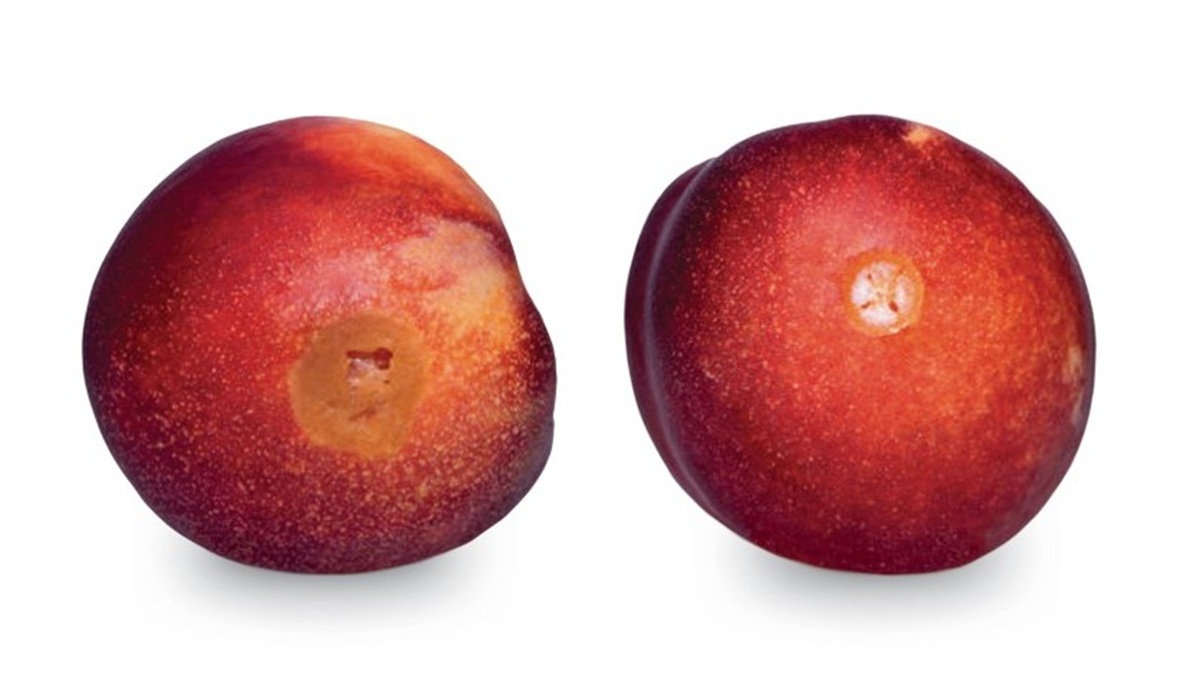
Stone fruit-producing areas in Spain have experienced severe outbreaks of sour rot, a disease that had not been reported before 2016. The main microorganism causing this condition is Geotrichum candidum. Symptoms include characteristic soft lesions of digested tissue appearing as a white layer of mycelial growth with a distinct sour odor. Currently, there are no effective authorized treatments for sour rot control in stone fruit.
This study documented the incidence of fruit affected by G. candidum under commercial conditions and its proportion compared to other major postharvest pathogens. Results confirmed Monilinia spp. as the primary pathogen, followed by Rhizopus spp. However, G. candidum was detected as a significant causal agent of fruit disease at all sampled packinghouses.
Inoculum sources of G. candidum were identified within packinghouse facilities, although no conidia were detected in air samples. When these sources were simulated, water samples showed an infection risk ranging from 7% to 21% in ‘Angeleno’ plums and up to 5% in ‘Tardibelle’ peaches. Regarding handling line surfaces, 21% of infected fruit was observed on healthy peaches following contact with contaminated areas.
In the field, all evaluated samples—including soil, leaves, and fruits—presented G. candidum inoculum. This evidence suggests that while the disease originates in the field, the most significant losses occur during the postharvest phase.
This study provides novel evidence that G. candidum is a causal agent of disease in the Ebro Valley and offers essential epidemiological knowledge to understand sour rot behavior, which is critical for developing sustainable control strategies.
Sector Importance and Traditional Pathogens
Spain produces 25% of Europe's 3.4 million tons of peaches and nectarines, with the Ebro Valley accounting for nearly 59% of the national total. Postharvest losses in this region are primarily driven by diseases, with brown rot, caused by Monilinia spp., being the most significant threat.
Traditionally, control strategies rely on chemical fungicides applied in the field and, in some cases, authorized postharvest treatments. Beside Monilinia, other secondary pathogens such as Rhizopus spp., Botrytis spp., and Penicillium spp. are commonly recognized as causes of postharvest loss.
The Rise of Sour Rot and Climate Influence
Over the last five to six years, the postharvest disease landscape in Spain has shifted.
The occurrence of Geotrichum candidum, responsible for sour rot, has increased significantly, particularly in the Ebro Valley and Extremadura. Under specific conditions, losses from sour rot can exceed those caused by the primary pathogen, Monilinia spp.
This shift is linked to rising global temperatures and relative humidity, which are key variables influencing infection. G. candidum thrives at an optimum temperature of around 30°C, which is higher than that of Monilinia. The pathogen utilizes pectinolytic enzymes to degrade fruit tissue during sorting and distribution.
Control Limitations and Current Management
There is limited information regarding effective products to control G. candidum in postharvest settings. Active ingredients like fludioxonil, widely used in Spain for stone fruit, are ineffective against sour rot.
Consequently, management depends on a holistic approach including optimal harvest practices, rigorous disinfection of facilities, and the maintenance of suitable ambient conditions during transport. The risk of infection is directly related to the conidial load on the fruit surface and prevailing environmental factors.
Inoculum Dynamics from Field to Packinghouse
Inoculum present on fruit surfaces can be rapidly spread within packinghouse facilities. While previous studies rarely identified G. candidum in these environments, the recent outbreaks necessitate a review of critical contamination points.
Although symptoms manifest postharvest, the inoculum originates in the field, where soil dust and rain act as primary dispersal vectors alongside insects like vinegar flies. The positive correlation between inoculum levels in the soil and those on leaves and fruit underscores the importance of field-level management.
About IRTA
IRTA (Institute of Agrifood Research and Technology) is a research institute dedicated to agrifood R&D+i in the fields of plant production, animal production, food industries, the environment, global change, and agrifood economics. The transfer of its scientific breakthroughs contributes to modernization, providing healthy, high-quality food to consumers while improving public well-being. IRTA is affiliated with the Ministry of Agriculture, Livestock, Fisheries and Food (DARPA) of the Government of Catalonia and is a member of the CERCA system.
Source:
C. Casals, P. Plaza, E. Zúñiga, R. Torres, M. Sisquella, N. Teixidó, J. Usall
Sour rot, an emerging postharvest disease on stone fruit in the Ebro Valley
Postharvest Biology and Technology, Volume 238,
https://doi.org/10.1016/j.postharvbio.2026.114353.
https://www.sciencedirect.com/science/article/pii/S0925521426002024
Image: IRTA
News of IRTA