
Kelvin Solutions
Measurements
How to prevent cold chain breaks in frozen fruit and vegetables
Continuous monitoring and real-time alerts make it possible to detect temperature deviations before they affect the quality of frozen fruit and vegetables
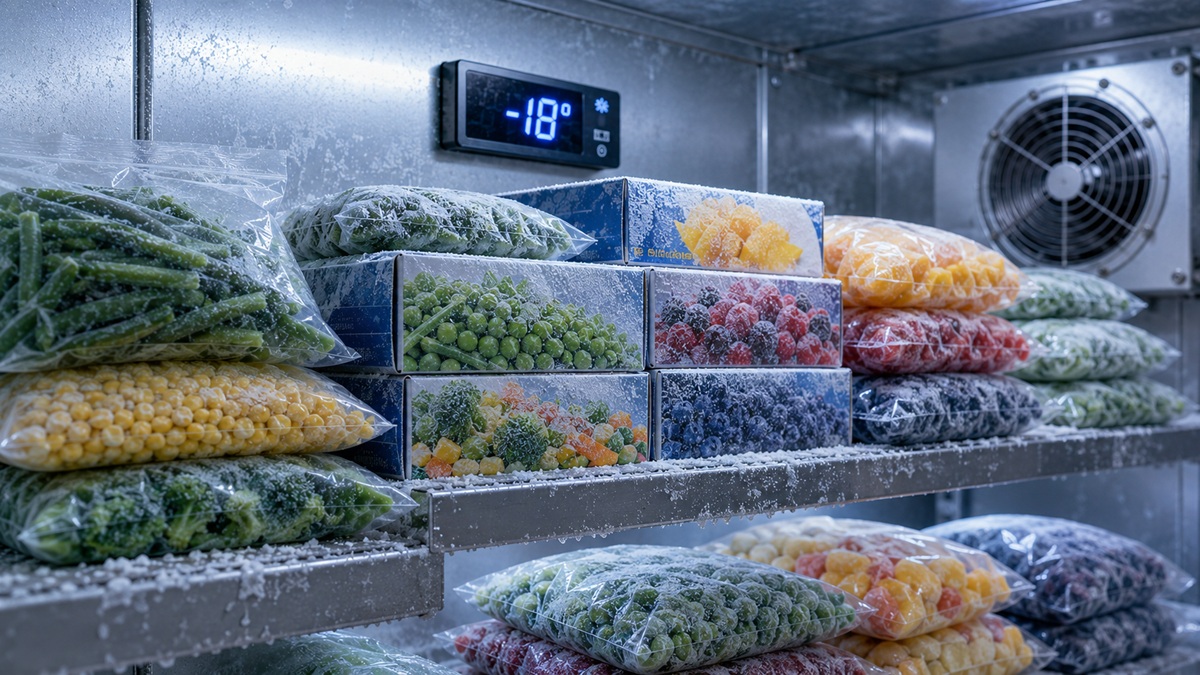
There is very little margin for temperature fluctuations in the logistics of frozen fruit and vegetables. Unlike chilled products, the frozen supply chain requires stable sub-zero temperatures to be maintained throughout every stage, from dispatch at the warehouse to reception at the point of sale or delivery to the consumer.
Even a brief interruption can cause partial melting followed by the growth of ice crystals. This recrystallisation process alters the internal structure of plant tissues and may affect product quality, although the damage is not always externally visible.
Why sub-zero temperatures require specific control
Chilled storage at temperatures between 0 and 8°C already requires suitable equipment and procedures. However, controlling frozen products below -18°C presents an additional challenge because of the greater difference between the ambient temperature and the target temperature.
A refrigeration equipment failure, a delay during transfer or an excessively long loading operation can cause the temperature to rise rapidly. The risk is particularly high during the warmer months and during operations in which products remain temporarily outside cold stores or refrigerated vehicles.
In the European Union, Directive 89/108/EEC establishes that the temperature of quick-frozen foodstuffs must remain stable and reach -18°C or lower at all points in the product. Brief fluctuations of up to 3°C are permitted during transport, meaning that temperatures may temporarily reach -15°C, provided that the conditions established by the legislation are met.
Regulation (EC) No 37/2005 also requires means of transport and premises used for the warehousing and storage of quick-frozen foodstuffs to be equipped with suitable instruments capable of recording, at frequent and regular intervals, the air temperature to which the products are exposed.
How temperature fluctuations affect plant tissues
The final quality of frozen fruit and vegetables is closely related to the formation and size of ice crystals. Rapid freezing processes promote the formation of smaller crystals, whereas slow freezing or subsequent temperature fluctuations can generate larger crystals.
These crystals can damage cell walls and membranes, reduce the tissue’s ability to retain water and cause loss of firmness or drip loss during thawing. Research into the freezing of fruit and vegetables highlights the control of nucleation, crystal growth and freezing rate as key factors in preserving product quality.
The consequences vary according to the species, variety, stage of maturity and previous processing. Not all fruit and vegetables respond in the same way, but plant tissues are particularly sensitive to the structural damage caused by ice formation and recrystallisation.
A study involving frozen strawberries subjected for four months to temperature cycles similar to those that may occur during distribution detected changes in several colour parameters and a reduction in ascorbic acid content. Samples that had not been exposed to these temperature abuses presented a better overall appearance.
Restoring the storage temperature after a deviation does not necessarily reverse the changes that have already occurred. The product may once again be stored below -18°C and still appear frozen, even though its internal structure has already been affected.
The four highest-risk points in the logistics chain
The loading bay is one of the main critical points. Every minute spent between the frozen storage room and the refrigerated vehicle exposes the product to a higher temperature. An incorrectly sized loading bay, the absence of temperature-controlled areas or an excessively slow loading operation can cause repeated deviations.
Multi-temperature transport creates an additional challenge. The same vehicle may carry frozen and chilled products in separate compartments. Managing different temperature zones simultaneously, together with the opening of doors during deliveries, increases the risk of warm air entering the vehicle.
Reception at distribution centres and retail outlets also requires careful attention. Unloading areas are not always refrigerated, and a consignment may remain at ambient temperature for several minutes before being transferred to the appropriate cold store.
The last mile is another particularly vulnerable link, especially in e-commerce and home delivery. Urban delivery vehicles may be opened many times during a route, and each opening allows outside air to enter the load compartment.
Other risk points include transhipments, waiting periods at logistics platforms, changes of vehicle and any operation in which the product temporarily leaves a temperature-controlled environment.
Identifying and controlling risk areas
Managing the frozen supply chain begins with identifying the stages at which temperatures may rise. Loading bays, transfer points, reception areas, vehicles and delivery points should be assessed to determine how long products remain exposed and which measures can be implemented.
Reducing handling times, improving coordination between warehouses and carriers, pre-cooling vehicles and correctly separating compartments all help to limit temperature deviations. However, these measures should be supported by recording systems that make it possible to verify what happened throughout the journey.
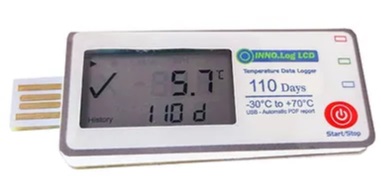
A data logger placed in each consignment provides a complete temperature history from dispatch at the warehouse to final reception. Without these data, it is difficult to demonstrate that the cold chain has been maintained or to identify when an incident occurred.
Continuous recording and real-time alerts
Continuous recording makes it possible to determine the duration and extent of a temperature deviation, rather than relying solely on a single measurement taken at the time of delivery. A correct temperature reading upon reception does not, by itself, prove that the temperature remained stable throughout transport.
For sensitive or high-value shipments, connected systems provide the additional possibility of receiving real-time alerts. This allows action to be taken before the situation becomes irreversible, such as checking the refrigeration equipment, repositioning the load, reducing waiting times or accelerating delivery.
Complete, time-stamped records also provide traceability during inspections, claims or disputes between operators. The documentation makes it possible to verify the actual transport conditions and helps determine responsibility when an incident occurs.
Kelvin Solutions systems for frozen products
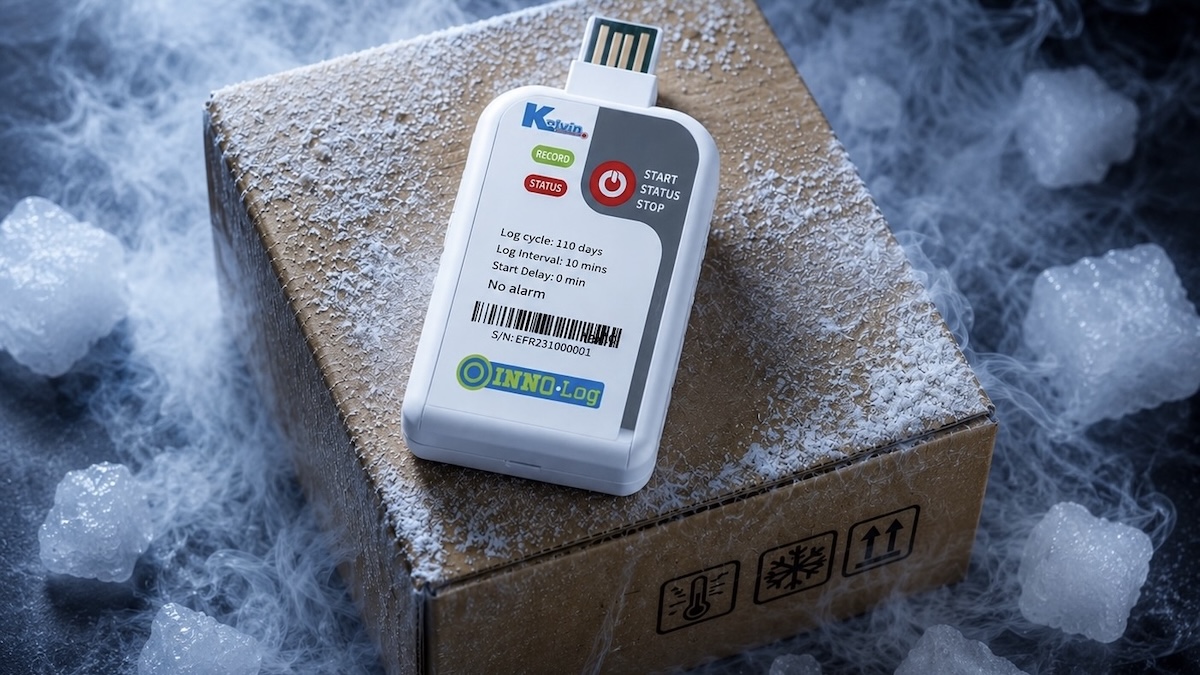
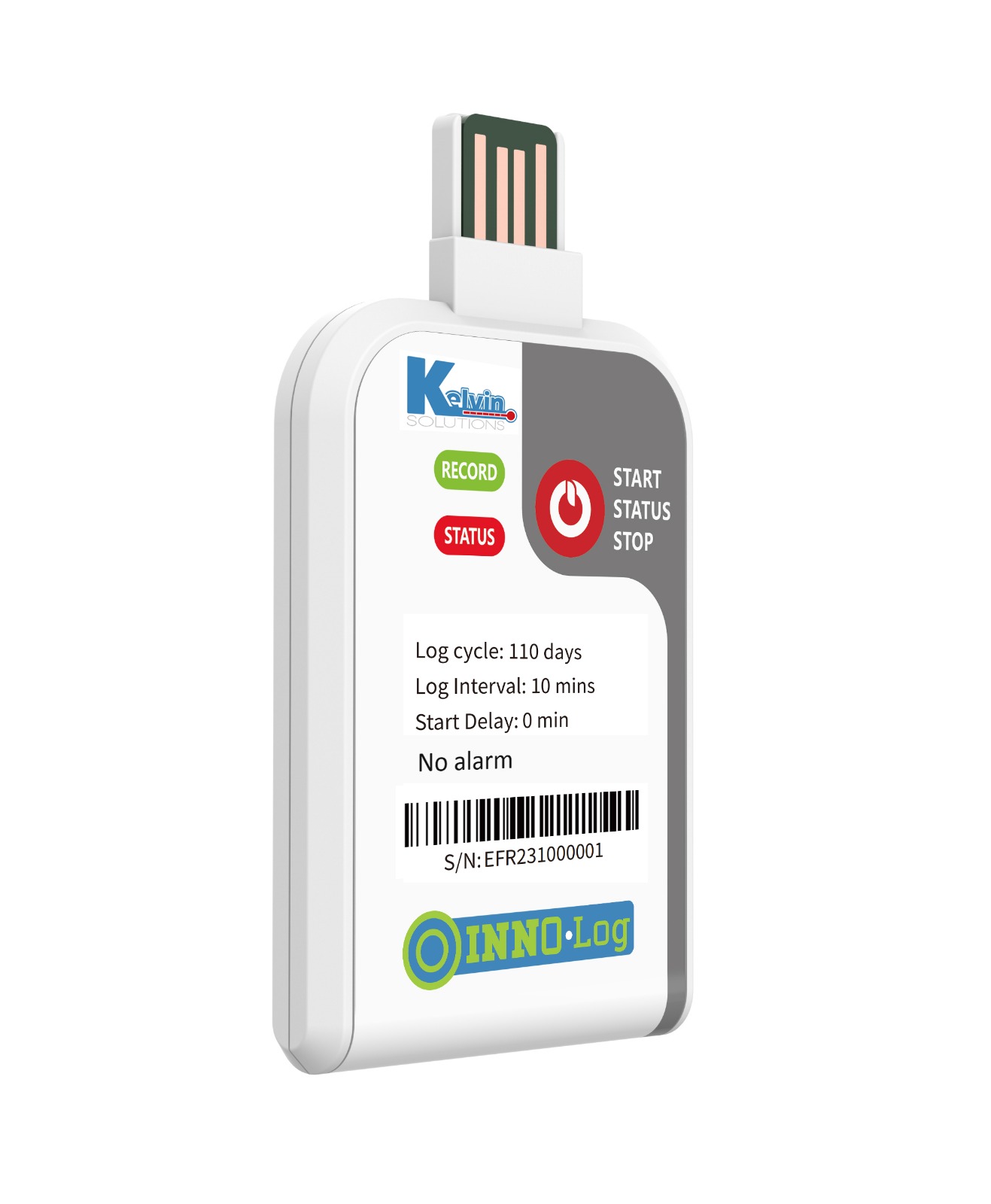
Kelvin Solutions offers Innolog™ Pro for recording the temperature conditions of frozen shipments. The device can store up to 16,000 measurements and automatically generates a PDF report when connected via USB, allowing users to review the temperature history, recorded readings and any alarms.
Its compact format means that it can be placed in different types of loads, from industrial pallets to shipments intended for home delivery. It can therefore accompany the product throughout the different storage and distribution stages.
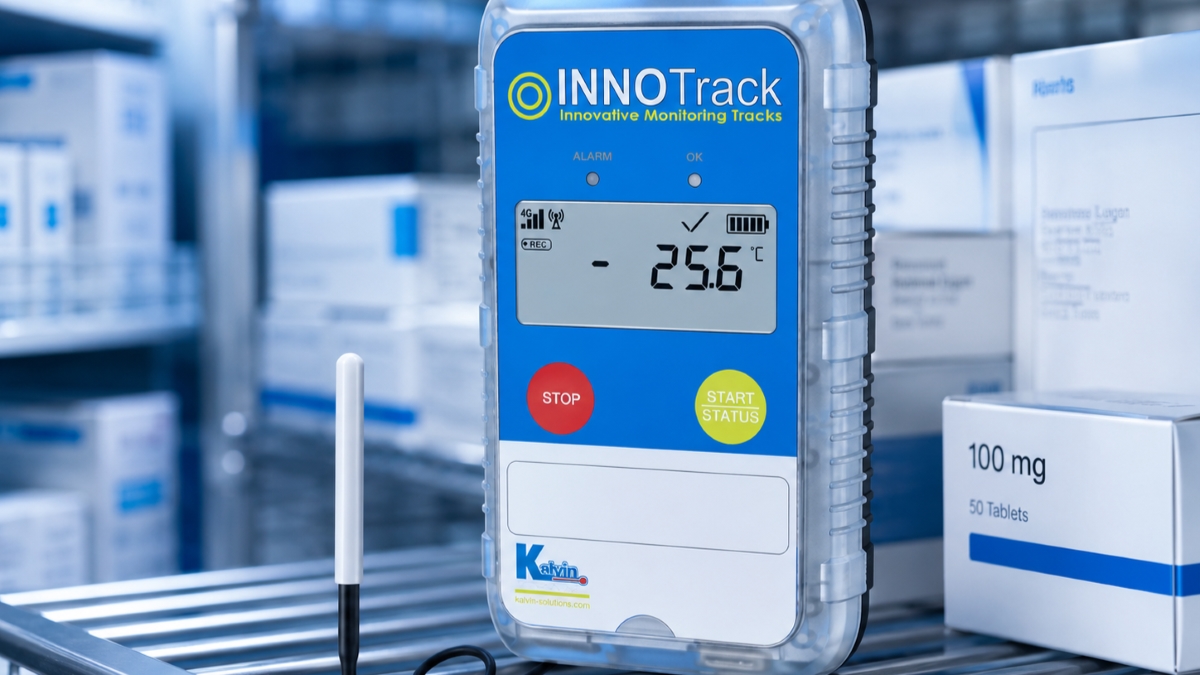
For operations that require access to information before the shipment reaches its destination, Innotrack™ provides real-time monitoring, shipment location, access to data through a cloud-based platform and SMS and email alerts when a deviation is detected.
Combining continuous recording with real-time alerts makes it possible to move from retrospective action to preventive management. In the logistics of frozen fruit and vegetables, having access to information during transport can help correct an incident before it irreversibly affects product quality.
Sources
Kelvin Solutions. "Frozen foods: the logistical challenges of sub-zero temperatures".
European Union. Directive 89/108/EEC on quick-frozen foodstuffs intended for human consumption.
European Union. Regulation (EC) No 37/2005 on the monitoring of temperatures during the transport and storage of quick-frozen foodstuffs.
Grover, Y. and Negi, P. S. "Recent developments in freezing of fruits and vegetables: Striving for controlled ice nucleation and crystallization with enhanced freezing rates". Journal of Food Science, 2023.
Cruz, R. M. S. et al. "The impact of cold chain temperature abuses on the quality of frozen strawberries (Fragaria × ananassa)". International Journal of Food Studies.
News of Kelvin Solutions