
Maf Roda
Conditioning
Robots in stone fruit packing: automation already shaping postharvest competitiveness
MAF RODA drives more efficient and stable packing lines in response to labour shortages with robotic systems using machine vision for cell trays
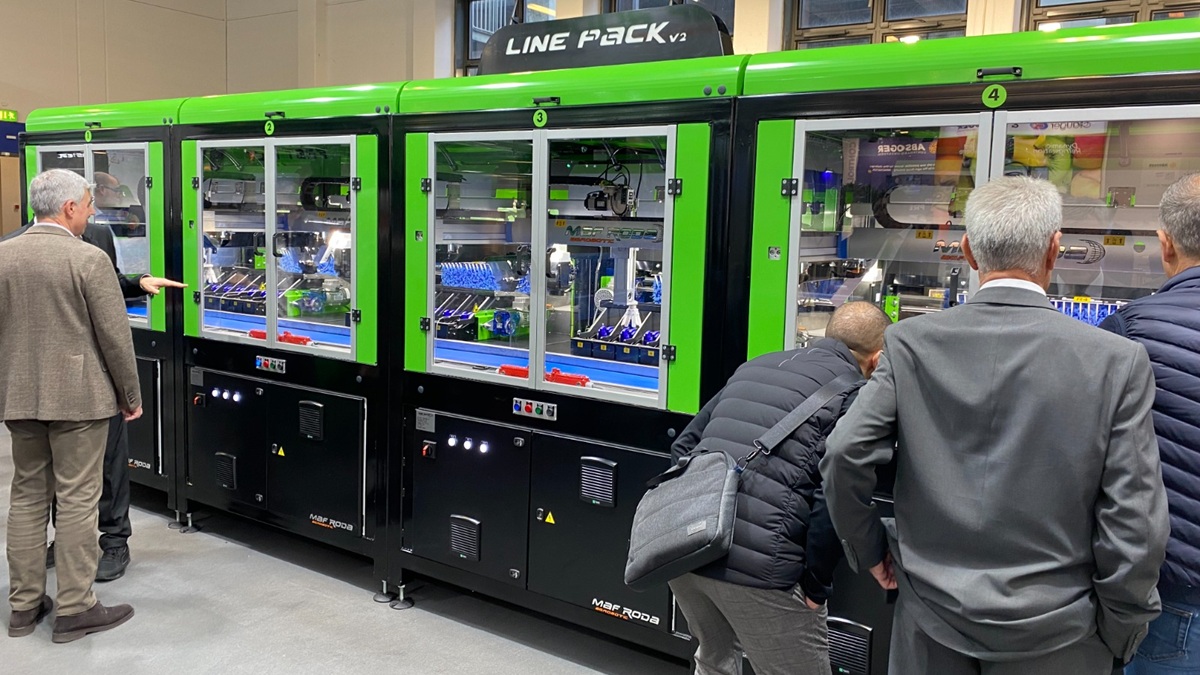
Labour shortages and the need to maintain high production rates are accelerating automation in fruit and vegetable packing houses. In this context, the integration of machine vision and robotics makes it possible to standardise fruit orientation criteria, reduce repetitive errors and maintain high throughput without depending on seasonal hiring peaks.
The objective is clear: for every peach or nectarine to reach the package with its most marketable side visible, with uniform placement and with a stable line flow even during peak activity periods.
Fast Pack, compact and flexible
Against this backdrop, MAF RODA is strengthening its R&D strategy with robotic solutions specifically designed to automate packing into cell trays. The company offers two approaches, Fast Pack and Line Pack, aimed at different packing house realities — available space, required capacity and format flexibility — while sharing the same objective: gaining efficiency without compromising presentation.
Fast Pack stands out for its compact design, a particularly valued feature where operating space is limited. The system packs fruit into boxes with cell trays and orients each piece according to predefined parameters, using machine vision to immediately identify the most suitable side and place it in the required position.
This combination of precision and speed helps maintain high working capacities, minimise operator-related variations and standardise product appearance at the point of sale. In addition, box format changes can be carried out quickly, providing flexibility when alternating packaging formats.
Line Pack for higher capacities
For facilities seeking a step up in capacity, Line Pack is based on the coordination of several delta robots, typically six per line, a technology already proven in other segments such as apples and now adapted to the specific requirements of stone fruit.
Machine vision analyses the full surface of each fruit, selects the most marketable side and positions it correctly in the cell tray. The simultaneous operation of the robots makes it possible to replace hard-to-cover manual tasks and sustain high production rates consistently, a key factor in meeting shipping programmes and maintaining presentation quality batch after batch.
Automation to sustain profitability
Robotics has become an essential component in fruit and vegetable packing houses and, in the case of stone fruit, its impact is especially visible in packing: a historically manual stage where presentation uniformity, speed and gentle handling determine commercial results. Today, with structural labour shortages and increasingly demanding campaigns, automation is no longer a future strategic option, but a condition for sustaining competitiveness and ensuring production continuity.
Beyond speed, the key value of these solutions lies in consistency: always orienting fruit according to the same criteria, reducing unnecessary handling and maintaining uniform packing that increases perceived value. For packing houses, robotics also provides resilience: helping sustain production when labour is scarce, absorb peaks in incoming fruit and plan operations more reliably. In the race for postharvest efficiency, packing automation is becoming one of the points where campaign profitability is decided.
The transition towards highly automated facilities is already a reality in the sector and is advancing in line with labour availability and market quality demands. With Fast Pack and Line Pack, MAF RODA focuses on one of the critical points of postharvest stone fruit handling, packing, and proposes practical robotics designed to produce more and better, with packaging flexibility and final presentation aligned with retail requirements.
News of Maf Roda