News
Melatonin: Sustainable Solution for Fresh Produce Quality
Botanical messenger regulates biochemical pathways improving commercial durability via redox balance
Melatonin has transcended its traditional role in the animal kingdom to position itself as a decisive factor in modern plant biotechnology. Its application represents one of the most innovative and environmentally friendly strategies to address the natural deterioration of products after harvest.
By acting as a master regulator, this molecule allows for the optimization of food freshness and nutritional value without resorting to aggressive synthetic treatments, thus responding to the demands of a global market increasingly conscious of health and sustainability.
Biological regulation and sustainable management
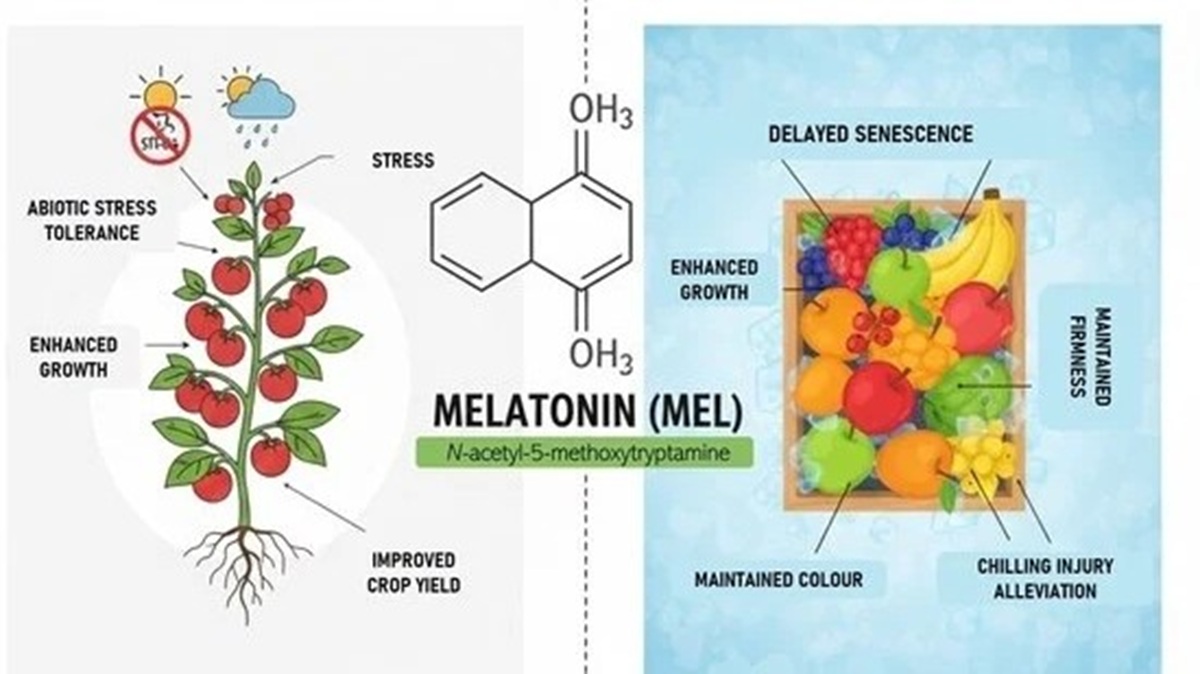
Melatonin (MEL), also known as N-acetyl-5-methoxytryptamine, has been reported in plants as a secondary messenger involved in regulating abiotic stress responses. MEL treatment, either preharvest or postharvest, regulates several physiological and biochemical processes during fruit growth and ripening in horticultural products. These include reproductive development, tissue and quality maintenance, delayed senescence, and responses to abiotic stress. Due to its natural origin, low toxicity, and multifunctional regulatory capacity, MEL has recently attracted attention as a promising ‘green preservative’ for sustainable postharvest management.
Mechanisms of action and quality maintenance
MEL coordinates through cross-talk with other plant hormones, such as abscisic acid, ethylene, polyamines, jasmmonic acid, γ-aminobutyric acid, salicylic acid, and nitric oxide, to regulate postharvest ripening and senescence. Furthermore, MEL enhances antioxidant systems and improves membrane integrity, thereby alleviating chilling injury and enhancing fruit firmness and colour.
Notably, recent evidence highlights the innovative regulatory mechanisms of MEL involving redox homeostasis, hormone signalling reprogramming, and transcriptional modulation of stress-responsive pathways. MEL could therefore be considered an emerging, eco-friendly tool for prolonging the shelf-life of fruit and vegetables and maintaining their quality.
Source
Pedro Antonio Padilla-González, Fernando Garrido-Auñón, María Emma García-Pastor, Fabián Guillén, María Serrano, Daniel Valero and Vicente Agulló
Melatonin as a Pre- and Postharvest Tool for Enhancing Fruit Quality, Plants 2026, 15(2), 331
https://www.mdpi.com/2223-7747/15/2/331
https://doi.org/10.3390/plants15020331
Related news