Hormonal networks comprising auxins, gibberellins, cytokinins, abscisic acid, ethylene, salicylic acid, and jasmonates regulate fruit growth, ripening, and post-harvest behavior. Increasing evidence indicates that plant-associated microbiomes, including rhizospheric, phyllospheric, and endophytic communities, significantly influence these networks by synthesizing phytohormones, regulating enzymes, and producing volatile compounds.
The microbial synthesis of indole-3-acetic acid (IAA) facilitates fruit development, whereas 1-aminocyclopropane-1-carboxylate (ACC) deaminase reduces stress-induced ethylene accumulation, therefore delaying senescence and extending shelf life.
Comparative analyses of climacteric and non-climacteric fruits reveal that microbial manipulation of ethylene can provide effects similar to pharmacological inhibitors such as 1-methylcyclopropene (1-MCP) or controlled storage methods.
Besides imitating hormones, microbial volatile organic compounds (VOCs) enhance systemic resistance, maintain antioxidant reserves, and safeguard crops post-harvest without leaving residues. Recent advancements in multi-omics have elucidated the influence of microbial metabolites on hormone-responsive transcription, metabolism, and signaling throughout critical developmental stages.
These mechanistic insights facilitate the rational development of SynComs that integrate hormone-modulating characteristics with VOCs synthesis. This article addressed the particular methods for enhancing fruit yield, nutritional quality, and stress resilience through the utilization of microbe-hormone interactions. It analyses crucial microbial intervention sites in hormonal processes, compares them to traditional approaches, and suggests climate-smart horticulture-aligned translational solutions.
Microorganisms associated with plants as hormone regulators in fruit development anda perservation
A complex network of phytohormones, including auxins, gibberellins (GAs), cytokinins, abscisic acid (ABA), ethylene (ET), salicylic acid (SA), and jasmonates (JA), controls fruit development, ripening, and postharvest physiology (Xiang et al., 2021, Mwelase et al., 2024). Auxins and GAs control the beginning of fruit and the early stages of growth, ABA is very important for sugar accumulation and colour development, and ET is the main hormone that controls the ripening of climacteric fruit (Kou et al., 2021).
These hormones operate through interconnected and dynamic signaling networks that establish developmental thresholds governing fruit softening, pigmentation, aroma biosynthesis, and senescence. Ethylene is a key integrator of these processes (Fenn and Giovannoni, 2021, Tipu and Sherif, 2024).
Influence of microorganims on hormonal regulation
Recent research indicates that this hormonal circuitry is not just plant-driven but is significantly affected by plant-associated microbes (Upadhyay, 2025). Microorganisms residing in the rhizosphere, phyllosphere, and endosphere have the capability to produce, degrade, or modify phytohormones, so directly influencing the physiology of the host fruit.
Numerous plant growth-promoting bacteria (PGPB) and endophytes synthesize indole-3-acetic acid (IAA), which facilitates fruit development and increases sink strength (Fenn and Giovannoni, 2021). Simultaneously, a specific group of bacteria produces 1-aminocyclopropane-1-carboxylate (ACC) deaminase, which breaks down the ET precursor ACC, thereby reducing the production of ET that happens when plants are under stress (Naing et al., 2021).
Effects on ripering and post-harvest life
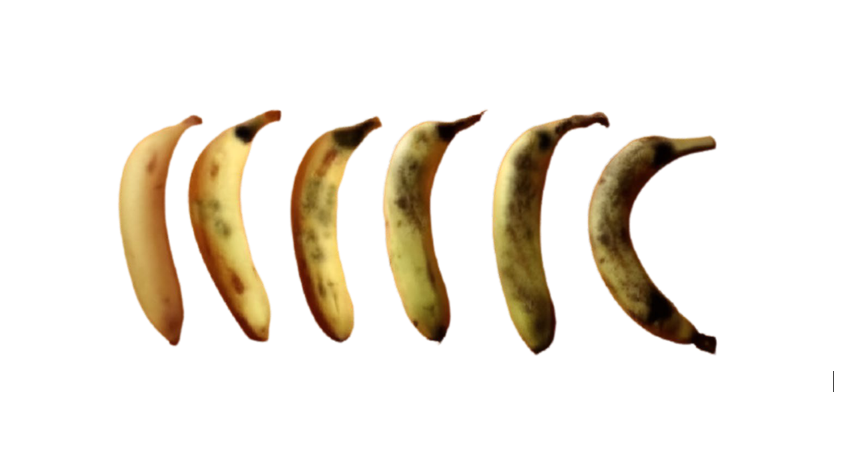
This microbial control of ET has been consistently associated with delayed ripening, reduced senescence, and prolonged shelf life (Figueroa et al., 2021, Kou et al., 2021, Xiang et al., 2021).
Experimental research from several fruit systems corroborates these pathways. In tomato, inoculation with ACC deaminase-producing bacteria postponed the climacteric ET-peak to values similar to those attained by 1-methylcyclopropene (1-MCP), a commonly used synthetic ET inhibitor (Gamrasni et al., 2020, Vittani et al., 2023). Similar results have been seen in banana, mango, and melon, where microbial treatments-maintained fruit firmness and extended postharvest shelf life (Zaman et al., 2025).
Other microbial mechanisms and biocontrol
The reversal of these effects after the introduction of exogenous-ET substantiates the direct participation of microbial activity in ET-signaling pathways.
In addition to modulating-ET, endophytes that can make cytokinins, control SA/JA signaling, or release volatile organic compounds (VOCs) help with systemic resistance, keeping antioxidants stable, and stabilizing pigments (Ravanbakhsh et al., 2018).
In strawberries and tomatoes, these endophytes maintain photosynthetic efficiency and firmness after harvest while stopping fungal infections (Huang et al., 2021). Microbial VOCs have therefore emerged as potential residue-free postharvest biocontrol agents, providing disease reduction without chemical buildup (Ling et al., 2023).
Integrated model and applications
These data together endorse a systems-level model of fruit resilience that incorporates endogenous hormone control, microbe-mediated modulation of hormone flow, and postharvest therapies aimed at common regulatory nodes. Microbial ACC deaminase serves as a biological equivalent of 1-MCP, with the additional benefit of preharvest administration that ensures protection throughout storage (Paul and Pandey, 2017).
Additionally, microbial modulation of hormone-defense crosstalk reduces the weaknesses that come with cuticle thinning and cell wall breakdown during ripening (Li et al., 2024a).
Sustainable perspective and future challenges
From a sustainability standpoint, fruit-processing by-products such as tomato pomace and strawberry residues serve as underutilized sources of beneficial microbes, proficient in phytohormone modulation and biocontrol, thus integrating fruit biotechnology with circular bioeconomy principles (Ahmed et al., 2023). Although there have been significant improvements in hormone biology and microbial biotechnology, the incorporation of microbe-driven hormone regulation into climate-smart fruit production systems is still not well understood (Albasri and Mawad., 2024). Presently, postharvest management mostly depends on synthetic inhibitors (e.g., 1-MCP), cold storage, and fungicides, which are expensive, energy-intensive, and ecologically unsustainable.
There is still a substantial vacuum in our understanding on how microbial phytohormone regulation affects fruit yield stability, postharvest quality, and stress resistance in changing weather circumstances. To lower worldwide postharvest losses, which may be as high as 30–40% of harvested fruits, and to provide eco-friendly, residue-free options for fruit supply chains, this gap must be filled. This study presents the first thorough synthesis of microbial metabolite-fruit hormone interactions throughout both developmental (fruit set, growth, ripening) and postharvest (shelf life, disease suppression, quality maintenance) stages. We propose a unified framework that highlights the following: synergistic interactions between ACC deaminase and IAA in stress ET suppression and fruit development, microbial-ET regulation in comparison with chemical inhibitors and storage technologies, VOC-mediated residue-free biocontrol strategies, and the rational design of synthetic microbial communities (SynComs) tailored for climate-smart fruit systems (Marin et al., 2021). This is different from previous reviews that looked at preharvest and postharvest processes separately.
This review connects basic hormone biology with practical advances for yield security, postharvest resilience, and sustainable food systems by combining the creation of microbial inoculants with the use of sustainable resources, such turning fruit-processing waste into useful goods.
This review aims to recognize essential junctures where microbial metabolites intersect with fruit hormonal pathways, assess the effects of IAA- and ACC deaminase-producing microbes on climacteric and non-climacteric fruits, contrast microbial ethylene regulation with chemical and storage-based methodologies, and suggest design principles for SynComs, encompassing trait prioritization, application strategies, and the integration of VOCs as residue-free postharvest instruments.
Sources
Sudhir Kumar Upadhyay, Phytohormone-microbial nexus targeting-next-generation strategy for fruit growth and postharvest resilience, Plant Science, Volume 367, 2026, 113098, ISSN 0168-9452,
https://doi.org/10.1016/j.plantsci.2026.113098
image: Pixabay https://pixabay.com/es/photos/molde-molde-de-fruta-podrido-decaer-6887246/