
Moelco Levante
Cooling and CA
Vacuum and cold, two complementary stages to protect postharvest quality
Moelco Levante proposes thermal management based on combining rapid pre-cooling, refrigerated storage and technical maintenance to reduce losses in fresh produce
In postharvest, vacuum and cold do not perform the same function, although they are part of the same conservation strategy. Drawing on its experience in Vacuum Cooler solutions and industrial refrigeration, Moelco Levante highlights the importance of distinguishing between both stages: vacuum cooling allows the product temperature to be lowered quickly after harvest, while refrigeration maintains that temperature during storage, handling and transport.
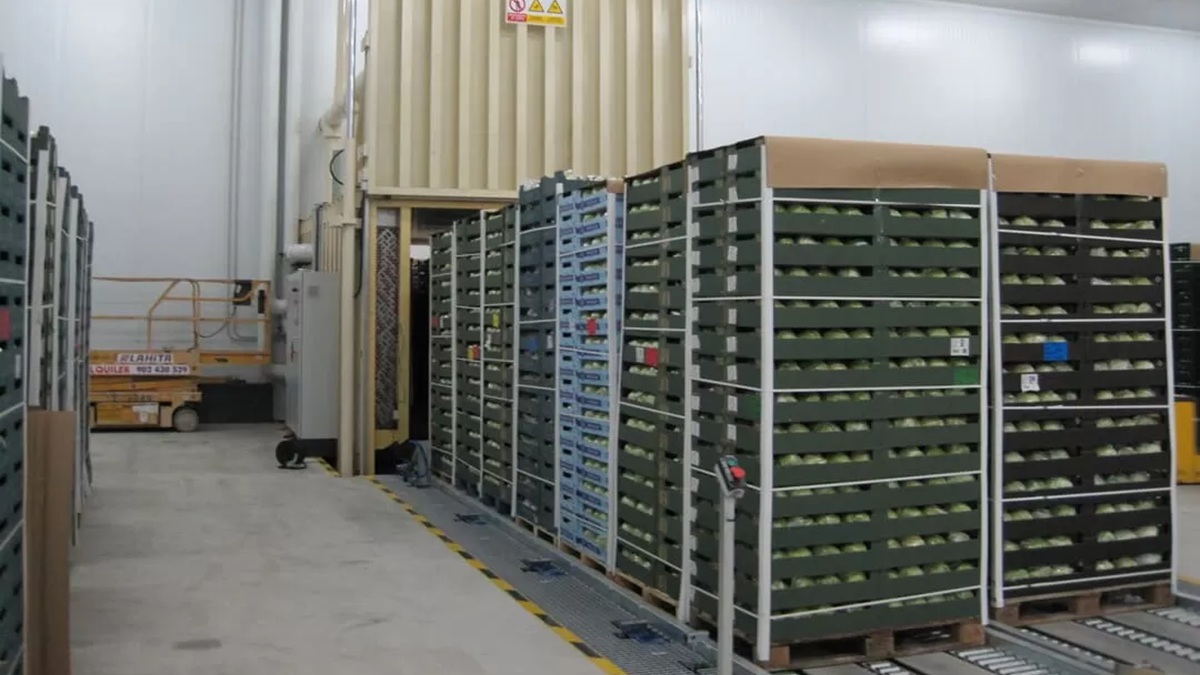
When produce arrives warm at the packinghouse, every minute of waiting increases the thermal load that the installation must absorb and can affect the subsequent behaviour of the lot. In this context, vacuum pre-cooling acts as a first stage designed to remove field heat quickly and uniformly, before the cold room takes over its conservation role. The combination of both technologies allows facilities to work with less pressure on cold rooms, greater thermal stability and a more orderly response during intake peaks.
Vacuum lowers the temperature, cold maintains it
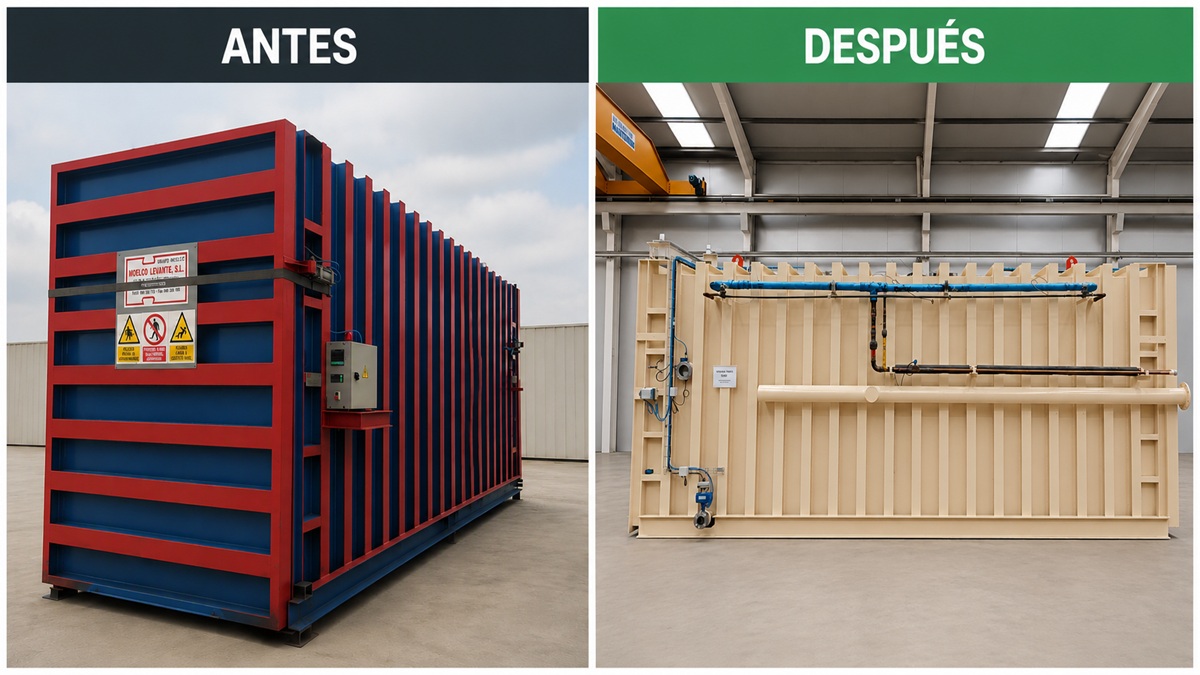
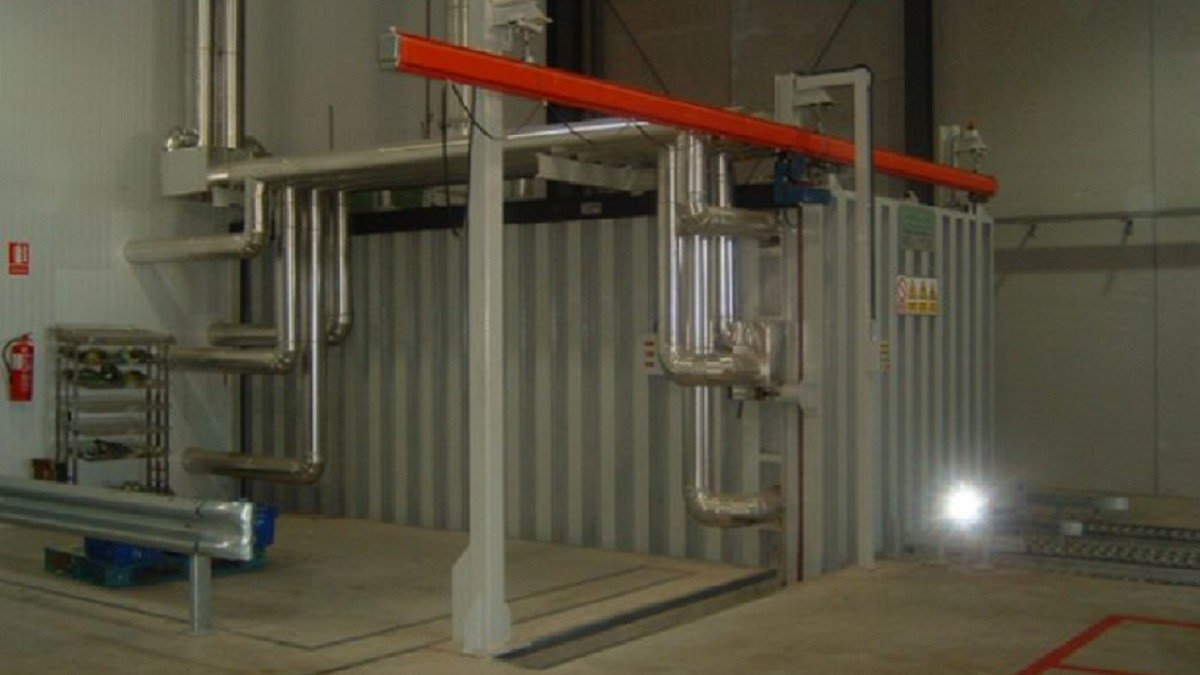
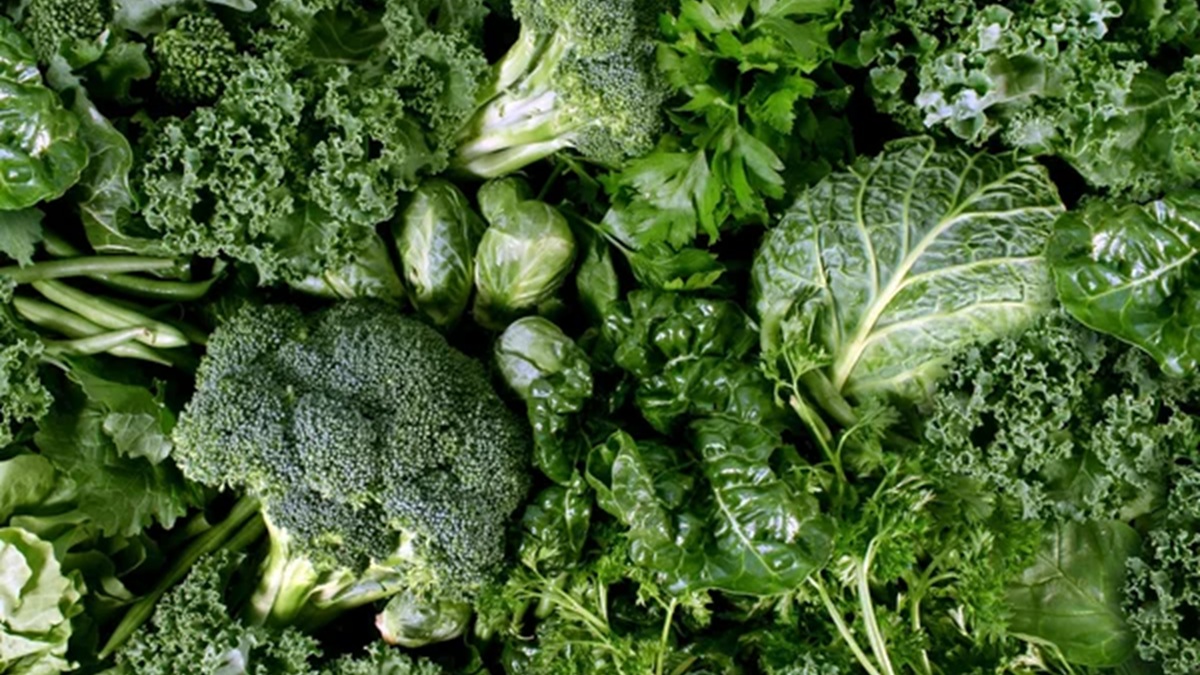
The Vacuum Cooler system is based on the rapid evaporation of part of the product’s moisture when pressure is reduced inside a sealed chamber. This evaporation absorbs thermal energy and enables a rapid drop in temperature, especially in products with a high surface-to-volume ratio, such as lettuce, cabbage, celery and other leafy vegetables.
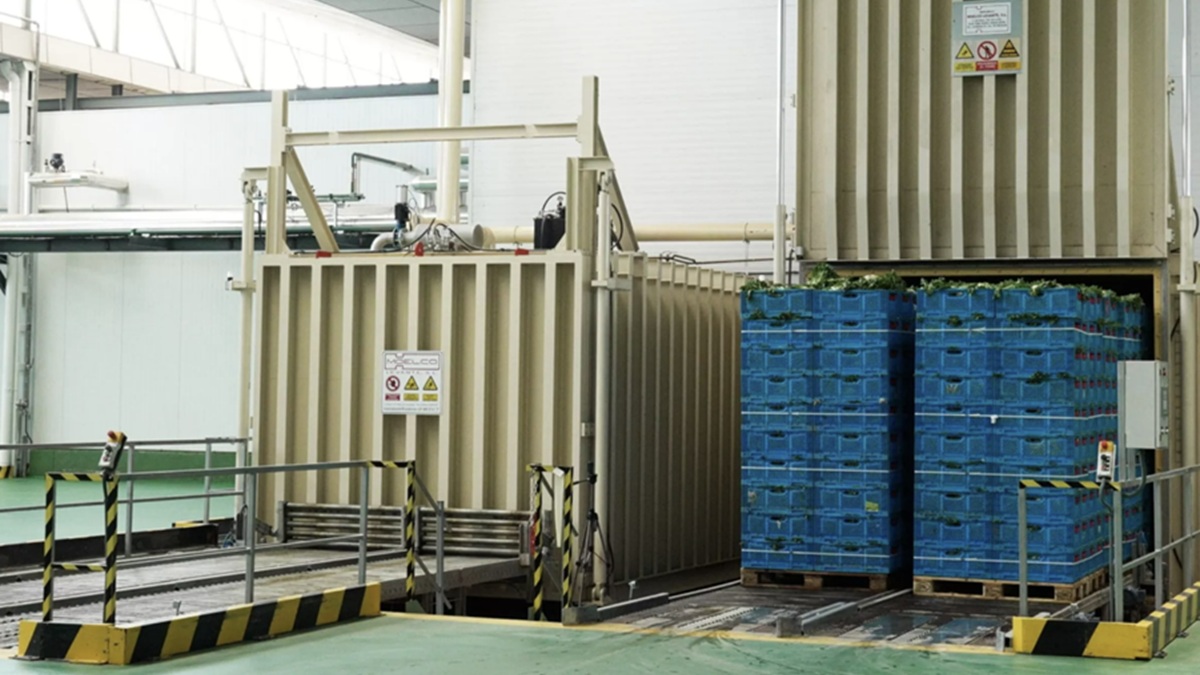
During the cycle, the product is introduced into a hermetic chamber, packed and stacked on pallets. The pumps generate vacuum inside the chamber and the refrigeration system condenses the vapour extracted from the product, promoting direct and uniform cooling. Depending on the product being treated, these cycles can range from 20 to 40 minutes, with the aim of stabilising the temperature before the product enters the cold room.
Conventional refrigeration is essential to maintain the temperature reached and preserve quality during storage and dispatch. However, when it is used as the only response to produce entering warm, the installation may be forced to absorb an excessive thermal load. This can lead to longer stabilisation times, greater pressure on cold rooms and less operational margin during periods of high product intake.
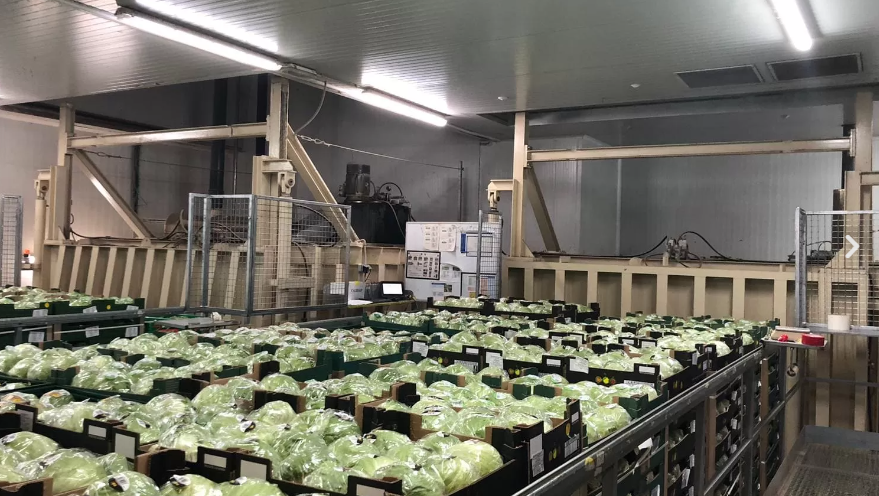 Vacuum pre-cooling helps stabilise the product before cold storage
Three critical points: pre-cooling, cold chain and maintenance
One of the most common mistakes during the season is delaying pre-cooling. If the product remains warm for too long, deterioration accelerates and shelf life is reduced. In sensitive products, this delay can result in loss of firmness, wilting, poorer commercial appearance and greater difficulty in maintaining quality through to destination.
Another critical point is breaking the cold chain. Prolonged door openings, internal waiting times, uncontrolled areas or poorly coordinated movements can generate condensation and temperature variations that compromise lot stability. During the season, these situations are not always caused by a lack of equipment, but by disorganised flow management between reception, pre-cooling, cold rooms, packing and dispatch.
Technical maintenance completes this thermal management. In Vacuum Cooler equipment, monitoring operating hours makes it possible to plan periodic operations such as changing oil and oil filters every 400 hours of pump operation, and replacing exhaust filters every 2,000 hours. These checks help avoid irregular cycles, loss of performance and high energy consumption that can lead to inconsistent cooling.
More precise thermal management from intake
The complementarity between vacuum and cold makes it possible to better organise thermal management from product reception. Vacuum pre-cooling quickly reduces the initial temperature, while refrigeration then maintains the conditions required to preserve quality. This sequence helps reduce pressure on cold rooms, improve process stability and lower the risk of bottlenecks when intake volumes increase.
For Moelco Levante, the key is not to choose between vacuum or cold, but to understand when to apply each technology and how to integrate them within the real operation of a packinghouse. Vacuum is particularly useful as an initial treatment to remove field heat from suitable products, while cold supports conservation throughout the chain. When both stages are coordinated with proper maintenance and orderly flow management, the installation operates more consistently and the product reaches its destination in better condition.
News of Moelco Levante