Packaging
Packaging design to reduce mechanical damage in bananas during storage and transportation
The study develops an optimized packaging strategy for bananas using 3D modeling and impact simulations demonstrating that container design and environmental conditions directly influence fruit resistance to bruising during postharvest handling
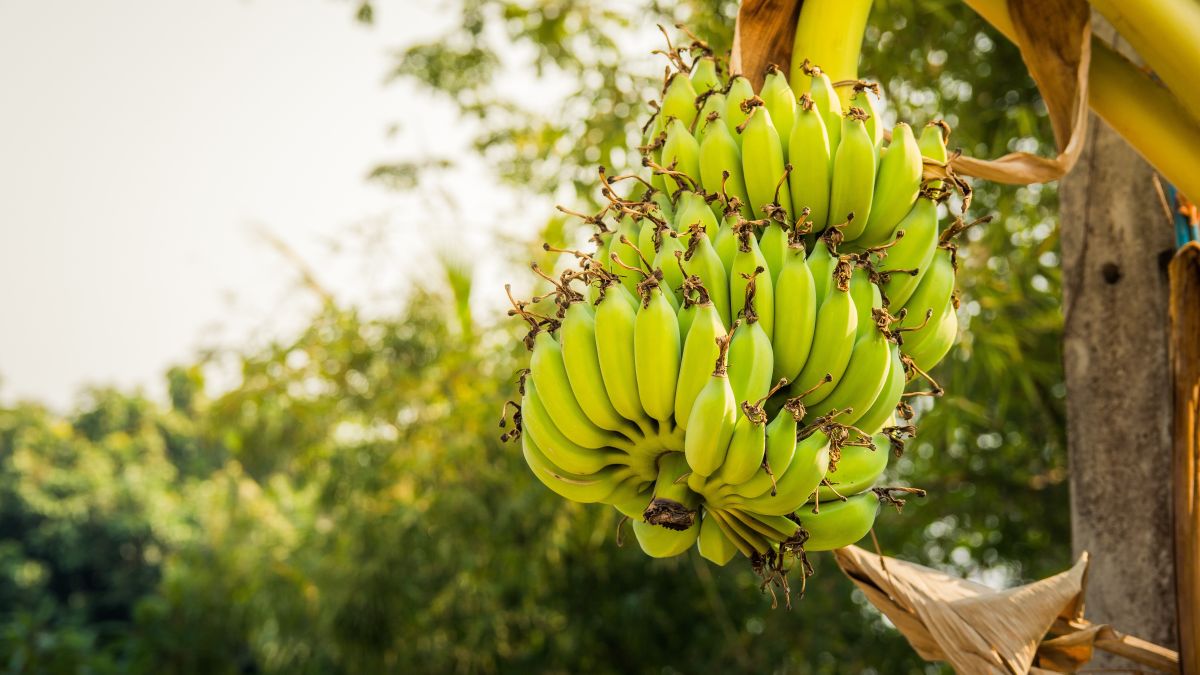
During banana postharvest operations, issues such as nutritional value reduction, economic losses, and deterioration of storage and transportation conditions are often unavoidable. Understanding latent damage mechanisms and the influence of temperature and humidity fluctuations on bruise propagation is considered an effective approach to reducing these problems.
To address this challenge, the study proposed an optimized packaging strategy for fresh bananas aimed at improving resistance to mechanical damage during postharvest handling. A physical container model capable of wrapping bananas in all directions was developed through parametric design and 3D modeling techniques.
The mechanical properties of the packaging material under different environmental conditions were determined using quasi-static tests. In addition, a finite element dynamic model of the collision system was constructed by incorporating the impact and collision characteristics between the fruit and the container.
The results demonstrated that the packaging material achieved its maximum axial tensile strength of 25.56 MPa at 18 °C and 85% relative humidity. Furthermore, a comprehensive analysis of bruise propagation under different packaging methods and storage environments revealed that all prediction models reached an accuracy above 84% for identifying potential fruit damage.
The research also identified that the optimal diameter of the cushioning bubbles inside the container was 5.8 mm, corresponding to the lowest bruise susceptibility, with values below 1.6e-6 m3/J, for expected impact speeds ranging from 3 to 4.14 m/s.
Finally, the authors emphasized that the quantitative banana damage assessment model and the bruise prediction system developed in this study can provide technical support for postharvest handling of other fruits and vegetables.
Source
Guo, J., Yang, Z., Guo, X., Han, X., Zhang, X., Duan, J., & He, Y. (s.f.). Optimal packaging strategy and its effect on mechanical damage resistance of bananas in storage and transportation.
https://www.sciencedirect.com/science/article/abs/pii/S0956713526003208