Phytosanitaries
Researchers identify the fungus causing postharvest banana red dot disease in Ecuador
A study conducted in Ecuador identified Fusarium sacchari as the causal agent of postharvest banana red dot disease. The research provides the first confirmation of this pathogen causing peel lesions that reduce the commercial value of bananas in destination markets
Ecuador, one of the world's leading banana exporters, faces several phytosanitary challenges that affect both production and postharvest fruit quality.
Major diseases include black sigatoka (Pseudocercospora fijiensis), moko disease (Ralstonia solanacearum race 2), and more recently Fusarium wilt caused by Fusarium oxysporum f. sp. cubense Tropical Race 4.
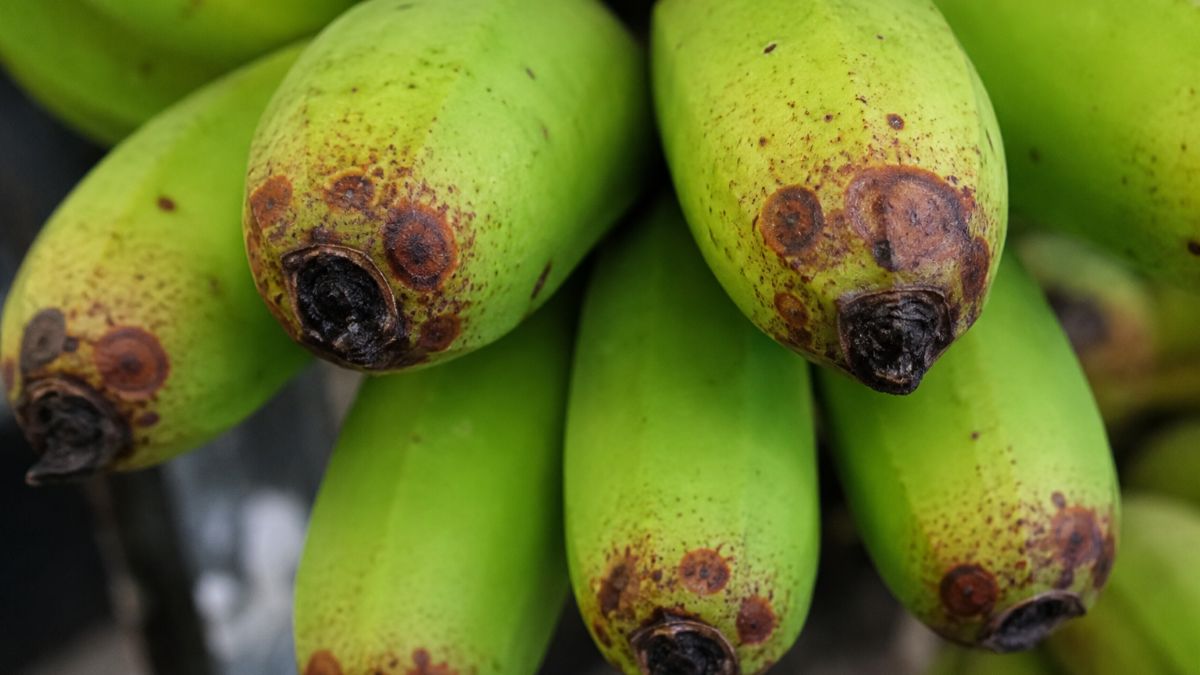
Researchers have now identified another threat affecting bananas after harvest: red dot disease. In September 2024, unusual symptoms were observed on banana fruits from a farm in Los Ríos Province.
The lesions appeared near the floral scar at the fruit tip and consisted of circular necrotic spots ranging from copper-red to dark red in color.
The symptoms were confined to the peel and did not penetrate the pulp, even after simulated transport conditions. Despite the absence of internal damage, affected fruit had already been associated with rejections in destination markets, resulting in economic losses for exporters.
To identify the causal agent, symptomatic peel tissues were collected and cultured in the laboratory. Multilocus phylogenetic analyses based on β-tubulin 2 (tub2), calmodulin (cmdA), RNA polymerase largest subunit (rpb1), and RNA polymerase second largest subunit (rpb2) confirmed that the pathogen belonged to the species Fusarium sacchari.
The researchers further verified the causal relationship by fulfilling Koch’s postulates through pathogen isolation, inoculation of healthy fruits, symptom reproduction and pathogen re-isolation.
According to the authors, this is the first report of postharvest banana red dot disease caused by Fusarium sacchari in Ecuador.
The findings expand current knowledge of postharvest banana diseases and provide a scientific basis for developing diagnostic and management strategies aimed at reducing commercial losses.
Source
Loja, B., Villao, L., Aycart, J., Garcés Fiallos, F. R., & Santos-Ordóñez, E. (2026). The postharvest banana fruit red dot disease is caused by Fusarium sacchari in Ecuador. Frontiers in Agronomy.
Related news