
PND
Processing
PND Adds a “High” Peeler for Butternut Squash , Improving Uniform Peeling on Elongated Fruit
The new version is designed to handle variable sizes and irregular shapes, with peel-thickness control and independent speed regulation to reduce yield loss and stabilize quality
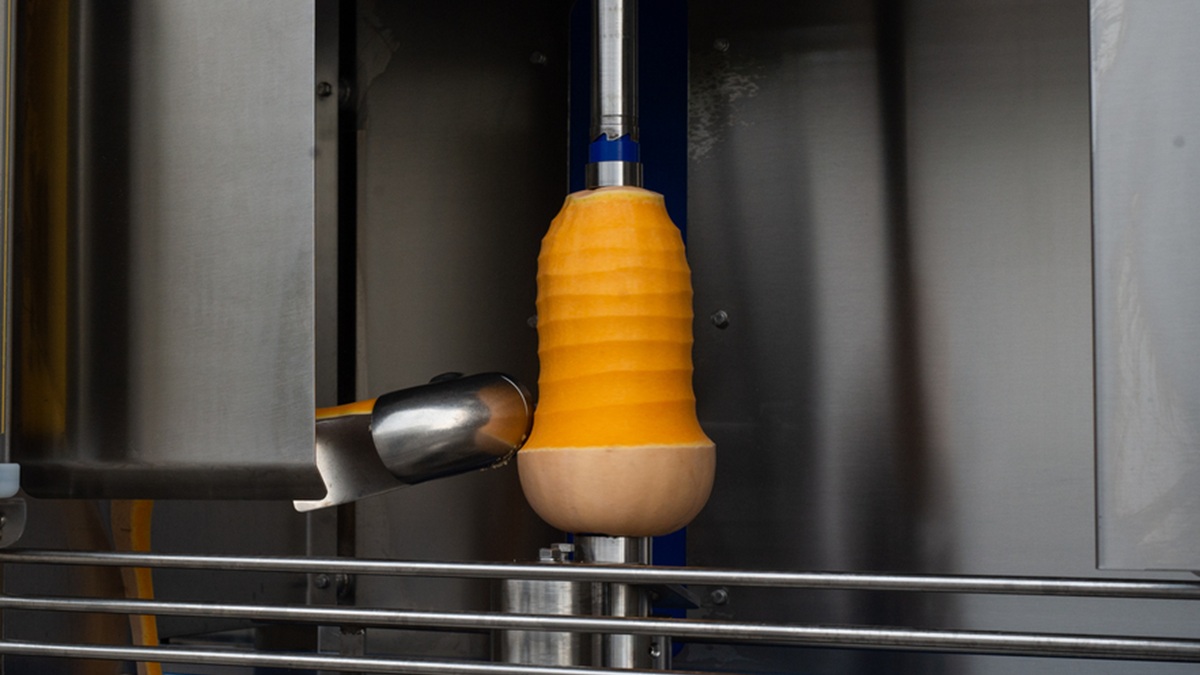
PND has expanded its range of semi-automatic peelers with a “high” version aimed at processing elongated fruit such as butternut squash. The plant-level need is straightforward. When incoming raw material varies in size and shape, maintaining consistent peeling without overpeeling becomes difficult, directly affecting yield, throughput stability, and finish uniformity.
The operating concept is simple. Feeding is manual, with the operator placing the fruit on a dedicated support. From there, the machine performs external peeling using pneumatic actuation. The unit features independent regulation of the fruit rotation speed and the knife speed, enabling peel-thickness adjustment and more stable performance even with less uniform product.
Technical specifications
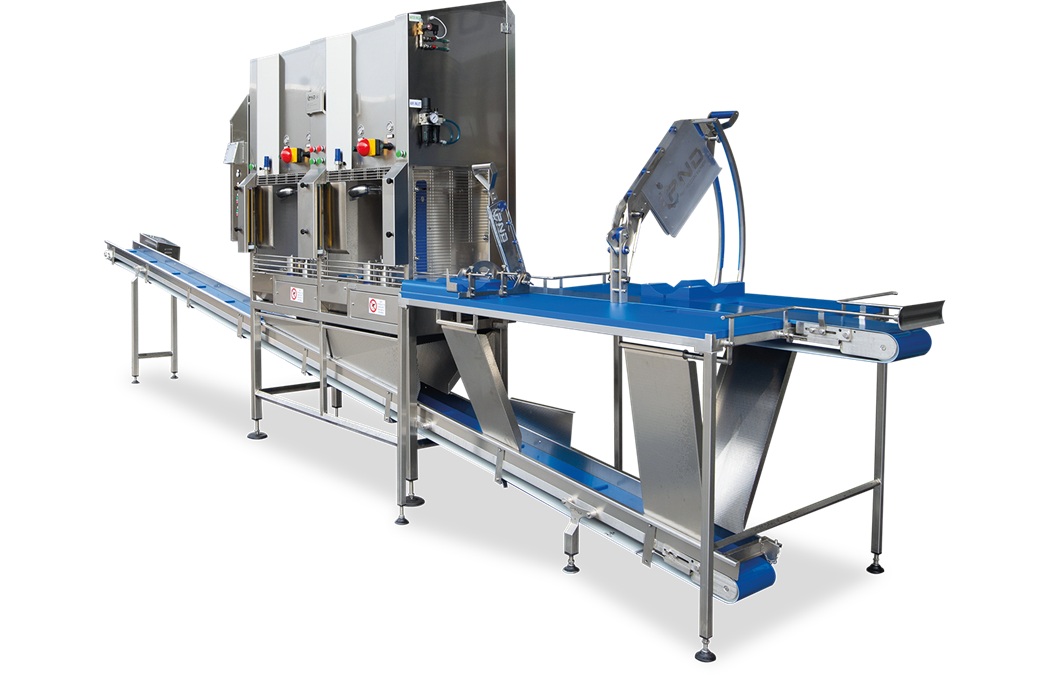
PND structures this range in three configurations to match different plant speeds. The PL1DZ is designed for moderate volumes, with a capacity of 4–5 fruit/min. The PL2DZ increases throughput to 8–10 fruit/min, while the PL4DZ sits at the top end with 18–20 fruit/min, aimed at operations where processing flow is the priority.
This step up in capacity is also reflected in machine footprint and weight. The PL1DZ measures 48x31x98 inch (1210x775x2500 mm) and weighs 661 lb (300 kg), with an installed power of 0.55 kW. The PL2DZ moves to 81x31x98 inch (2050x775x2500 mm), 1323 lb (600 kg) and 1.1 kW. At the high end, the PL4DZ reaches 97x31x98 inch (2470x775x2500 mm), 2646 lb (1200 kg) and 2.2 kW.
In terms of utilities, all three models share the same minimum supply requirements: 72.5 psi (5 bar) for air and 43.5 psi (3 bar) for water. From there, consumption scales with capacity. Air consumption increases from 1.413 CFM (40 NL/min.) on the PL1DZ to 2.825 CFM (80 NL/min.) on the PL2DZ and 5.650 CFM (160 NL/min.) on the PL4DZ. Water consumption follows the same pattern, at 0.13 gal/min (0.5 L/min), 0.26 gal/min (1 L/min) and 0.52 gal/min (2 L/min), respectively.
The product window is consistent across the range, with an admissible fruit size of ø 4–9.8 inch (ø 100–250 mm) and a maximum fruit height of 13.39 inch (340 mm). For operation, PND specifies 1 operator for PL1DZ and PL2DZ, and 2 operators for PL4DZ.
Butternut squash, a basic physiological view
Butternut squash belongs to Cucurbita moschata and is considered a winter squash. Physiologically, it is characterized by dense flesh and good keeping quality when the rind remains intact, since the skin acts as a barrier against moisture loss and pathogen entry. This matters in processing. Once peeled, the exposed tissue behaves like a fresh-cut vegetable, becoming more prone to moisture loss, surface oxidation, and cross-contamination if line hygiene and product flow are not well controlled.
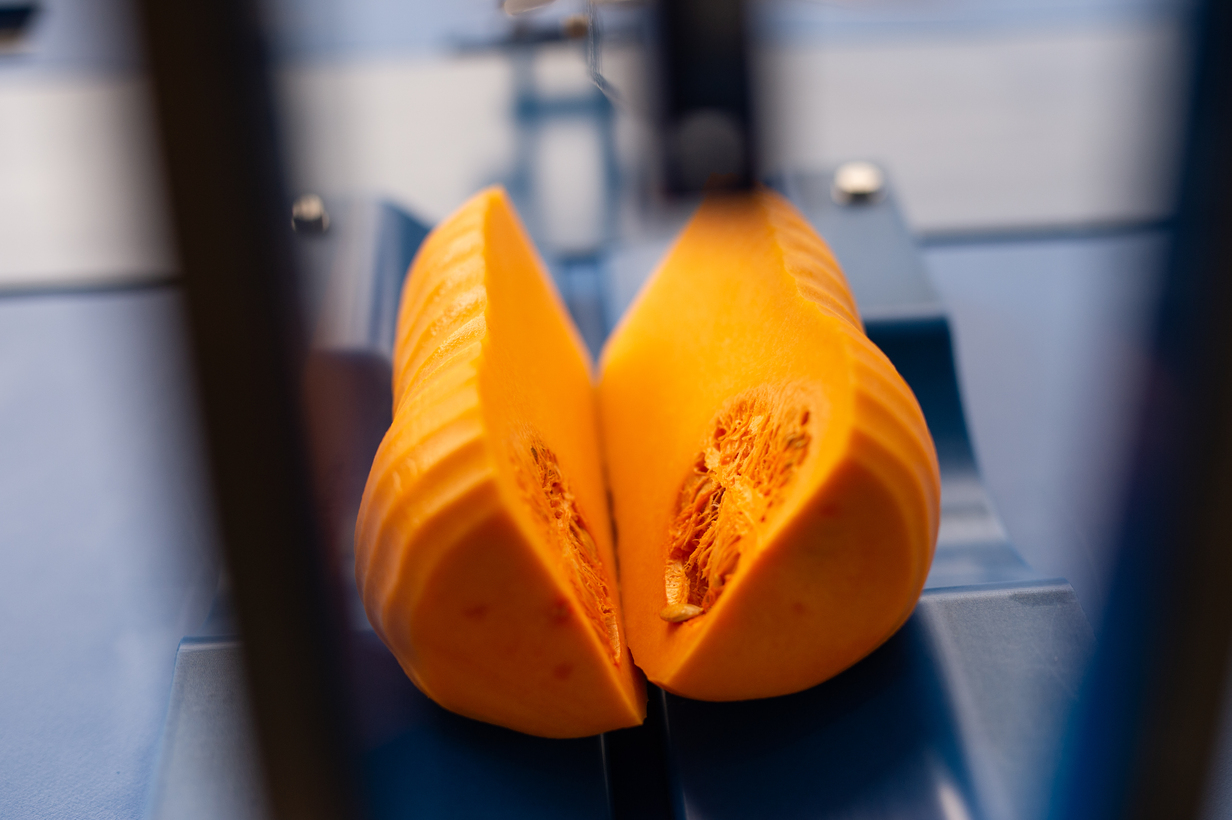
In practical terms, this explains why peel-thickness control matters. Overpeeling does not only increase yield loss; it also increases exposed surface area and, therefore, the risk of quality deterioration if the product is destined for fresh-cut formats or if there are waiting times before the next processing step.
About PND
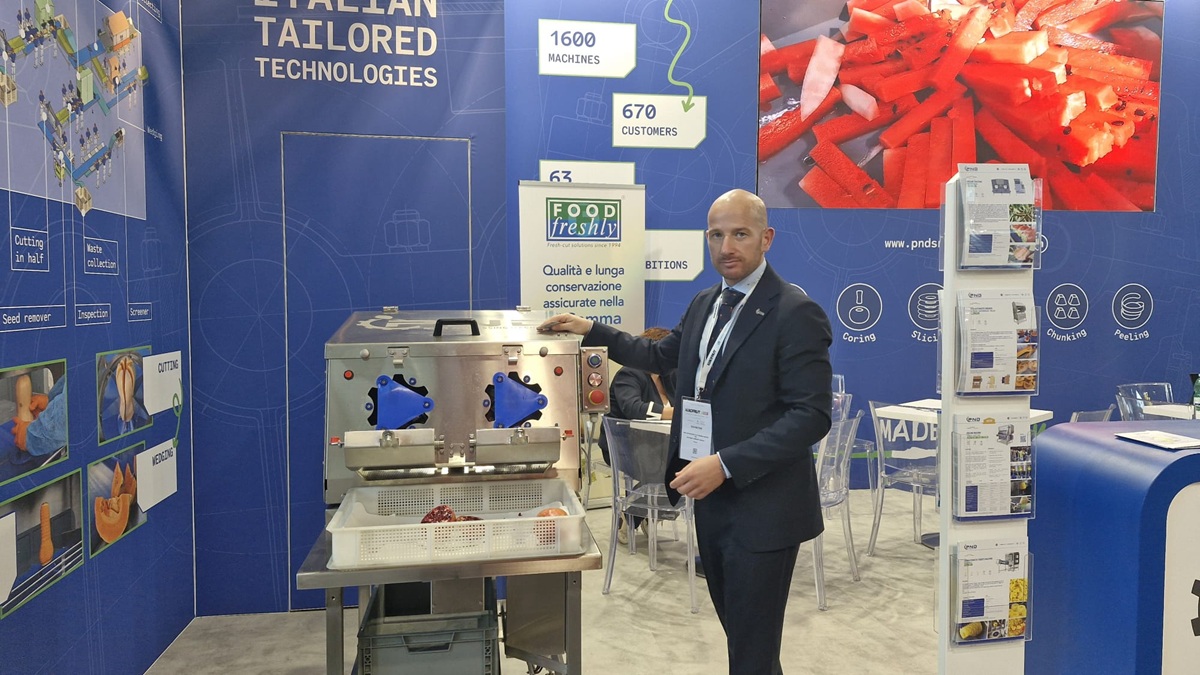
PND Srl is an Italian manufacturer of fruit and vegetable processing machinery, focused on peeling, cutting, and feeding/orientation solutions for food processing lines. Founded in 2000, the company highlights continuous investment in quality and innovation and supplies both standard machines and tailor-made systems for minimally processed (fresh-cut), canning, freezing, and dehydrating industries. PND states its equipment is installed and operating worldwide, with machines working in Europe, the Americas, Asia, Australia, and Africa, supported by an international commercial network and customer care.