News
Pomegranate waste, a potential friendly antifungal treatments to reduce postharvest diseases of citrus fruits
Verónica Taberner et al. obtained different ‘Mollar de Elche’ pomegranate peel extracts, and sequentially evaluated for the control of Penicillium digitatum and P. expansum
Green and blue molds, caused respectively by Penicillium digitatum and Penicillium italicum, are the most economically important postharvest diseases of citrus fruits.
Although synthetic chemical fungicides are used for their control, nonpolluting control methods, such as the application of natural antifungal plant extracts, are increasingly required.
In this work, different ‘Mollar de Elche’ pomegranate peel extracts (PPEs) were obtained and sequentially evaluated for the control of these diseases.
The extracts were obtained with different solvents and their curative activity was evaluated in in vivo primary screening tests.
For this, single extracts or combinations of them were applied at different concentrations to different cultivars of oranges and mandarins artificially inoculated with P. digitatum 24 h before extract application and incubated at 20°C.
Aqueous solutions of the best extracts were then evaluated in small-scale dip treatments, and immersion times of 150 s were selected as the most effective in reducing the incidence and severity of green and blue molds.
Among a wide range of extraction methods and solvents used, the most effective extracts were those obtained with water (Wat-SP PPE) and methanol (Met PPE), at concentrations of 12 g L-1 dry residue supplemented with 70 mL L-1 of dimethyl sulfoxide (DMSO).
This solvent increased the antifungal activity of some PPEs, but did not reduce disease when applied as a single treatment.
In further trials, Met PPE and Wat-SP PPE reduced the incidence of green mold by 39 and 52 % and that of blue mold by 30 and 48 %, respectively, on ‘Clemenules’ mandarins after 4 weeks of storage at 5 °C.
The results of this study contribute to the valorization of pomegranate waste and by-products and represent a significant advance in the development of natural, effective, and environmentally friendly antifungal treatments to reduce postharvest diseases of citrus fruits.
1. Introduction
Over the last decade, food loss and waste has become a major problem with global consequences that needs to be addressed as a priority.
In fact, food losses lead to a waste of resources used in its production such as land, water or energy, also contributing to global warming, climate change, and even affecting biodiversity (Sala et al., 2017; Springmann et al., 2018).
Of the total food loss and waste, an estimated 25-30 % is due to discarded fruits and vegetables (Hussain et al., 2022; Sarker et al., 2024).
Among fruit waste, peels from different processing industries such as juices, jams, and ready-to-eat fruits represent between 15 and 60 % of the total (Rifna et al., 2023).
These by-products, although sometimes used as feed for livestock or raw material for composting, biofertilizers, or alternative energy sources, are generally discarded, often posing a risk for the environment.
Pomegranate processing results in a high level of waste
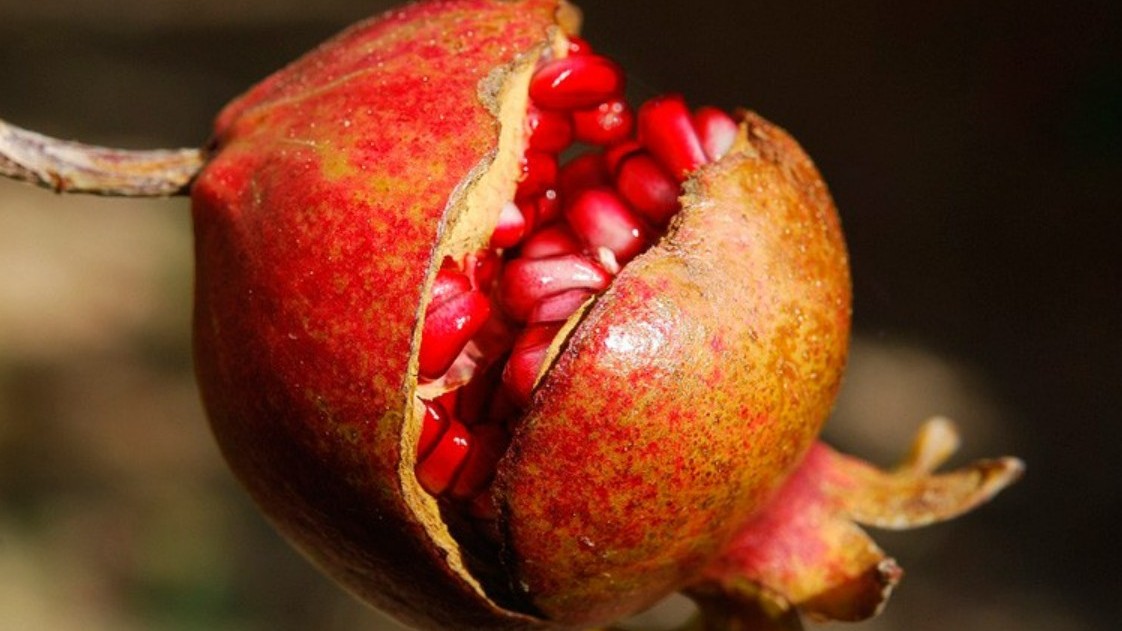
Among fruits, the juice industry and the production of ready-to-eat arils of pomegranate (Punica granatum L.) generate a high volume of waste, since the peel accounts for about 50 % of the whole fruit.
Thus, a recent study reported that 1.9 million tonnes of pomegranate peel are generated worldwide each year (Lacivita et al., 2023). These figures are associated with the significant increase in recent years in the production and consumption of pomegranates due to their health-promoting properties and the growing consumer demand for nutraceutical products.
Spain, and particularly the province of Alicante (Valencia region), is the main producer and exporter of pomegranates in Europe, and the autochthonous ‘Mollar de Elche’ is the most important cultivar.
Although most of its production is intended for consumption as whole fresh fruit, new market trends are contributing to a considerable increase in the production of juice or arils and the consequent generation of peels as an industrial by-product.
Potential uses of pomegranate waste
Several reports describe potential applications of pomegranate peel waste as animal feed, fertilizer, or material for bioethanol production, as well as a value-added product for food, medical, and cosmetic applications (El Barnossi et al., 2021; Lacivita et al., 2023).
Among these, important research efforts have focused on the valorization of pomegranate by-products through the extraction of bioactive compounds, as they are an important source of phenolics, including phenolic acids such as ellagic, gallic and gallagic acids; flavonoids such as anthocyanins, catechin, kaempferol, and quercetin; and hydrolysable tannins such as punicalagin, castalagin, and granatin.
Pomegranate phenolics are widely recognized for their antioxidant and antimicrobial properties (Fischer et al., 2011; Glazer et al., 2012; Gullón et al., 2020; Mena et al., 2012; Valero-Mendoza et al., 2023).
These antimicrobial properties and particularly the antifungal activity of bioactive compounds present in pomegranate peel extracts (PPEs) can be exploited to develop novel postharvest decay control treatments to be implemented within nonpolluting integrated disease management (NPIDM) strategies, which main aim is the effective control of major postharvest diseases of fresh horticultural produce without the use of synthetic chemical fungicides (Zacarias et al., 2020).
For instance, several authors have reported the use of PPEs as antifungal agents for commodities such as sweet cherries (Li Destri Nicosia et al., 2016), apples, olive fruits (Pangallo et al., 2017a), and citrus fruits.
Penicillium, main pathogens of citrus fruits
During postharvest, fresh citrus fruits are subjected to physiological and pathological alterations that limit their shelf life causing relevant economic losses. Green (GM) and blue (BM) molds, caused by the pathogenic fungi Penicillium digitatum (Pers:Fr) Sacc. and Penicillium italicum Wehmer, respectively, are the most important postharvest diseases of citrus fruits in Spain, California, and other production areas characterized by low summer rainfall.
In these conditions, the incidence of these rots is typically high, representing more than 80 % of the total fruit losses after harvest.
Both pathogens infect fruit only through rind wounds mainly produced during harvest, but also before harvest by insects, mechanical abrasion, etc. and after harvest by inadequate fruit handling.
Although green mold is generally more common than blue mold, both develop rapidly at room temperatures (20-25 °C), and P. italicum grows better than P. digitatum at refrigerated temperatures (Palou, 2014; Smilanick et al., 2020).
At present, these diseases are controlled by the application of conventional chemical fungicides such as imazalil, sodium o-phenylphenate, pyrimethanil, and fludioxonil (Alvarez et al., 2022; Smilanick et al., 2020).
However, the risk to the environment or human health associated with the accumulation of these compounds, as well as legal restrictions on maximum residue limits (MRLs) and the emergence of an increasingly demanding market for natural and organic products have raised the need to seek for alternative NPIDM strategies for citrus postharvest disease control (Palou et al., 2015; Yang et al., 2023; Zacarias et al., 2020).
Antifungal potential of pomegranate peel extracts
The application of PPEs as eco-friendly antifungal treatments on citrus fruit have been explored by means of extracts obtained with water (Fozi et al., 2022; Kharchoufi et al., 2018; Tayel et al., 2009) or ethanol/water mixtures (Givi et al., 2019; Li Destri Nicosia et al., 2016; Pangallo et al., 2017b, 2021; Salem et al., 2022; Tayel et al., 2016) as extractor solvents.
The phenolic content of the PPEs and subsequently its antifungal activity can greatly vary depending on several factors, such as solvent and extraction method, fruit variety, maturity stage, growing area and postharvest treatment (Belgacem et al., 2021; Lima de Souza et al., 2026; Magangana et al., 2021; Yan et al., 2017). For example, Glazer et al. (2012) and Rongai et al. (2019) found different punicalagin contents in various pomegranate genotypes, and this was correlated to their antifungal activity.
Some workers have studied the effect of the in vitro activity of PPEs obtained with different solvents against bacteria (Negi and Jayaprakasha, 2003) and fungi (Kharchoufi et al., 2018; Tayel et al., 2009; Tayel and El-Tras, 2010; Tehranifar et al., 2011).
Use of solvents of different polarities
However, as far as we are aware, the antifungal activity of PPEs obtained with a range of solvents of different polarities, directly applied in in vivo tests to artificially inoculated citrus fruits, has not been previously reported.
Furthermore, this is first study on the effect of PPEs on citrus fruit artificially inoculated with P. italicum and cold-stored.
Differences in the efficacy of antimicrobial compounds between in vitro and in vivo tests can be significant.
Although in vitro tests with plant extracts are an important first step in the selection of promising novel antifungal materials, in vivo tests are needed to confirm their effectiveness against the target pathosystem.
This hypothesis may be relevant for PPEs, as their in vivo antifungal activity is due not only to inhibition of the pathogens, but also to their ability to induce resistance to fungal development in the host tissues (Belgacem et al., 2021).
Aims of the research
The aims of this work were to obtain different PPEs from the Spanish autochthonous cultivar ‘Mollar de Elche’ by various extraction procedures and a wide range of solvents and their mixtures and sequentially select the most effective ones for the control of both green and blue molds of citrus fruits. For this purpose, the best extraction methods and extract concentrations for green mold control were determined in in vivo primary screenings and then applied in small-scale dip trials to control green and blue molds on artificially inoculated fruit incubated at 20 °C.
Finally, the influence of immersion time and the effectiveness in reducing decay on cold-stored fruit were also assessed.
Sources
Obtention and sequential selection of antifungal pomegranate (Punica granatum L. cv. ‘Mollar de Elche’) peel extracts to control postharvest decay of citrus fruits caused by Penicillium spp
Verònica Taberner, Laura Settier-Ramírez, María Bernardita Pérez-Gago, Lluís Palou
Applied Food Research, February 2026
https://doi.org/10.1016/j.afres.2026.101764
https://www.sciencedirect.com/science/article/pii/S2772502226001058
Picture, https://iresiduo.com/noticias/mexico/conacyt/17/03/02/cascara-granada-materia-prima-desarrollar-compuestos-bioactivos
Related news