Processing
¿Applying ozone or heat to tomatoes to extend their commercial shelf life? The science of hormesis in postharvest
Quantitative determination of hormetic doses of ozone, white light, heat, ultrasound, and UV-B for the clean extension of the commercial shelf life of tomatoes
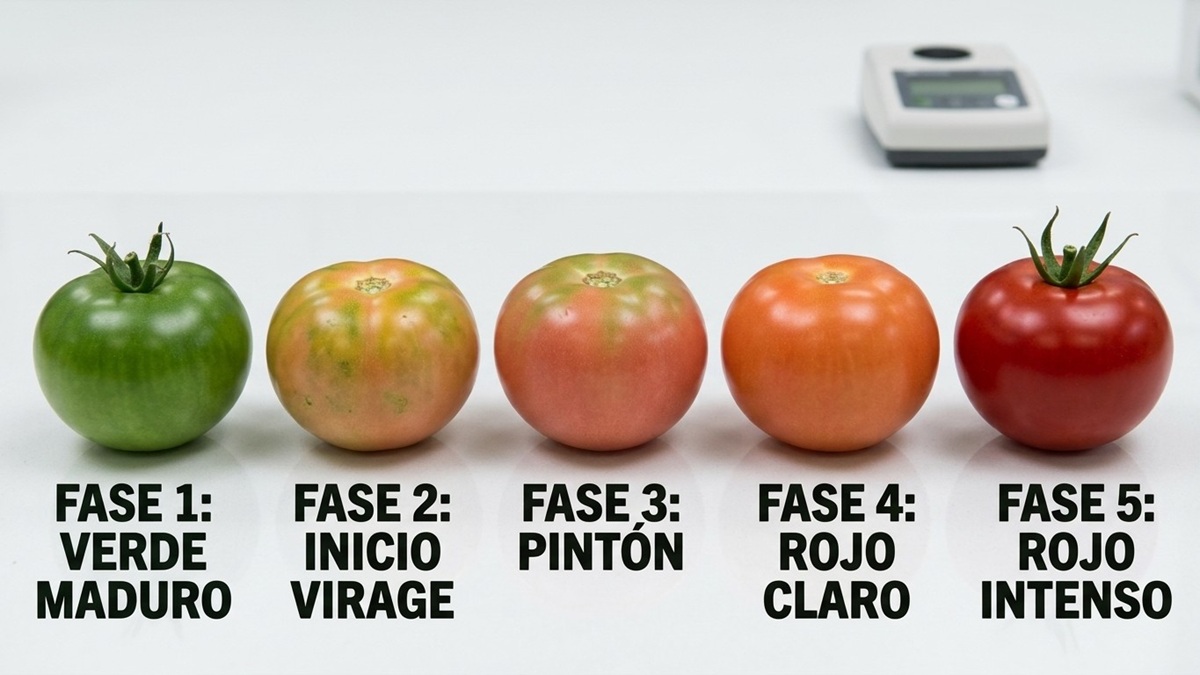
Abiotic stress-induced hormesis involves the application of sub-lethal doses of physical agents to stimulate endogenous antioxidant defense systems in tomatoes (*Solanum lycopersicum*). This study establishes dose-response curves for delaying ripening at the "mature green" stage, while evaluating energy efficiency per kilogram, as well as the effects on fruit firmness and lycopene accumulation.
1. Biological basis of postharvest hormesis
The application of moderate physical stress induces a transient increase in reactive oxygen species (ROS), which acts as a secondary elicitor signal. This controlled oxidative burst triggers the expression of superoxide dismutase (SOD), catalase (CAT), and ascorbate peroxidase (APX), thereby delaying the climacteric ethylene peak and preserving cell wall polysaccharides. The response follows either a biphasic pattern where an excessive dose accelerates deterioration, as seen with ozone or heat or a hyperbolic saturation curve, as observed with UV-B radiation and white light.
2. Hormetic doses and comparative energy balance
Presented below are the optimized parameters for tomatoes at the mature-green stage (cv. Starbuck) treated prior to storage at 12 °C:
3. Color dynamics and controlled carotenogenesis
Retreatment with gaseous ozone at 5 ppm temporarily inhibits the carotenoid biosynthesis pathway by suppressing the expression of phytoene synthase (PSY1). This extends the color-change phase from green to the "breaker" stage by more than a week, without altering the final sugar content or titratable acidity upon reaching consumption maturity.
4. Industrial viability and economic evaluation
When analyzing the relationship between energy cost per kilogram of product and the extension of commercial shelf life, the use of **gaseous ozone in an airtight chamber** emerges as the most cost-effective alternative for packing facilities. With an energy consumption of only 1.7 kJ/kg and an extension of shelf life by 11 days (at 12 °C), it significantly outperforms thermal treatments, which require high energy input and carry the risk of softening the parenchyma tissue.
Meanwhile, although UV-B radiation has the lowest energy consumption (0.8 kJ/kg), it provides a more modest delay (+3.9 days), making it better suited as a supplementary treatment for dynamic grading lines on conveyor belts.
Recommendations for horticultural packing
- Ozone in the Cold Room: Applying 5 ppm of O₃ for 5 hours after washing inhibits climacteric ethylene synthesis without leaving any chemical residue.
- Strict Dosage Control: Exceeding 8 ppm of ozone or 12 hours of heat (37 °C) triggers a reverse necrotic effect, which accelerates decay caused by *Botrytis cinerea*.
- Certified Sustainability: Enables access to "zero-residue" export markets while maintaining fruit firmness above 3.5 kg/cm².
Source:
Jha, D. K., Patil, B. S., Arul, J., & Desjardins, Y. (2026).
Abiotic stress hormesis in tomato fruit: Determining hormetic doses from stress dose - Ripening response relationships. Postharvest Biology and Technology, 240, 114459.