Services
Climate as a key factor in blueberry quality, from calibre to arrival
The first arrivals of Peruvian blueberries show high firmness, but also calibre variability and bloom loss, against a climatic backdrop marked by El Niño
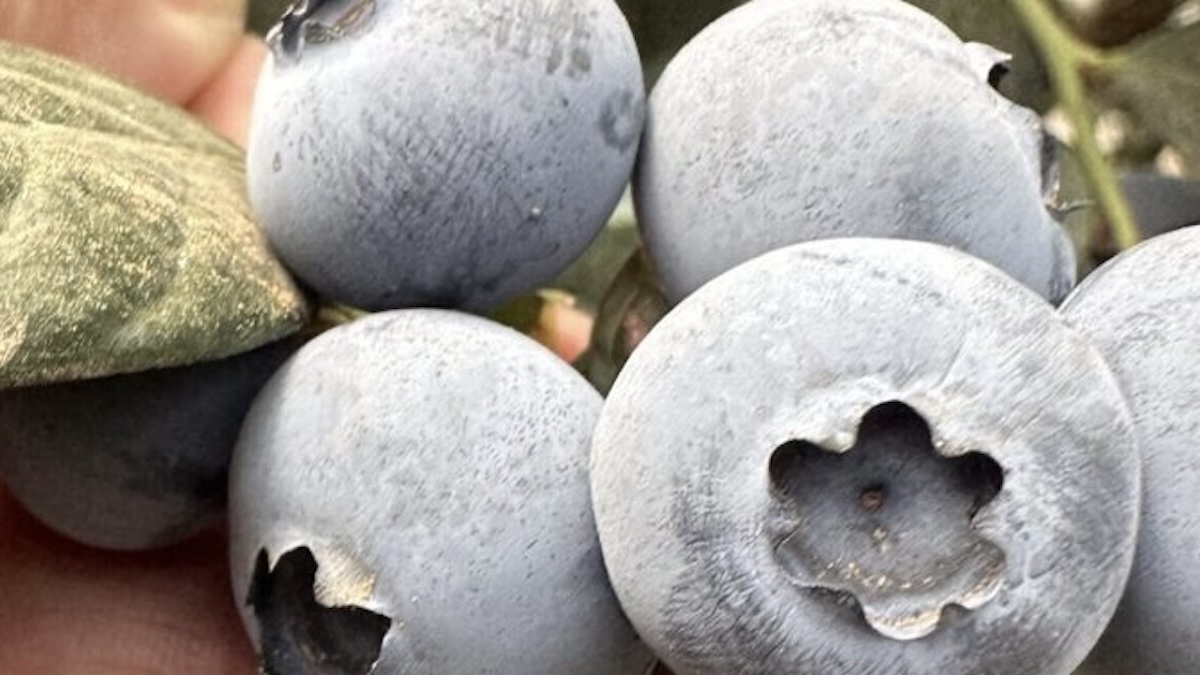
The first arrivals of Peruvian blueberries in Europe, recorded during weeks 27 and 28, were excellent and promising. However, the arrivals corresponding to weeks 37 and 38 at myblueproject once again raise a question that the industry should ask itself every season: are we really evaluating fruit condition, or are we still analysing individual indicators in isolation?
During these first weeks of the campaign, fruit with a particularly positive characteristic has been observed: high firmness levels, accompanied by soluble solids values of around 11.5–12.3 °Brix.
Alongside these positive indicators, however, other phenomena requiring attention have also been observed, including bloom loss, calibre variability and significant differences between lots and varieties. This scenario is compounded by a factor that cannot be left out of the analysis: the impact of climatic conditions associated with El Niño on fruit development and condition.
Calibre as an Indicator of Crop Behaviour
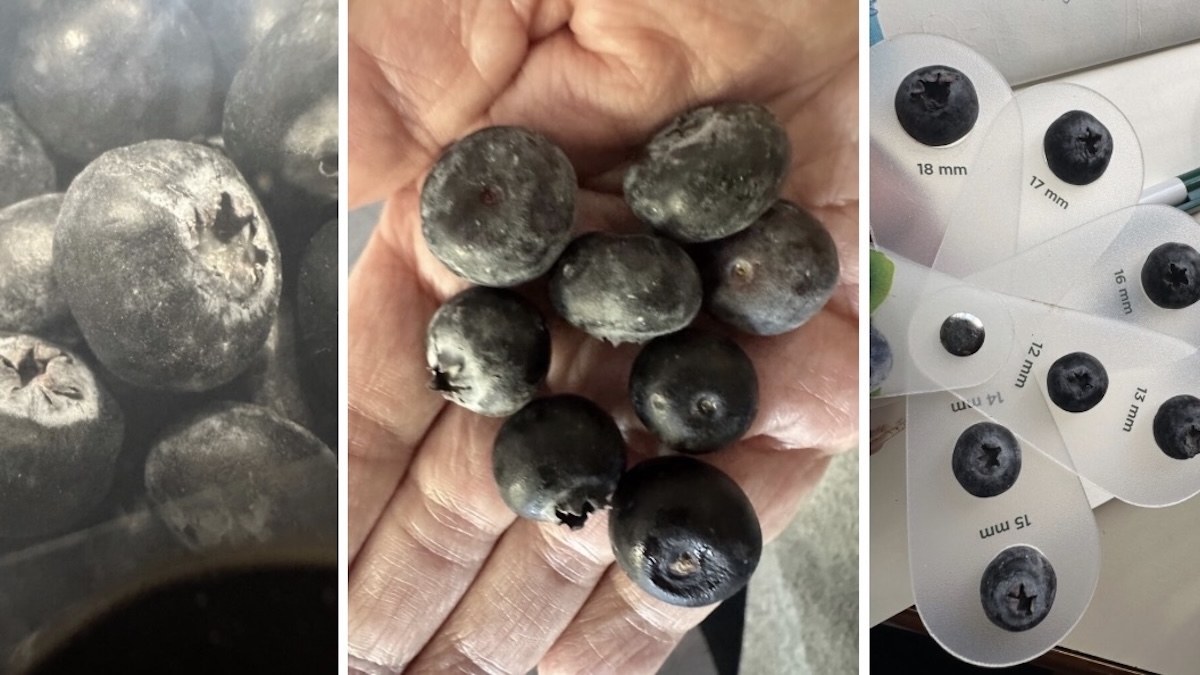
One of the clearest findings from these first arrivals is calibre variability. Clamshells containing fruit ranging from 12 to 18 mm have been observed, including in varieties that traditionally produce fruit in the 22–24 mm range or above.
This does not mean that every small fruit can be attributed exclusively to El Niño. Calibre is the result of multiple variables, including genetics, crop load, phenological development, water availability, nutrition, temperature, crop management and harvest timing.
However, the behaviour observed is consistent with a climatic scenario that is placing greater pressure on crop development and increasing physiological variability.
Peru's situation during this campaign cannot be analysed independently from the broader climate context. The IBO recently revised its export forecast for Peru's 2026 campaign downwards, to approximately 382,000 tonnes, and has highlighted the effect of El Niño on the development of the season.
In addition, several campaign analyses have indicated that high temperatures can alter physiological processes related to growth, flowering, fruit development, soluble solids and postharvest performance.
For this reason, calibre should not be considered merely a commercial parameter at the time of receiving the fruit. It can also become an early indicator of the physiological behaviour experienced by the crop during development.
Firm Fruit Does Not Always Mean Consistent Fruit
These first arrivals have shown fruit with very high firmness levels, which is a positive sign. The genetic development of blueberries is providing cultivars with higher firmness, greater calibre potential and postharvest performance that would have been much more difficult to achieve only a few years ago.
Precisely because of this progress, the question must also evolve. It is no longer enough to ask how firm the fruit was. It is necessary to understand how the fruit arrived and its ability to maintain that condition throughout storage and transport.
Fruit can show excellent instrumental firmness while simultaneously experiencing bloom loss, calibre variability, differences in flesh condition, reduced flavour expression or a different response after several days in storage. Firmness remains a fundamental KPI, but it can no longer be considered in isolation.
Condition assessment should incorporate a combination of firmness, °Brix, colour, calibre, flesh condition, external condition and bloom, among other parameters. Only then is it possible to obtain a more complete picture of the fruit's postharvest potential.
Bloom Also Provides Information About the Process
The bloom loss observed in some of these first arrivals also deserves a broader interpretation.
There is not necessarily a single cause. Bloom can be affected by the condition of the fruit itself, handling, harvesting, packaging, friction, condensation, storage conditions and transport, among other variables. Therefore, rather than immediately looking for someone or something to blame, it is necessary to reconstruct the entire process.
Paula del Valle, Quality Advisor, asks:
How was the fruit harvested? At what temperature did it arrive at the packing house? How long did it remain there before cooling? How was the pre-cooling process carried out? Were there temperature fluctuations? Were there points of condensation? How was the fruit handled during packing? What conditions did it experience during transport?
All these variables form part of the condition in which the fruit ultimately reaches the market.
In this context, technology and postharvest treatments can be valuable tools for protecting blueberry condition. The key is to integrate them into a data-driven decision-making system capable of determining what works, for which variety, under what initial conditions, for how long and in which destination market.
The issue is not whether to be for or against a particular technology, but rather to understand when, how and under what conditions it should be used to achieve the expected outcome.
From Isolated Data to an Integrated View of Fruit Condition
The major challenge of this campaign will not simply be to produce firm fruit. It will be to produce and deliver consistent fruit. Consistent in calibre, flavour, texture, bloom and internal condition. And, above all, consistent after 30, 40 or 45 days, depending on the characteristics of the destination market. The current climate scenario makes it even more important to connect information generated in the field with information collected during the postharvest process.
In this regard, variables such as phenology, heat accumulation, fruit development, calibre, °Brix, flesh condition, firmness, cooling, storage, transport and arrival should not be analysed as independent elements. Connecting these variables makes it possible to move beyond simply observing what happened and begin to understand why it happened.
Calibre Should Become an Early Warning Signal
This approach is particularly relevant when analysing the calibre variability observed in the first arrivals.
A clamshell containing 12–18 mm fruit, from a variety whose historical performance is above these values, should raise a technical question. Not necessarily a commercial alarm, but a signal prompting investigation into what happened during fruit development.
To achieve this, monitoring should not begin at the packing house. The impact of climate should be assessed from the field, by monitoring variables such as phenology, heat accumulation, calibre development, fruit weight, soluble solids and flesh condition before harvest.
This information subsequently makes it possible to relate the initial condition of the fruit to its behaviour during storage and transport.
The Cold Chain Starts at Harvest
The final condition of the blueberry cannot be separated from temperature management either.
Control should take into account the temperature at harvest, the time elapsed before pre-cooling, pulp temperature, cooling rate, storage conditions, temperature fluctuations during transport and potential condensation points.
The cold chain does not begin when the pallet enters the cold room. It begins at harvest.
This perspective is particularly important when interpreting phenomena such as bloom loss or differences in condition between lots. Assessment of the final product should be accompanied by traceability of the conditions to which the fruit was exposed throughout the supply chain.
Evaluating Technologies According to Initial Condition
Postharvest treatments, controlled atmospheres, packaging materials, protective technologies and other tools available to the industry should be evaluated according to the initial condition of the fruit.
The same technology can deliver different results depending on variety, maturity stage, temperature, physiological condition and transit duration.
Therefore, the objective should not simply be to validate a particular technology, but to determine under which conditions it generates real value for the fruit and the destination market.
The Real Challenge: Predicting Arrival Condition
The blueberry industry is advancing rapidly. New genetics are redefining what has traditionally been understood as high-quality fruit, and today it is possible to find cultivars with extremely high firmness and very good calibre performance.
The way quality is measured must evolve at the same pace.
The future is not simply about stating that a fruit arrived at 85 Shore. The real value will lie in being able to anticipate that, given a particular harvest condition, maturity level, calibre, °Brix, flesh condition and cold-chain strategy, a specific performance can be expected after 30 or 45 days.
That is the leap postharvest management needs: moving from volume to condition, from firmness to consistency, and from isolated data to shelf-life prediction.
The first arrivals of this Peruvian campaign offer precisely an opportunity to move in this direction. Beyond determining how the fruit arrived, every shipment can provide information to better understand how to produce, harvest, cool and transport the fruit we want to receive tomorrow.
Related news