Services
How long-distance shipping is reshaping ethylene management in climacteric fruit
Longer and more variable seafreight routes are pushing exporters of climacteric fruit to rethink how they manage ethylene from harvest to destination
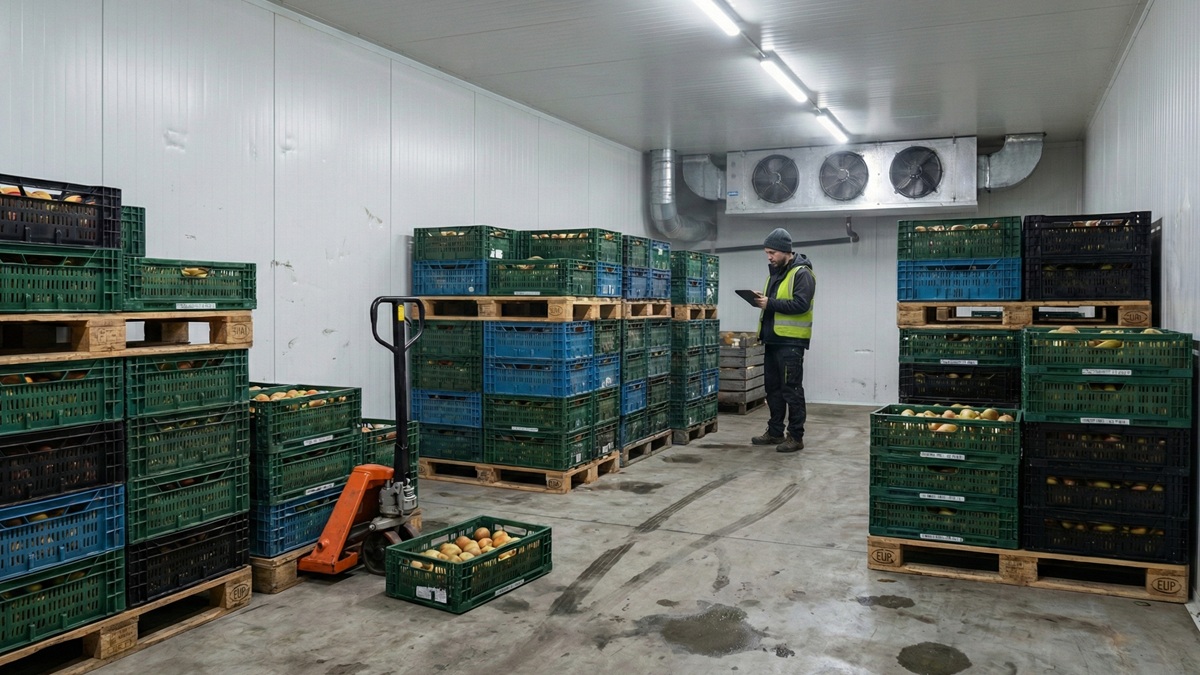

Over the last decade, fresh produce trade has become more global and more complex. A growing share of apples, pears, avocados, mangos and other climacteric fruit now travels by sea from South America, South Africa, the Mediterranean, Australia or Asia to distant markets in Europe, North America and the Middle East. These journeys can last several weeks, often with schedule changes, port congestion and unstable weather conditions along the way.
In this scenario, ethylene is no longer a secondary detail in postharvest management. For climacteric fruit, even low ethylene concentrations are enough to trigger ripening, accelerate softening and shorten the shelf life at arrival. When harvest maturity is heterogeneous or temperature control is not tight, this risk increases. If ventilation in storage rooms or containers is not well designed, ethylene can accumulate around certain pallets and create “hot spots” where ripening advances faster than expected.
For exporters serving long distance markets, this means narrower quality windows, more pressure on distribution and a higher probability of claims when fruit does not arrive within the agreed specifications.
From single tools to integrated ethylene programmes
The main tools to manage ethylene in export chains are well known, but the way they are used is changing. Instead of relying on a single intervention, more operators are moving towards integrated programmes that connect harvest decisions, cold chain design, chemical tools and packaging solutions.
One of the pillars is still 1-methylcyclopropene (1-MCP). Widely used in apples, pears, kiwifruit and other climacteric species, 1-MCP binds to ethylene receptors and delays ripening and senescence. Correctly applied, it helps to maintain firmness, delay colour changes and reduce some physiological disorders during long-term storage and transport. Its effect, however, depends strongly on timing, dose and storage temperature, and protocols need to be adapted to each cultivar and market.
A second axis is controlled and modified atmosphere. By lowering oxygen and moderately increasing carbon dioxide, respiration and ethylene biosynthesis in the fruit are reduced. Controlled atmosphere (CA) rooms and CA containers are now common for long seafreight, but the set points are not universal: each species and cultivar has its own tolerance limits to low O₂ and elevated CO₂, and a regime that is safe for one product can be too aggressive for another.
In parallel, progress in materials science has brought new options to remove ethylene from the storage atmosphere. Active packaging components, pallet covers and inserts with ethylene scavengers based on permanganate, clays, activated carbon or engineered polymers can lower ethylene levels around the fruit when they are correctly dimensioned for load, ventilation and expected ethylene production.
The fourth component is monitoring. Temperature loggers are now standard, and in some chains they are being complemented with periodic or continuous ethylene measurements in rooms and containers. Linking this information with quality data at arrival allows exporters to refine ventilation strategies, adjust the placement and load of scavengers and improve 1-MCP protocols from one season to the next.
Different products, different balances
Ethylene sensitivity and the balance between ethylene control and other risks, such as chilling injury, vary widely between products and cultivars. As a result, exporters are designing specific programmes rather than applying a single protocol across the board.
In apples and pears, the combination of harvest at the right maturity, 1-MCP and cold storage has become standard practice in many export regions. The focus is now on details: cultivar-specific treatments, the interaction with CA regimes and the target firmness at destination.
In avocado and kiwifruit, the objective is to preserve quality along the chain while keeping the possibility to induce ripening on demand at arrival. Programmes in these crops tend to combine temperature management, 1-MCP and, in some cases, CA or modified atmosphere shipping, aligned with the capacity and schedules of ripening facilities in the destination market.
In mango and other tropical climacteric fruit, chilling sensitivity limits how low the temperature can be set. Strategies described in recent work combine moderate cold regimes, conservative use of 1-MCP and ethylene-scavenging packaging that does not leave residues in the fruit. Here, small deviations in temperature or time can make the difference between meeting or missing specifications.
What it means in practice for packhouses and exporters
For packhouses and exporters in regions such as South Africa, Chile, Peru, Spain, Morocco, Australia or India, the practical message is that ethylene management starts earlier and ends later than before. It begins with the definition of maturity indices adapted to long distance markets and continues with decisions on pre-cooling, cold room operation, choice of container type, use of scavengers and application of 1-MCP according to variety, route and destination.
At the same time, load configuration and packaging are increasingly seen as part of ethylene control, because they determine how air and ethylene move around the fruit. And data from loggers and inspections at arrival are no longer just a record of what happened: they are being used to adjust programmes for the following season.
Across different studies, a common trend emerges: ethylene is still a central lever in the postharvest management of climacteric fruit, but the focus is shifting from individual technologies to integrated, data-driven programmes that cover the whole chain from orchard to shelf.
Sources
Asrey, R., Sharma, S., Barman, K., Prajapati, U., Negi, N., & Meena, N. K. (2023). Biological and postharvest interventions to manage the ethylene in fruit: A review. Sustainable Food Technology, 1(6), 803–826.https://doi.org/10.1039/D3FB00037K
Zhang, J., Cheng, D., Wang, B., Khan, I., & Ni, Y. (2017). Ethylene control technologies in extending postharvest shelf life of climacteric fruit. Journal of Agricultural and Food Chemistry, 65(34), 7308–7319. https://doi.org/10.1021/acs.jafc.7b02616
Ebrahimi, A., Zabihzadeh Khajavi, M., Ahmadi, S., Mortazavian, A., Abdolshahi, A., Rafiee, S., & Farhoodi, M. (2022). Novel strategies to control ethylene in fruit and vegetables for extending their shelf life: A review. International Journal of Environmental Science and Technology, 19(5), 4599–4610. https://doi.org/10.1007/s13762-021-03485-x
Wei, H., Seidi, F., Zhang, T., Jin, Y., & Xiao, H. (2021). Ethylene scavengers for the preservation of fruits and vegetables: A review. Food Chemistry, 337, 127750. https://doi.org/10.1016/j.foodchem.2020.127750
Cocetta, G., & Natalini, A. (2022). Ethylene: Management and breeding for postharvest quality in vegetable crops: A review. Frontiers in Plant Science, 13, 968315. https://doi.org/10.3389/fpls.2022.968315
Jiang, Y., Liu, Z., Peydayesh, M., Zhang, B., Jia, X., & Huang, Q. (2024). Ethylene control in fruit quality assurance: A material science perspective. Aggregate, 5(5), e565. https://doi.org/10.1002/agt2.565
Soneji, I. B., Bakane, P. H., Mohod, V. D., Bisen, R. D., & Khobragade, U. H. (2024). Ethylene management strategies for fresh produce preservation: A comprehensive review. International Journal of Advanced Biochemistry Research, 8(12S), 1110–1120. https://doi.org/10.33545/26174693.2024.v8.i12Sn.3305
Related news
The 24th IRTA postharvest technical conference addresses how to adapt fruit storage to a scenario with fewer tools and higher demands