News
The Importance of Temperature Data Loggers in Preventing Losses of Temperature-Sensitive Products
The use of temperature data loggers enables the detection and documentation of temperature deviations during transport, reducing losses of temperature-sensitive products while ensuring cold chain compliance
Temperature-sensitive products, such as food, pharmaceuticals, and vaccines, require strict temperature control during transportation and storage to preserve their quality, safety, and efficacy. Despite advances in refrigeration technology, cold chain interruptions remain a major challenge, resulting in economic losses and regulatory non-compliance. Therefore, continuous temperature monitoring has become an essential tool for ensuring the integrity and traceability of these products.
Cold chain failures, one of the main causes of product losses
A break in the cold chain occurs when a temperature-sensitive product is exposed to conditions outside its recommended storage range, even for a short period. Such situations may irreversibly compromise product quality, cause food spoilage, or reduce the effectiveness of pharmaceuticals and vaccines.
Cold chain failures commonly occur during loading and unloading, transhipments, or temporary storage. Without accurate temperature records, it is difficult to determine when the deviation occurred and to demonstrate compliance with transportation requirements.
Industry estimates indicate that 20–30% of food losses in certain supply chains are associated with cold chain failures. In addition, the World Health Organization (WHO) estimates that nearly 50% of vaccines are lost each year due to inadequate transportation conditions. These figures highlight the need for continuous temperature monitoring.
Regulations to prevent damage caused by cold chain failures
- GDP (Good Distribution Practice): Requires documented temperature monitoring during the distribution of temperature-sensitive medicines.
- EN 12830 Standard: Specifies the technical requirements for temperature data loggers used in the transport of perishable food products.
- HACCP (Hazard Analysis and Critical Control Points): Requires temperature monitoring and control at every stage of the food supply chain.
Temperature data loggers as a solution
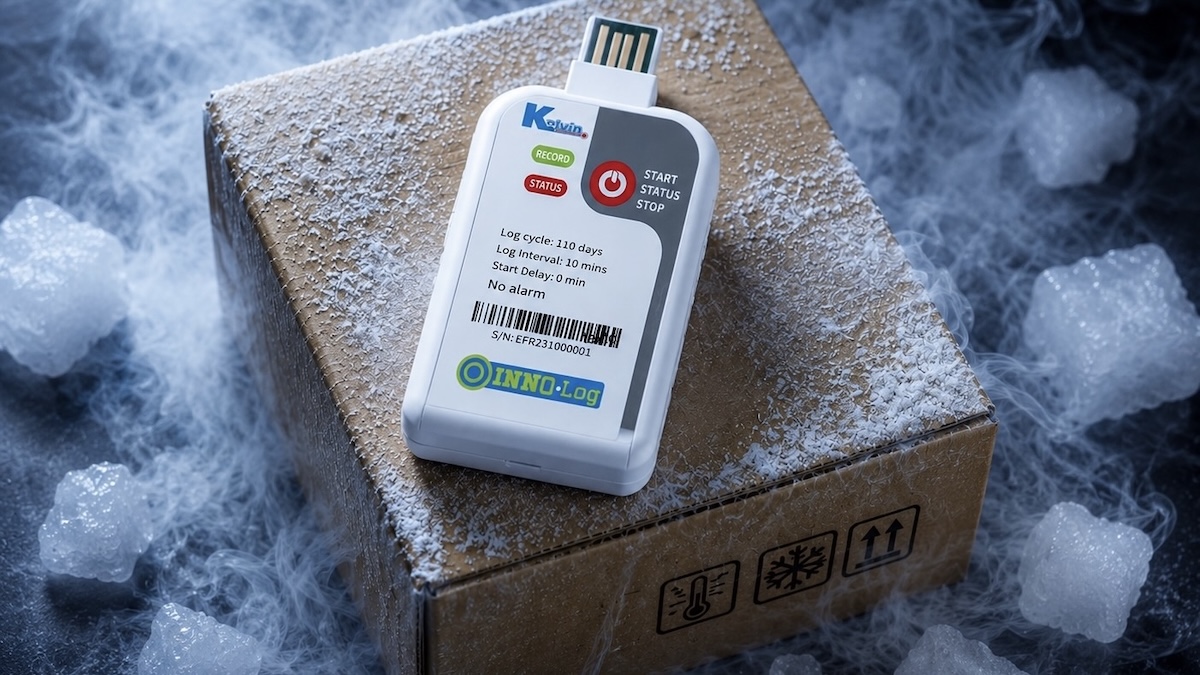
The article presents the Innolog LCD, developed by Kelvin Solutions, as a tool to improve cold chain traceability. Its integrated LCD screen allows users to view recorded temperatures, device status, and alarm notifications in real time without the need for a computer or additional software.
In addition, the data logger operates within a temperature range of −30 °C to +70 °C, with an accuracy of ±0.5 °C, records data for up to 180 days, and automatically generates PDF and CSV reports via USB connection. It also complies with EN 12830, GDP, CE, and RoHS certifications, ensuring the validity of the recorded data during audits and inspections.
Temperature monitoring as a guarantee of quality
Continuous temperature monitoring provides documented evidence that products have been maintained under appropriate storage conditions throughout transportation, reducing economic losses, facilitating regulatory compliance, and strengthening the confidence of customers and regulatory authorities.
In conclusion, continuous temperature monitoring using temperature data loggers helps prevent losses of temperature-sensitive products, improves traceability, and ensures compliance with quality and safety standards throughout the entire logistics chain.
Sources
Noémie, C. (May 21, 2026). Kelvin Solutions. Cold chain temperature logger: How can you avoid 30% of losses on your shipments?