News
Water stress and hormonal regulation in pomegranate husk browning during postharvest
The study analyzes husk scald in pomegranates under different relative humidity levels showing that low humidity accelerates oxidative stress and senescence while high humidity helps maintain fruit stability and delays postharvest damage
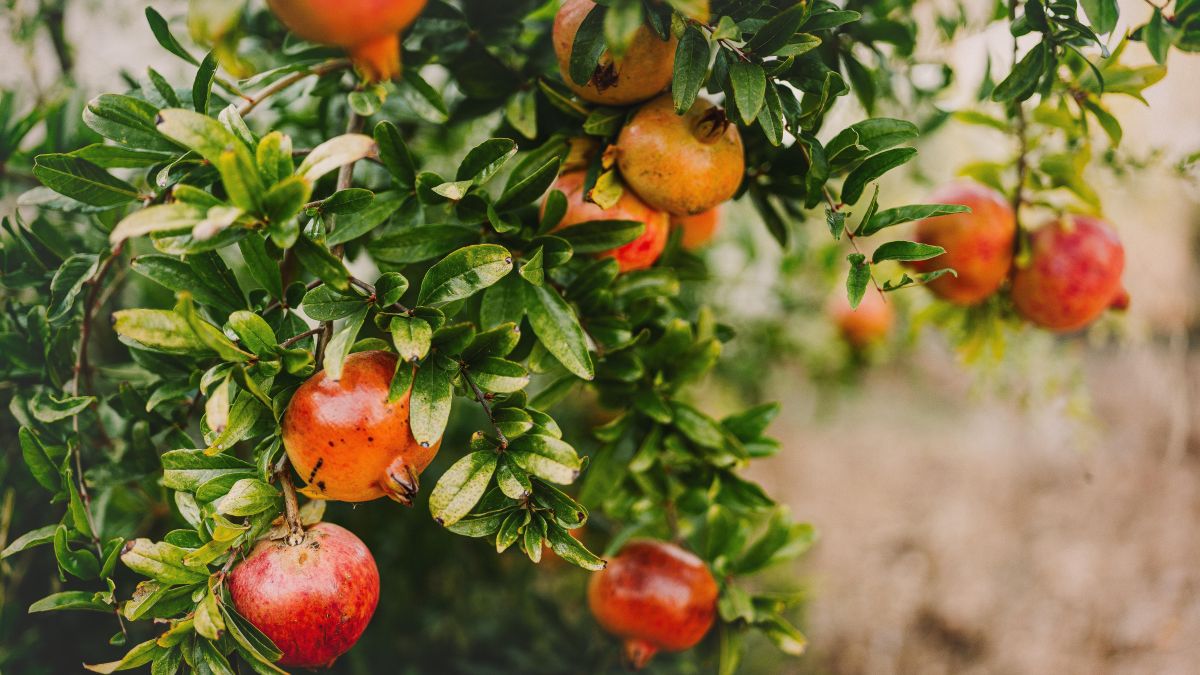
Husk scald in pomegranates is a browning disorder that significantly affects postharvest quality and the commercial value of the fruit. This phenomenon was studied from a physiological and biochemical perspective in order to understand the mechanisms that trigger its development under different relative humidity conditions.
For this purpose, Wonderful pomegranates were stored at 11 °C for 70 days under two contrasting relative humidity levels, 55% and 95%. It was observed that low relative humidity increases water loss in the fruit, which activates a hormonal signaling cascade initially associated with jasmonic acid accumulation.
This process subsequently triggers the activation of reactive oxygen species and the involvement of abscisic acid, intensifying oxidative stress and leading to cellular damage. At the same time, an increase in the activity of enzymes related to the oxidation of phenolic compounds was recorded, directly contributing to the development of browning.
In contrast, under high relative humidity conditions, water loss is significantly reduced and hormonal and metabolic processes remain more stable, which substantially delays the onset of the disorder.
The results demonstrate that husk scald is not a random event but a programmed stress-induced senescence process, primarily triggered by fruit dehydration conditions.
Source
Maghoumi, M., Fatchurrahman, D., Amodio, M. L., Colelli, G., & Cisneros-Zevallos, L. (s.f.). Husk scald in pomegranates is a programmed stress-induced senescence event triggered by water loss and exacerbated by low RH. ScienceDirect.
https://www.sciencedirect.com/science/article/pii/S0925521426002255