News
Advancing Ethylene Removal: Interfacing Natural and Synthetic Solutions
Review of phytohormone management within active containers, evaluating mineral adsorbents plus chemical oxidizers across varied formats. Addressing commercial efficacy, safety mandates, plus environmental metrics aimed at reducing agricultural waste throughout global distribution cycles
09 April, 2026
Ethylene (C2H4) is a volatile plant hormone that accelerates ripening and senescence in ethylene-sensitive fruits and vegetables, posing challenges to fresh produce industries.
Ethylene scavengers as an active food packaging system have emerged as a promising solution to maintain the quality of fresh produce. While numerous ethylene scavenging materials have been developed, their effective translation into commercial applications depends on incorporation methods, packaging format design, and real-time performance validation.
This review critically examines incorporation methodologies of ethylene scavengers into functional packaging systems, emphasizing the mechanistic interplay between scavenger chemistry, carrier matrix properties, and packaging format architecture.
We systematically evaluate natural adsorbents (activated carbon, zeolites, halloysite nanotubes, agricultural waste derivatives) and synthetic systems (permanganate oxidizers, photocatalytic metal oxides, palladium catalysts) in different packaging formats: sachets, active films, edible coatings, and absorbent pads.
Critical gaps are identified in standardized performance metrics, real-world validation protocols, and material behavior under temperature fluctuations (2-25 °C) and relative humidity variations (75-95% RH).
The influence of packaging design parameters, including scavenger loading capacity, distribution homogeneity, mass transfer kinetics, and carrier-scavenger interfacial compatibility on ethylene removal efficiency is quantitatively analyzed.
Regulatory frameworks governing food contact materials, migration limits, and sustainability metrics are comprehensively addressed. This review provides evidence-based guidelines for developing commercially viable, environmentally sustainable ethylene-scavenging packaging systems that address the substantial postharvest loss challenge.
Global Impact of Postharvest Losses
Fruits and vegetables serve as crucial nutritional reservoirs; however, the global fresh produce industry faces significant challenges in maintaining quality throughout increasingly complex supply chains.
According to FAO estimates, agricultural losses have escalated to approximately $3.26 trillion globally over the past 33 years, averaging $99 billion annually and accounting for nearly 4% of global agricultural GDP.
With global population projected to reach 9.4 billion by 2050, this 33% demographic increase necessitates a 60% augmentation in food supplies compared to 2005 levels, positioning postharvest loss reduction as a critical imperative for sustainable food systems.
Ethylene Phytohormone & Physiological Response
Ethylene (C2H4), the primary phytohormone regulating ripening, senescence, and stress responses in plant tissues, plays a pivotal role in quality deterioration.
The biosynthesis of ethylene in plants follows a well-characterized pathway, wherein S-adenosyl-L-methionine (SAM) is converted to 1-aminocyclopropane-1-carboxylic acid (ACC) by ACC synthase, followed by oxidation to ethylene via ACC oxidase.
While ethylene-mediated ripening is essential for developing desirable flavor, color, and texture in climacteric fruits, uncontrolled accumulation during storage and transportation leads to accelerated quality loss, reduced shelf life, increased pathogen susceptibility, and substantial economic losses.
The centrality of ethylene as the primary molecular trigger of postharvest deterioration therefore positions its management as the most impactful intervention point for extending fresh produce shelf life.
Climacteric producers including apples, bananas, avocados, mangoes, tomatoes, and kiwifruits exhibit autocatalytic ethylene production during ripening. Exposure to trace concentrations as low as 0.1 ppm triggers physiological cascades involving chlorophyll degradation, cell wall softening, volatile compound synthesis, and increased respiration rates.
Non-climacteric produce such as leafy greens, berries, and citrus fruits, while lacking autocatalytic production, remain highly sensitive to exogenous ethylene, manifesting yellowing, abscission, bitterness development, and accelerated decay.
Ethylene synthesis rates vary significantly across commodities: low emitters (<0.1 μL kg−1 h−1) include leafy vegetables and citrus; moderate emitters (0.1-10 μL kg−1 h−1) comprise berries and melons; while high emitters (>100 μL kg−1 h−1) include apples, bananas, and tomatoes.
Limitations of Conventional Management
Conventional ethylene management systems including controlled atmosphere storage, modified atmosphere packaging (MAP), 1-MCP, and refrigeration present inherent limitations.
Controlled atmosphere storage requires substantial infrastructure investment viable only for large-scale operations. The 1-MCP approach demands application within 24 h post-harvest, offering no subsequent protection during distribution.
Cold chain infrastructure gaps 62% in India and 45% in Southeast Asia further limit refrigeration-based approaches. These limitations collectively underscore the need for passive, packaging-integrated ethylene removal technologies that operate continuously without infrastructure requirements throughout the distribution chain.
Scavenging Mechanisms & Material Selection
Active packaging, as defined by European Regulation (EC) No. 450/2009, deliberately incorporates components that absorb substances from the packaged food environment to extend shelf life.
Ethylene-scavenging active packaging represents one of the most commercially successful categories within this domain. The scavenging mechanisms encompass physical adsorption, chemical oxidation, and catalytic degradation, each with distinct performance characteristics.
Physical adsorption on high-surface-area materials (activated carbon: 800-1500 m2/g; zeolites: 300-900 m2/g) exhibits rapid kinetics but reversible operation with temperature-dependent capacity and competitive inhibition by water vapor, reducing capacity by 50% above 80% RH.
Chemical oxidation using potassium permanganate provides irreversible ethylene conversion with higher capacity (40-80 mg C2H4/g KMnO4) but requires specific humidity levels and raises contamination concerns. Photocatalytic systems using TiO2 offer regenerability with quantum efficiencies of 5-12% but demand UV exposure incompatible with dark storage conditions.
The selection of scavenging materials and packaging material extends beyond intrinsic ethylene removal capacity. Natural materials derived from minerals (zeolites, clays, halloysite nanotubes) and agricultural by-products (activated carbon, biochar) offer environmental sustainability, biodegradability, low cost, and consumer acceptance, particularly attractive for organic produce markets.
However, batch-to-batch variability (±15-25% in surface area), moisture sensitivity, and finite saturation capacity (5-15 mg C2H4/g) limit their application. Contrariwise, synthetic materials including photocatalysts (TiO2, ZnO), permanganate-based oxidants, and palladium-based catalysts provide superior performance with 2-5 × higher capacity and 40-60% faster kinetics but face regulatory scrutiny regarding nanoparticle migration and consumer resistance.
Packaging Formats & Engineering Challenges
Ethylene scavengers can be incorporated into packaging through multiple formats: sachet-based systems containing scavengers in permeable pouches placed inside packages; coated films and laminates incorporating scavengers directly into packaging materials; pad and tray systems suitable for high-moisture produce simultaneous liquid absorption; and edible coating applied directly to produce surfaces.
Integration presents format specific challenges. Sachet-based systems, dominating 70-75% of the commercial market, offer dose flexibility but suffer from mass transfer limitations, reducing effective rates by 30-50% and consumer perception issues.
Active films incorporating scavenging material using coating or extrusion provide uniform distribution but confront scavenger-polymer compatibility issues, with 15-35% tensile strength reduction at >5 wt% loadings and thermal stability requirements during processing at 180-250 °C. Further, absorbent pads face liquid saturation impeding gas diffusion, reducing ethylene removal rates by 40-60% under high exudate conditions.
Research Gaps & Review Objectives
Despite growing research interest and commercial product launching, significant gaps remain in understanding real-world performance under actual fresh product distribution conditions.
Laboratory studies typically conduct at specific conditions that may not reflect dynamic scenarios during transportation, cold chain interruptions, and retail display. Comparative assessments of different packaging formats and standardized evaluation methodologies remain limited, hindering informed technology selection decisions.
Previous reviews have primarily focused on scavenger material chemistry and synthesis methodologies, ethylene biochemistry and physiology, or broad active packaging technologies. While Wang et al. (2025) compared scavenger mechanisms at the material level, Wei et al. (2021) emphasized material properties over incorporation engineering, and Awalgaonkar et al. (2020) predates recent advances in photocatalytic films, MOF systems, and HNT composites, none systematically links scavenger chemistry to packaging format selection, commercial performance validation, or regulatory decision-making frameworks.
The present review addresses these gaps by integrating mechanism-to-format compatibility analysis, critical evaluation of peer-reviewed commercial product data, and a structured regulatory comparison across EFSA and FDA frameworks to provide actionable guidelines for industry implementation.
This review addresses these gaps with five specific objectives: (i) systematically categorize ethylene scavenger packaging formats including sachets, films, coatings, and pads with detailed analysis of design principles and manufacturing processes; (ii) compare efficiency of natural versus synthetic scavengers across different packaging formats; (iii) evaluate practical applications through commercial implementations and case studies; (iv) analyze regulatory framework, food contact safety, and sustainability considerations; and (v) identify critical research gaps for developing next generation ethylene scavenging packaging systems.
By focusing on packaging integration and real time application, this review aims to provide actionable insights for reducing postharvest losses and improving the sustainability of fresh produce distribution systems.
Sources
Subhash V. Pawde, Wanli Zhang, Di Wu, Young Hoon Jung, Saroat Rawdkuen Evolution of ethylene scavenging: Bridging natural and synthetic approaches for sustainable postharvest packaging
Journal of Agriculture and Food Research, Volume 27, 2026, 102859
https://doi.org/10.1016/j.jafr.2026.102859.
https://www.sciencedirect.com/science/article/pii/S2666154326002292
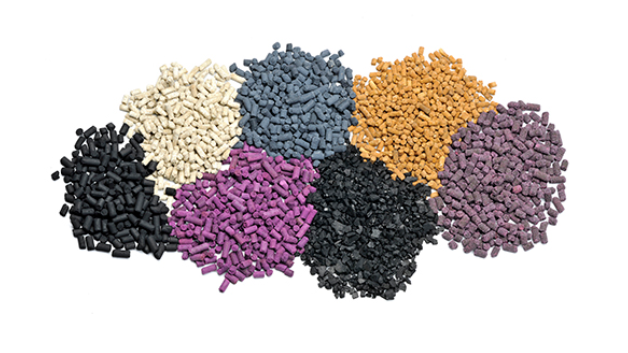
Image: BION, ethylene scrubber specialists
Related news