News
Berries: 2025–2026 season review and postharvest priorities for 2026–2027
Arrival quality and operational consistency are emerging as key factors in an increasingly demanding logistical, climatic and commercial environment
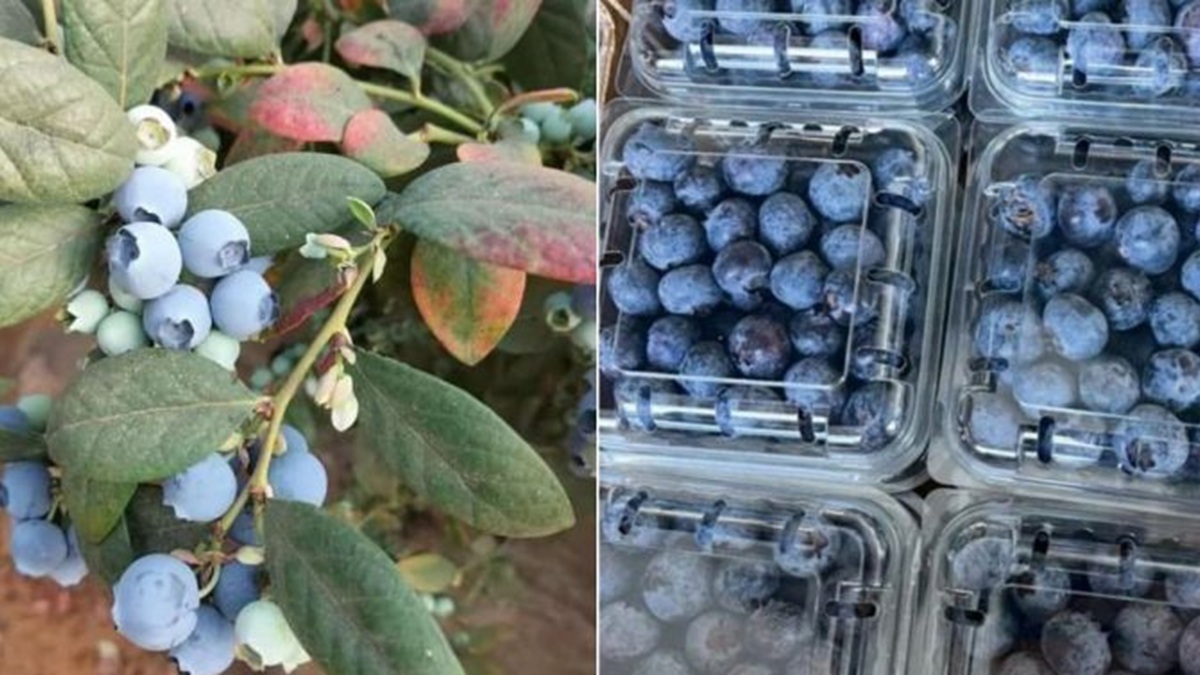
The close of the 2025–2026 season leaves a conclusion that is difficult to ignore: in berries, and especially in blueberries, competitiveness no longer depends solely on producing more or reaching further, but on arriving in better condition. During this season, the industry conversation once again revolved around recurring issues that continue to impact quality perception at destination, such as dehydration, over-ripening, loss of firmness, bloom collapse and reduced commercial shelf life. What is relevant is not only that these problems persist, but that they now occur in an increasingly demanding context, with less predictable logistics windows, greater retail pressure and climatic and geopolitical variability that forces a reassessment of decisions that previously seemed stable.
Based on experience in quality assessment, postharvest and technology trials across LATAM, the USA and EMEA, one of the clearest conclusions is that arrival issues rarely have a single cause. In most cases, what is detected at destination is the result of a chain of accumulated decisions that begins long before shipment: harvesting, pulp temperature, waiting times, packing operations, cooling, varietal selection, humidity management, packaging, transit and commercial decisions regarding risk. Final quality does not depend on a single point, but on the consistency of the entire system.
The 2025–2026 season: more demanding fruit and less margin for error
The season that has just ended was marked by a complex combination of factors: volume pressure in certain origins, strained logistics routes and fruit that, in many cases, arrived under borderline conditions. In blueberries, the issue was not only “arriving late” or “arriving soft”, but arriving with physiologically fatigued fruit, meaning fruit with a limited postharvest capacity to withstand distribution, retail display or repacking.
This was reflected in recurring symptoms such as:
- Dehydration, visible as loss of turgor or fruit with lower apparent weight
- Over-ripening, especially in lots with heterogeneous maturity at origin
- Loss of firmness, critical for consumer experience
- Greater sensitivity to transit times
- Inconsistency between lots and varieties
These indicators should not be interpreted solely as postharvest problems, but as the expression of a gap between the physiological potential of the fruit and the operational reality of the supply chain.
When fruit arrives, but not necessarily in good condition
One of the most widespread mistakes in the industry is still to evaluate logistical success in binary terms: “the fruit arrived”. However, in berries, especially in demanding markets, arrival does not mean preserving value. Quality at destination is not lost at a single point; it deteriorates progressively.
Dehydration, for example, is often attributed to long transit times or lack of humidity, when in reality it results from an interaction of factors such as initial fruit condition, time between harvest and pre-cooling, accumulated thermal load or varietal decisions not aligned with the commercial route. Similarly, over-ripening often reflects the tension between harvesting to meet a commercial window and harvesting to preserve the fruit’s travel capacity, a difference that has become increasingly critical in the current context.
At the same time, retail has evolved towards a new language of quality, where appearance alone is no longer sufficient. Consistency of experience —the ability to withstand distribution, maintain texture, preserve bloom and deliver organoleptic quality several days after arrival— has become a determining factor.
Technology and decision-making: lessons from field trials
Technology trials conducted across different regions have confirmed that technology can add value, but it does not replace operational discipline. The sector continues to look for solutions in the form of additives, packaging, coatings or sensors, but their effectiveness depends directly on the problem being addressed and the stage of the chain at which they are applied.
Among the most relevant lessons:
- Not all technologies perform equally across all routes or conditions
- Proper risk segmentation by lot is as important as the technology applied
- The greatest value lies in reducing variability rather than improving isolated indicators
- Measuring with purpose is more valuable than making assumptions
In this sense, the difference between discussing postharvest and managing it lies in the ability to integrate real data on initial condition, transit performance and behaviour at destination.
The key lesson: postharvest starts before harvest
One of the most repeated, yet still insufficiently addressed aspects is that arrival quality is not built in the container, but much earlier. When fruit enters the chain with uneven maturity, prior water stress, heat exposure or delays in the field, postharvest management is already at a disadvantage.
This requires rethinking quality management as a transversal process involving all areas:
- Production
- Harvest
- Packing
- Postharvest
- Logistics
- Commercial
Lack of alignment between these stages ultimately becomes visible in a single place: the opened box at destination.
Looking ahead to the 2026–2027 season: designing risk
The next season is expected to unfold in an even more complex scenario, where factors such as logistical uncertainty, variable costs, trade tensions and resource availability will shape operations. In this context, the question is no longer only how to ship more fruit, but which fruit is truly suitable for each route and market.
This is compounded by the climatic factor, with potential scenarios linked to El Niño Costero that could affect key variables such as temperature, humidity or uniformity of ripening. These elements not only impact yield, but also the fruit’s ability to travel, a key postharvest variable that is still often underestimated in decision-making.
For the 2026–2027 season, the approach must become more preventive and data-driven, with greater risk segmentation, stricter control of time and temperature, and better integration between quality and commercial decisions.
Consistency as a competitive advantage
The main conclusion from the season is clear: in berries, competitiveness no longer depends solely on volume or market access, but on the ability to maintain consistent quality in an increasingly uncertain environment.
The opportunity for the next season lies in moving from reactive postharvest management to a strategic approach, where decisions are made earlier, with greater criteria and supported by real data. In that shift, a significant part of the sector’s future competitiveness will be determined.
Article by Paula del Valle, specialist in berry quality and postharvest, My Blue Project