.jpg)

AgroFresh
Phytosanitaries
Key insights for the fresh produce sector at AgroFresh Xperience 2026
AgroFresh brings fresh produce leaders together in Berlin to anticipate structural challenges across the value chain
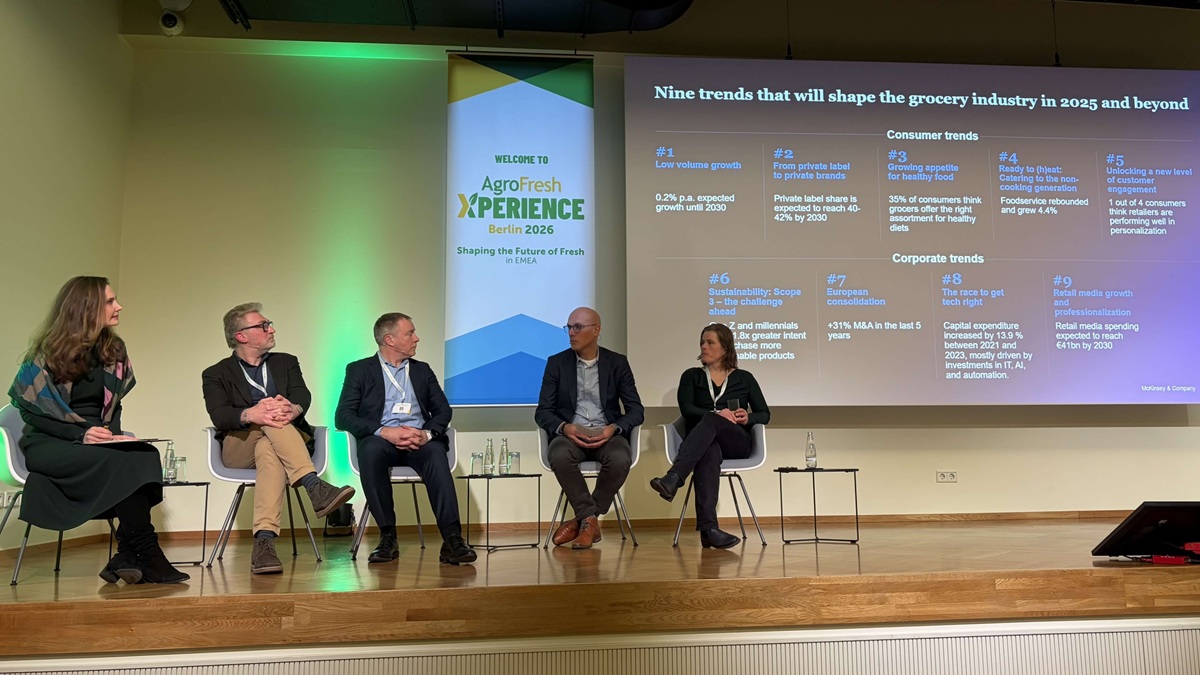
AgroFresh held a strategic industry forum on 3 February 2026 at the Berlin Congress Centre, bringing together international leaders from across the fresh produce sector with a clear objective: to analyse how the horticultural value chain is evolving and which levers will be decisive in addressing the challenges ahead.
Against a backdrop of climate volatility, cost pressure, logistical complexity and increasingly demanding consumer expectations, the event offered a technical, cross-value-chain perspective on the role of science, data and innovation in securing long-term competitiveness, consistency and sustainability.
A global perspective for an increasingly interconnected sector
Opening the event, Adrian Cox highlighted that the Berlin edition marked a step change in the AgroFresh Experience Events format. While previous editions had focused on specific crops or regions, this forum brought together multiple crops, geographies and areas of expertise within a single, integrated discussion.
Cox underlined that AgroFresh operates in more than 50 countries through a highly localised model, supported by a global structure built on science, knowledge sharing and technical expertise — enabling insights to flow across markets and helping the sector respond to challenges that are no longer isolated, but systemic.
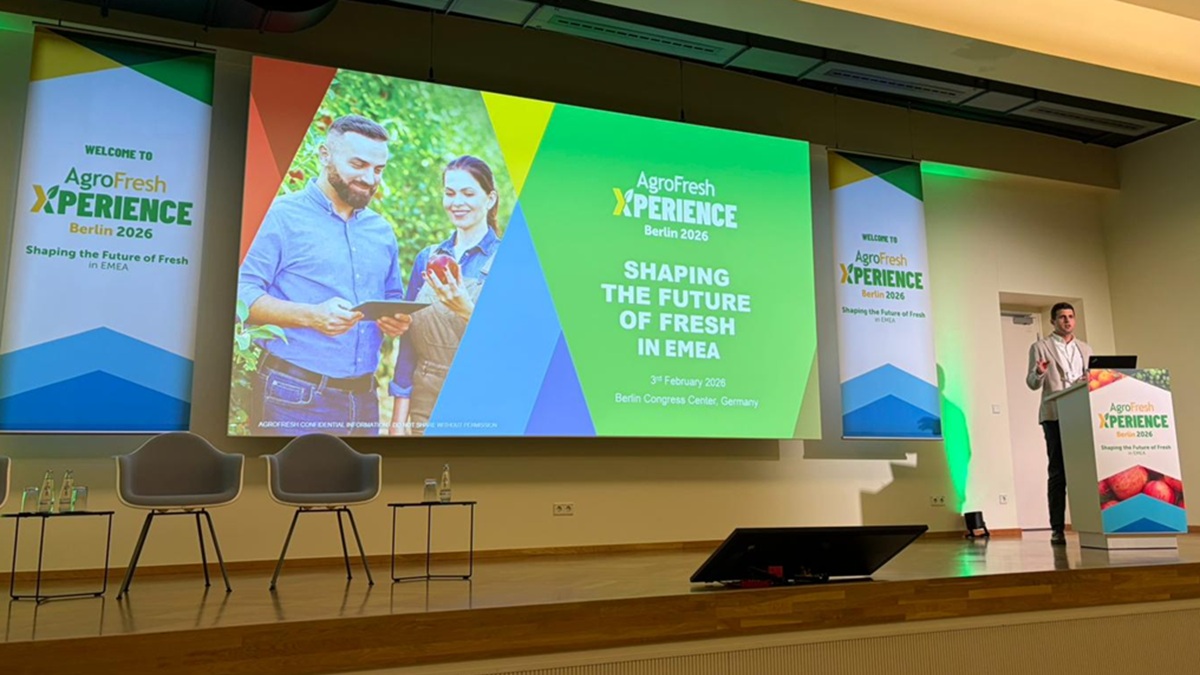
Adrian Cox, Comercial Director at EMEA in Agrofresh
Greater economic stability, but persistent structural pressures
Cindy van Rijswick from Rabobank provided a macroeconomic overview of the fresh fruit and vegetable market in the EMEA region. While the broader environment shows signs of stabilisation — with inflation easing and labour markets remaining robust — she noted that consumers continue to display strong price sensitivity.
According to Van Rijswick, fresh fruit consumption in Europe remains largely flat, with growth concentrated in categories such as berries and tropical fruit. At the same time, European production faces structural constraints driven by regulation, rising input costs, labour shortages and the increasing impact of climate change, placing sustained pressure on supply, margins and long-term viability.
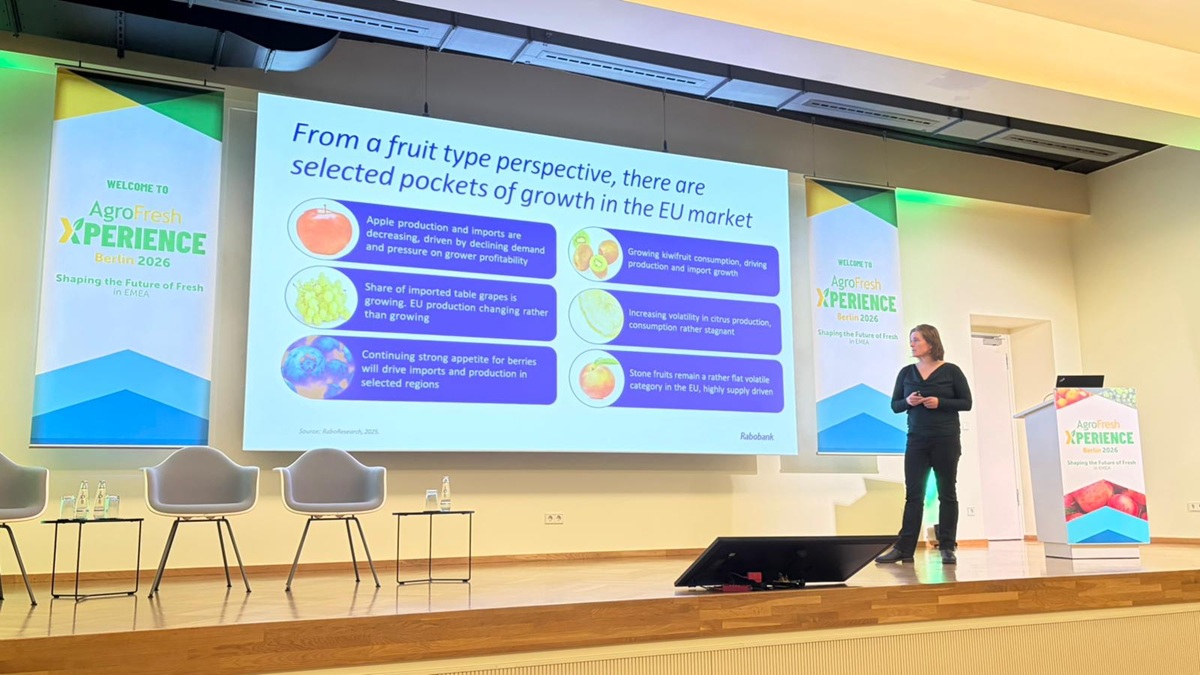
Cindy Van Rijswick, Rabobank
Consistency as the new benchmark for quality
From the perspective of Driscoll’s, Alfredo Molin emphasised that consistency has become the defining factor in building consumer loyalty. The consumer experience, he explained, is not a single moment, but a promise that must be delivered repeatedly and predictably.
Molin stressed that this consistency starts with genetics and agronomic management and extends across the entire field-to-fork value chain. Climate extremes, production variability and logistical disruptions not only affect quality, but also availability, increasing the risk of irregular consumer experiences that ultimately undermine trust.
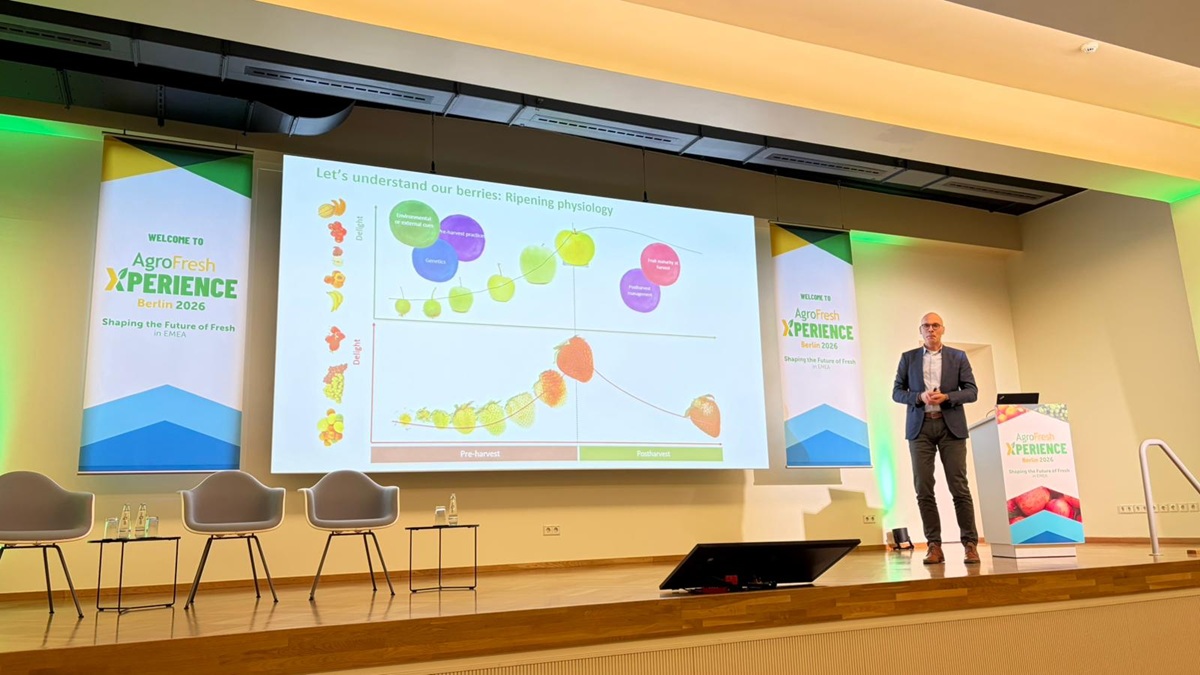
Alfredo Molin, Vice President Supply Chain EMEA of Driscoll's
Science and data translating preference into technical decisions
Matvey Smirnov of AMFRESH Group addressed the role of science in converting consumer preferences into concrete operational decisions. By combining chemistry, sensory analysis, data and predictive models, it becomes possible to identify which variables truly shape flavour, texture and overall eating experience.
Smirnov highlighted that consumers are far from homogeneous and that distinct preference profiles exist, requiring a far more precise, data-driven approach to quality management — from varietal selection through postharvest handling and packaging design.
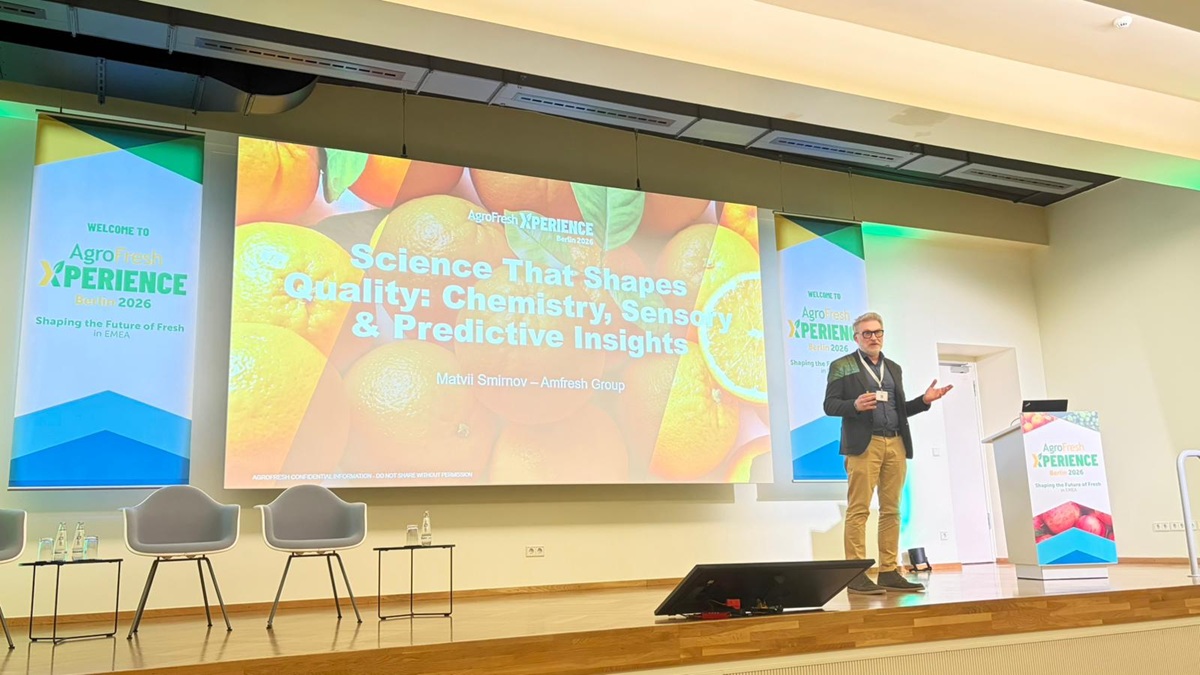
Matvey Smirnov, Innovation Director at Smartfresh
Panel discussion: collective responses to shared challenges
The panel discussion, moderated by Magdalena Balazy from McKinsey, revealed a clear consensus among speakers: consistency has become the sector’s primary technical and strategic challenge.
Participants agreed that achieving this consistency requires an integrated value-chain approach built on data, traceability and real-time technology. Sustainability was also addressed from a pragmatic standpoint, with a strong focus on reducing food waste, improving water efficiency and accelerating the adoption of biological solutions.
The discussion also explored the evolving role of packaging — not only as a protective tool, but as a means of communication and guidance for consumers — as well as the opportunity to transfer learnings from other industries to improve the retail experience.
AgroFresh’s vision: managing risk through applied solutions
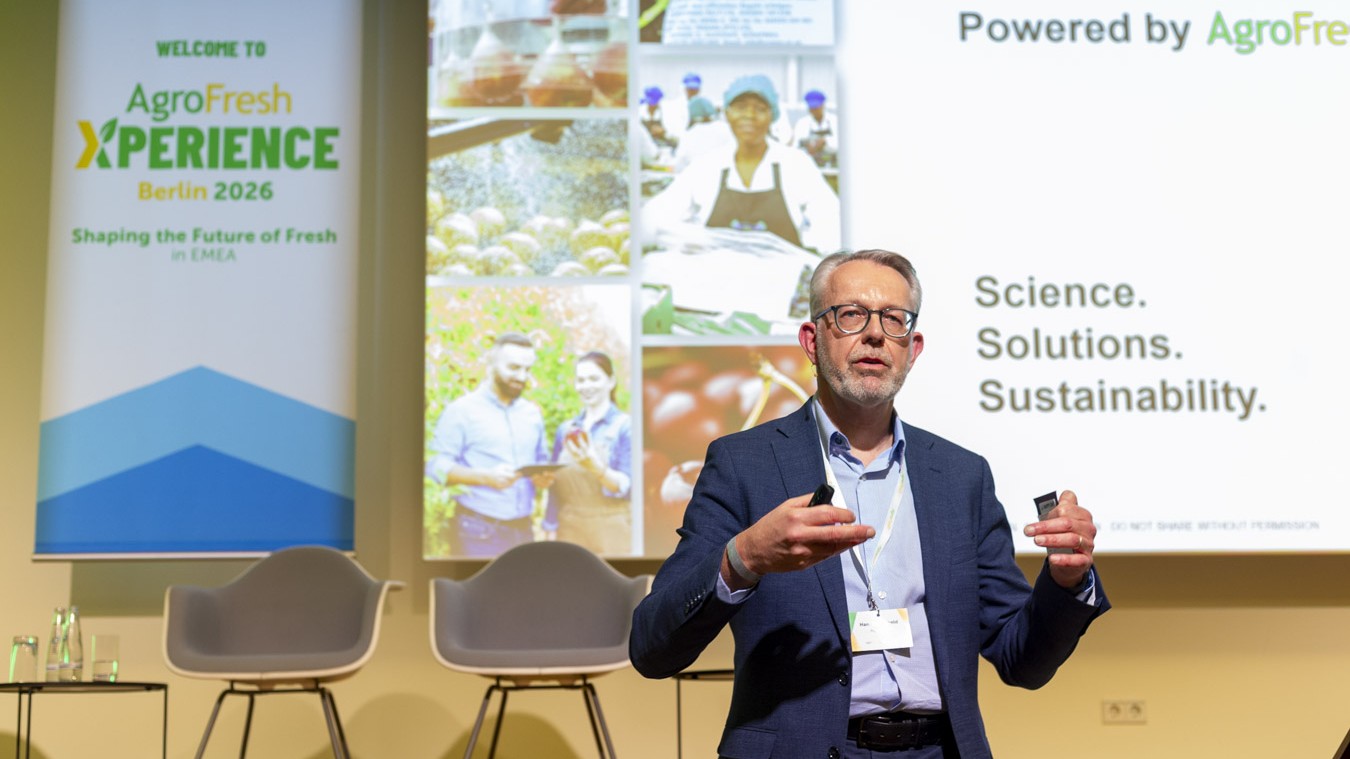
In his closing remarks, Han Kieftenbeld, CEO of AgroFresh, described the fresh produce sector as fundamentally a risk-management business, where science only creates value when it is translated into practical, measurable and scalable solutions.
Kieftenbeld emphasised that the ultimate objective is to maximise the likelihood that produce reaches the consumer in optimal condition, is consumed and does not go to waste. In this context, he positioned AgroFresh as a strategic partner for the value chain, capable of integrating science, solutions and sustainability to support growers, operators and retailers in navigating an increasingly complex and uncertain environment.
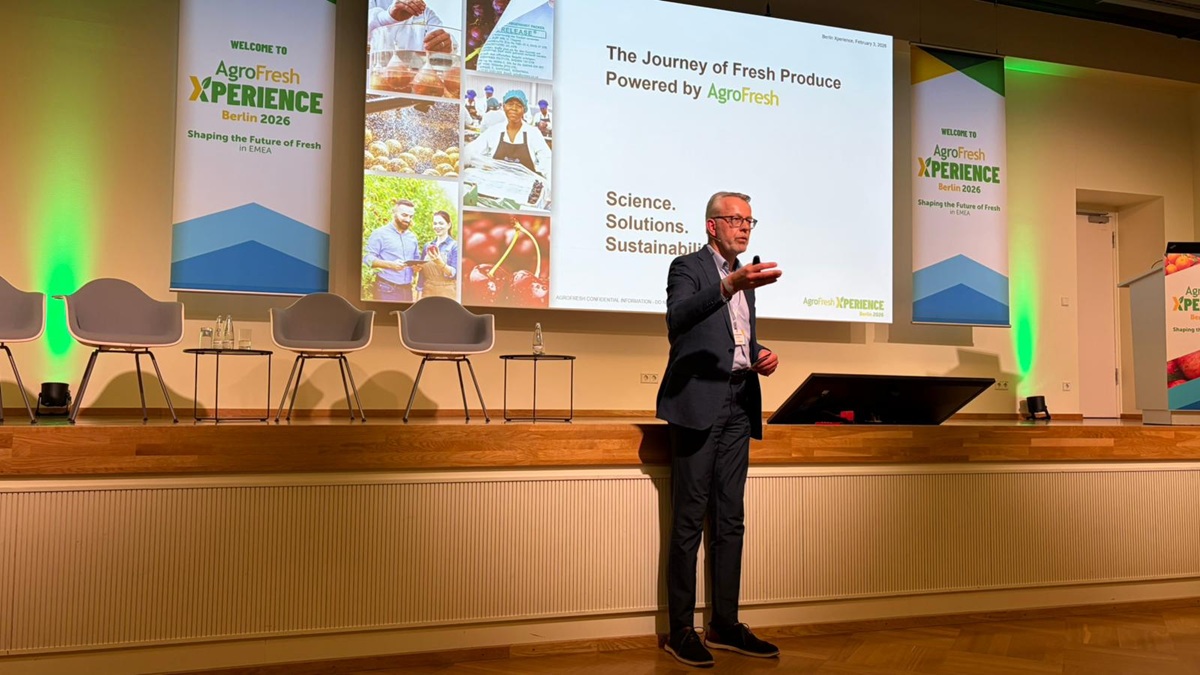
Han Kieftenbeld, CEO at AgroFresh
A shared conclusion
The Berlin forum delivered a clear message: today’s challenges in the fresh produce sector demand coordinated, knowledge-based responses. The integration of applied science, data, consumer insight and cross-chain collaboration is emerging as the foundation for strengthening resilience and competitiveness in the years ahead.
News of AgroFresh
The role of 1-MCP in preserving the quality of pome fruit
AgroFresh