
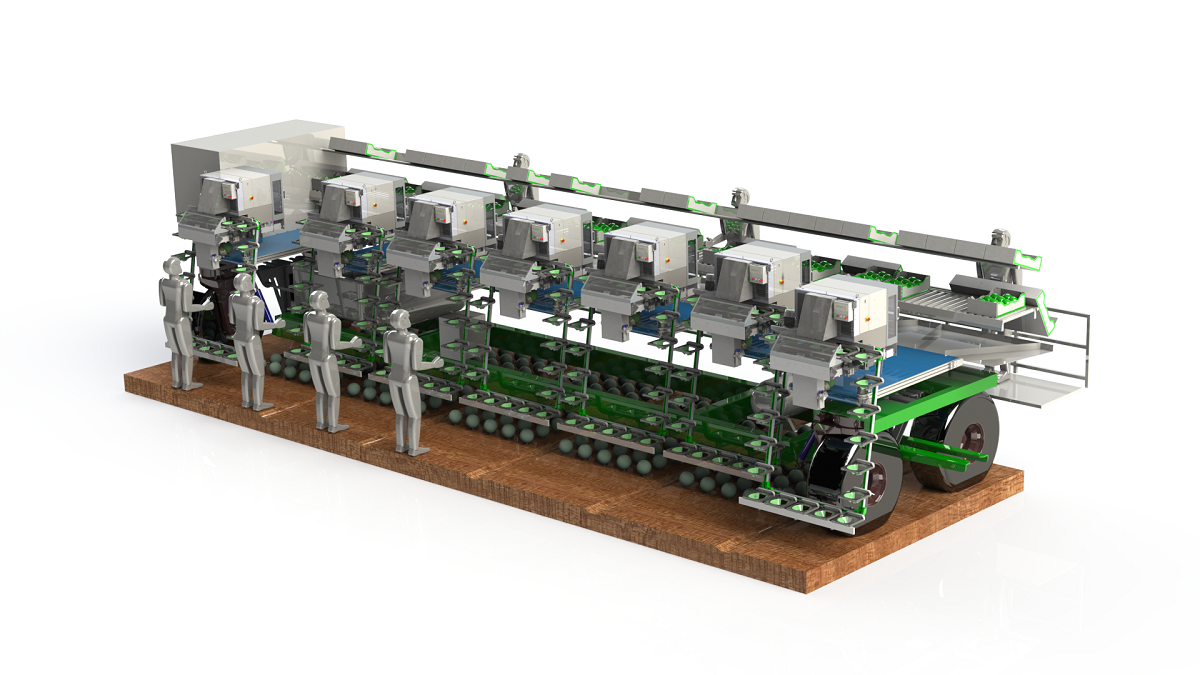
.jpg "A self propelled gantry platform combines box erecting, packing stations, and side off load to a trailer, with configurations aimed at 40 and 42 inch beds and a stated capacity of 7700 packs per hour in a typical twelve bed setup")
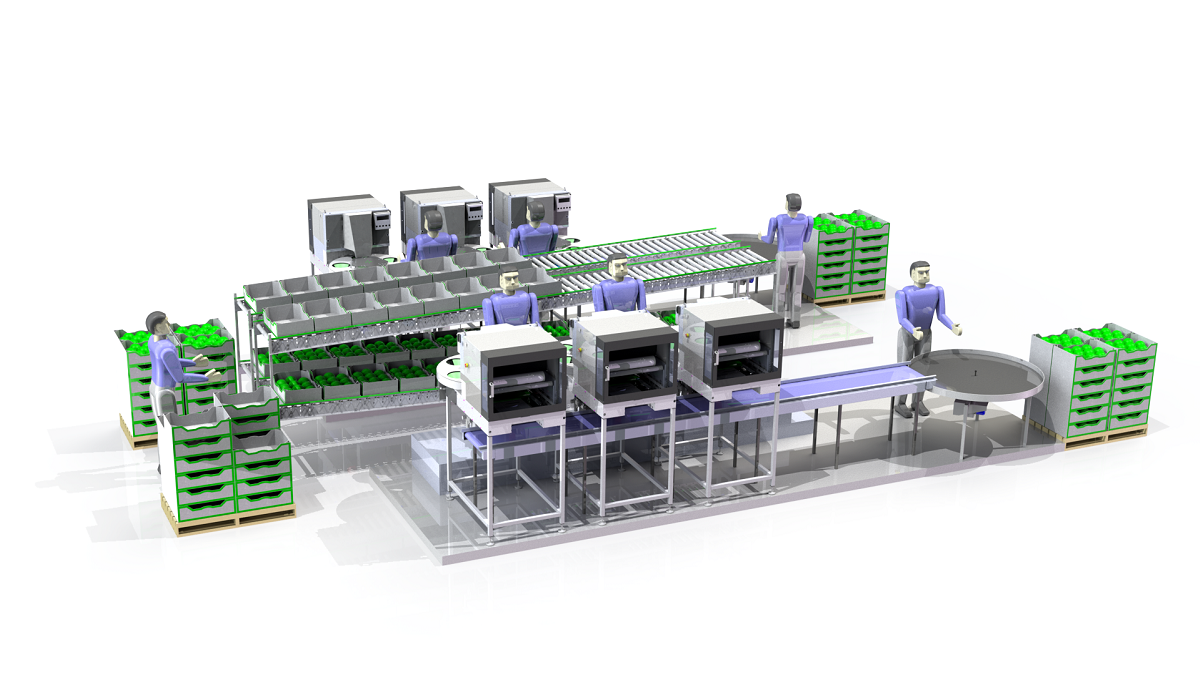
BrimaPack positions the Discovery system as a practical response when labour availability becomes the real limiter of harvest throughput in high volume vegetable crops. The machine brings harvesting and packing into one self propelled gantry style platform, integrating multiple packing units, box erecting stations, and in field logistics into the same workflow. Packed boxes are side off loaded directly onto a transport trailer running alongside the rig, a layout intended to keep the line moving and to reduce unproductive time linked to stops, internal handling, and re staging.
Operational context and where it fits
Discovery is described as a self propelled gantry style harvester designed to meet regional requirements, including the kinds of configurations common in the United States. The core idea is that boxes leave the field already packed and ready for the next logistics step, with fewer intermediate touches and clearer lot organisation from the point of harvest. In practice, the value depends not only on cutting speed, but on how well the packing flow and box removal schedule are stabilised to avoid bottlenecks.
Configuration highlights and stated capacity
BrimaPack offers wheelbases from 8 to 14 m, and can integrate a variable wheelbase on request to suit 40 and 42 inch beds. In a typical twelve bed system at 40 feet, equivalent to 12.2 m, the company states a production capacity of 7700 packs per hour. BrimaPack also reports that, in that same configuration, the required crew size can be about half of what a conventional harvester needs, based on the information provided by the manufacturer.
Practical implications for quality, traceability, and cooling speed
Bringing packing into the field shifts the quality control point forward, because packing decisions are made earlier and directly shape what arrives at the packinghouse. To protect product condition, the side off load and trailer removal plan needs enough frequency to avoid prolonged exposure to sun, wind, and dehydration, especially in crops sensitive to loss of turgor. Where fast pre cooling is required, field logistics should aim to move packed boxes into shade and then into the cold chain as quickly as possible, while keeping identification and records consistent from the packing station through palletising and dispatch.
Discovery aims to make packing part of the harvest process itself, with the goal of sustaining a continuous flow while reducing dependence on large crews. The technical watch point is heat and moisture management and the disciplined removal of packed boxes, because higher cadence only holds if quality and traceability are protected. A sensible next step is to map the full route from cutting to pre cooling, and to verify headland manoeuvrability and true compatibility with the bed width used in the crop.