News
Can sustainability be measured in the fruit and vegetable sector?
The presentation of Generazione Ortofrutta at Macfrut opens the debate on how to turn sustainability into a measurable, verifiable and useful concept for producers, retailers and consumers
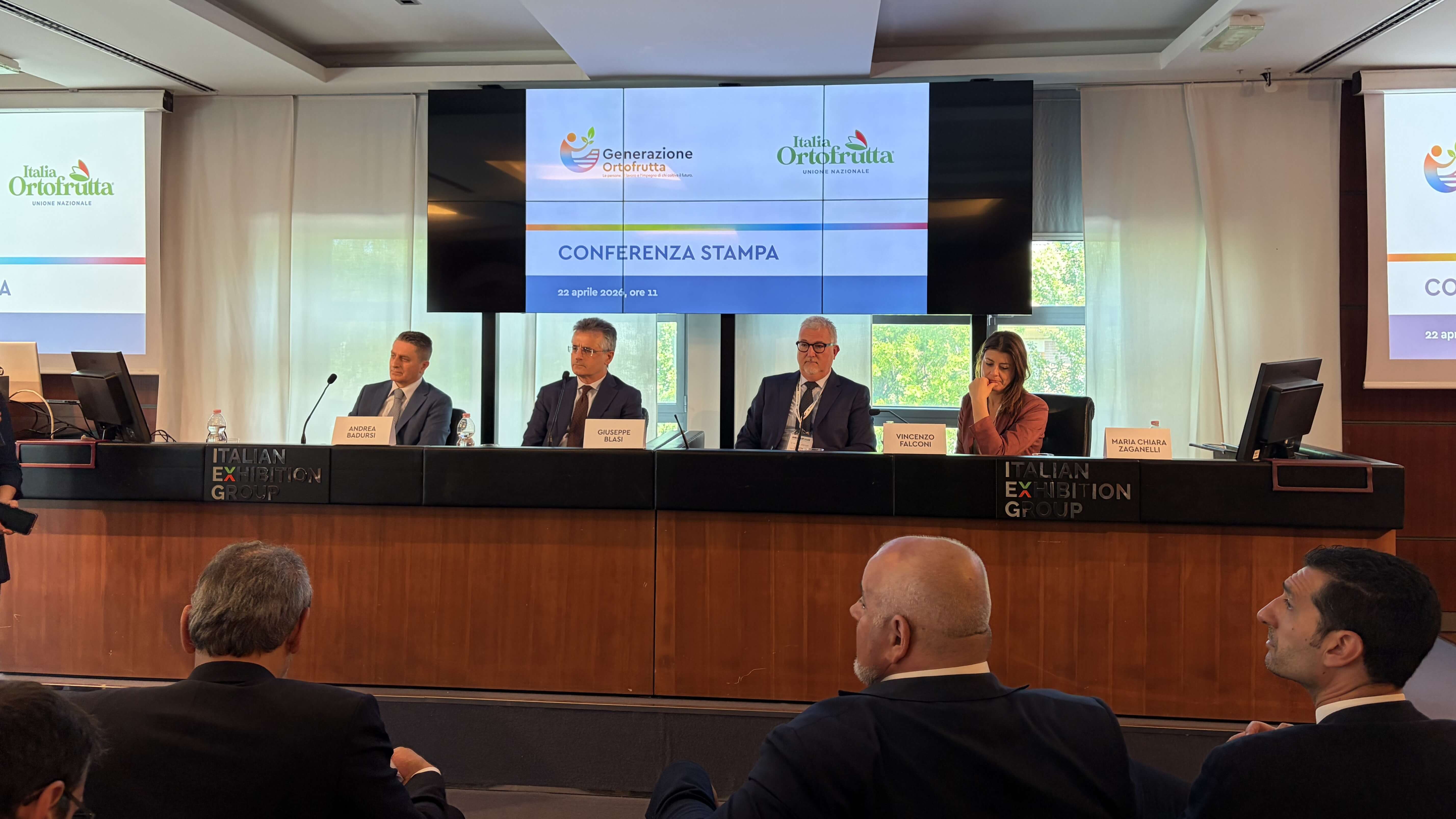

Sustainability has become one of the most frequently used words in the agri-food sector. It appears at trade fairs, on packaging, in campaigns, certifications, innovation projects and commercial strategies. However, the more it is used, the more necessary it becomes to ask what it really means: emission reduction, water savings, lower use of plant protection products, energy efficiency, recycling, labour welfare, waste reduction, profitability for growers, or all of these at once.
At Macfrut, the presentation of Generazione Ortofrutta brought precisely this question to the table. The project, promoted by Italia Ortofrutta with the scientific support of CREA, seeks to define a sustainability standard for the Italian fruit and vegetable sector, based on measurable parameters and applicable from the field to the packinghouse and marketing.
A word increasingly used and increasingly less concrete
Talking about sustainability is no longer enough. The term has gained strength as a market argument, but it also risks becoming diluted if it is not accompanied by clear criteria. In practice, the same word can encompass improvements in conservation, energy and logistics, changes in packaging, postharvest treatments or waste management.
The challenge for the fruit and vegetable sector is not only to communicate that it produces more sustainably, but also to prove it. This requires shared indicators, verification systems and tools that make it possible to convey to consumers and retailers the real efforts made by growers and organisations. Without a common basis, sustainability can become an attractive concept, but one that is difficult to compare and even more difficult to value.
A standard to organise sustainability in the fruit and vegetable sector
Generazione Ortofrutta was created with the aim of organising this scenario. Italia Ortofrutta presents the project as a standard capable of integrating environmental, economic and social sustainability into a single frame of reference. The initiative starts with 28 pilot producer organisations, present in 17 Italian regions. Together, they bring together more than 4,000 growers and around 33,000 hectares under cultivation. The standard includes 34 parameters and is designed to cover the different stages of fruit and vegetable activity, from the field to the packinghouse, marketing and the management of the producer organisations themselves.
The idea is not to add yet another label to a market already saturated with seals, but to build a common tool that makes it possible to identify, measure and communicate sustainable practices with a recognisable basis for the entire chain.
Measuring, verifying and communicating
One of the most relevant elements of the project is the participation of CREA as scientific partner. Its role is key to transforming sustainability into objective, verifiable and updateable indicators. In a context in which many certifications respond to private requirements or to specific demands from retailers, Generazione Ortofrutta aims to start from the production sector itself and rely on technical criteria.
This dimension is especially important because growers already deal with multiple requirements, seals and standards. Fragmentation generates costs, duplications and difficulties in clearly communicating what is being done and what value it has. A common framework could help reduce this dispersion, provided that it gains recognition from the different actors in the chain and maintains a balance between technical rigour, economic viability and commercial usefulness.
The project also seeks to give visibility to practices that, according to the sector, have already been carried out for years, but do not always reach the end consumer. In this sense, sustainability should not only be measured: it must also be communicated in an understandable way. If the effort is not recognised in the market, it will hardly become value for those who produce.
A reflection for other major producers
The Italian initiative opens up a reflection that goes beyond its borders. In countries with a strong fruit and vegetable sector, such as Spain, there are operational programmes, private certifications, organic production, efficiency strategies and growing requirements linked to sustainability. However, the debate remains how to articulate all this in a common, measurable and recognisable language for growers, retailers and consumers.
It is not about using the word sustainability more, but about defining its content more precisely. The underlying question is who defines the criteria, how they are verified, what cost they have for growers and what real value they generate in the market. At a time when the term sells, but is also being worn down by overuse, projects such as Generazione Ortofrutta show a possible direction: moving from the generic message to data, from the commercial claim to the standard, and from intention to measurement.
Sustainability will continue to be a key word for the fruit and vegetable sector, but its value will increasingly depend on the ability to demonstrate it with evidence, communicate it clearly and make it useful for the entire chain.
Related news
The 24th IRTA postharvest technical conference addresses how to adapt fruit storage to a scenario with fewer tools and higher demands