News
Postharvest challenges in avocado: temperature, chilling injury and internal browning
As global demand for avocados grows and shipments reach increasingly distant markets, postharvest protocols must be fine-tuned to limit chilling injury, internal browning and ripening problems, while maintaining the level of quality expected by consumers
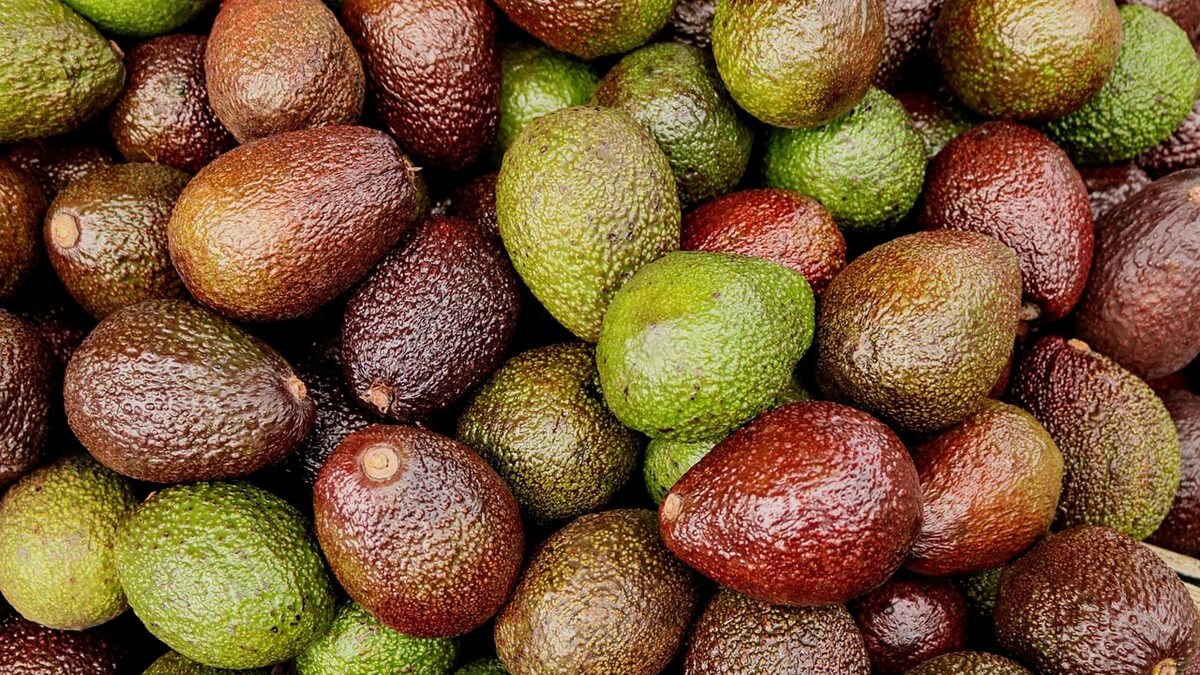

The rapid expansion of international avocado trade is putting postharvest systems under pressure. Along the chain, fruit needs to maintain its quality despite being highly sensitive to low temperatures, ethylene and harvest maturity. Every season, larger volumes are shipped to markets with very strict requirements in terms of presentation and uniformity, which makes any weakness in postharvest handling much more visible.
In this context, seemingly small deviations in temperature, transit time or ethylene management can result in lots that look acceptable on the outside but show internal defects in the destination market, with clear commercial implications.
Sensitivity to low temperatures and physiological response
Avocado is one of the fruits that most clearly reflects the effects of inadequate temperature management. When fruit is held below recommended temperature ranges for prolonged periods, chilling injury may develop, expressed as pulp browning, skin discoloration, loss of firmness and a higher susceptibility to decay.
This behaviour calls for very precise refrigeration programmes. Simply "cooling more" is not an option if the goal is to extend shelf-life, because temperatures that are too low can trigger problems that only become evident at the end of the chain, at retail level or even in the consumer’s home. In addition, tolerance to cold can vary depending on the cultivar, growing region and preharvest climatic conditions, adding another layer of complexity to the design of storage and transport protocols.
At the same time, the combination of temperature, storage duration and physiological status of the fruit determines how well avocados can withstand long journeys without developing internal damage. As a result, there is growing interest in fine-tuning temperature profiles according to the final market and the type of programme or customer being supplied.
Harvest maturity, dry matter and internal quality
Final eating quality is closely linked to harvest timing. Parameters such as dry matter content and initial firmness strongly influence how the fruit will behave during storage and transportation. If avocados are harvested too early, subsequent ripening can be irregular, leading to poor textures and a disappointing eating experience.
In practice, many operators deal with lots that show considerable variation in internal maturity. Within a single consignment, some fruit may reach ready-to-eat condition in just a few days while others still need time to soften. This makes commercial management more difficult and complicates the goal of presenting a homogeneous product at the point of sale. For this reason, systematic assessment of dry matter and other internal quality indicators is becoming increasingly important, both at origin and at control points along the chain.
This growing focus on internal quality is also opening the door to non-destructive assessment techniques that help characterise lots more accurately and decide which destinations and postharvest programmes are most suitable in each case.
Ethylene, storage atmospheres and ripening speed
As a climacteric fruit, avocado responds strongly to ethylene. Its presence accelerates softening, while reducing or removing ethylene helps slow down the ripening process. The challenge is to strike a balance between keeping the fruit firm enough for transportation and ensuring that, on arrival, it can reach the desired eating stage in a controlled way.
Technologies such as controlled and modified atmospheres, combined with high and stable relative humidity, are used to modulate fruit respiration and reduce water loss. In parallel, monitoring tools are becoming more sophisticated: from gas sensors to non-destructive quality assessment methods, they allow closer tracking of fruit evolution and support more precise decision-making at each step of the chain.
All these factors mean that avocado postharvest handling has become a field where coordination between harvest maturity, refrigeration, ethylene management and storage atmospheres is crucial. When these elements are properly aligned, the result is fewer claims, better eating quality for the consumer and a stronger basis for sustaining market growth.
Related news

The 24th IRTA postharvest technical conference addresses how to adapt fruit storage to a scenario with fewer tools and higher demands