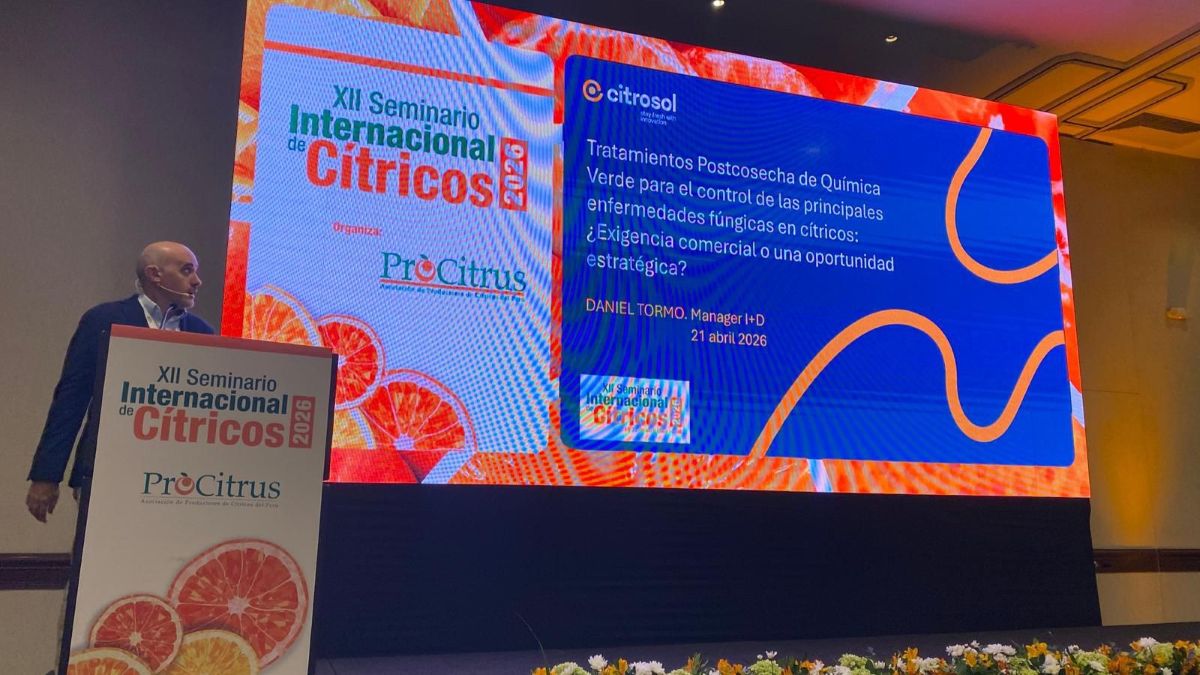
Citrosol also took part with two presentations, delivered by Daniel Tormo, R&D Manager at the company.
The first, entitled "Green Chemistry Postharvest Treatments for the Control of the Main Fungal Diseases in Citrus: A Commercial Requirement or a Strategic Opportunity?", presented the different solutions developed by Citrosol in this field, as well as results from the Biocare treatment lines, which include organically certified solutions. Within this range, innovative treatments were presented that make it possible to achieve rot control levels of over 90%, with sustained efficacy over time, helping "chem free" fruit reach distant markets with fewer losses.
In addition, other green chemistry treatments developed by Citrosol to respond to new market demands were presented, such as Greenfog-AS, an antifungal fumigation treatment especially suitable for citrus packinghouses; and the Plantseal® range of coatings, organically certified coatings with the vegan V-label seal, offering excellent control of weight loss, far superior to other conventional coatings. PlantSeal® achieves a reduction in weight loss of over 50%, resulting in greater fruit firmness on arrival and less softening and deformation of the fruit compared to fruit protected with conventional waxes.
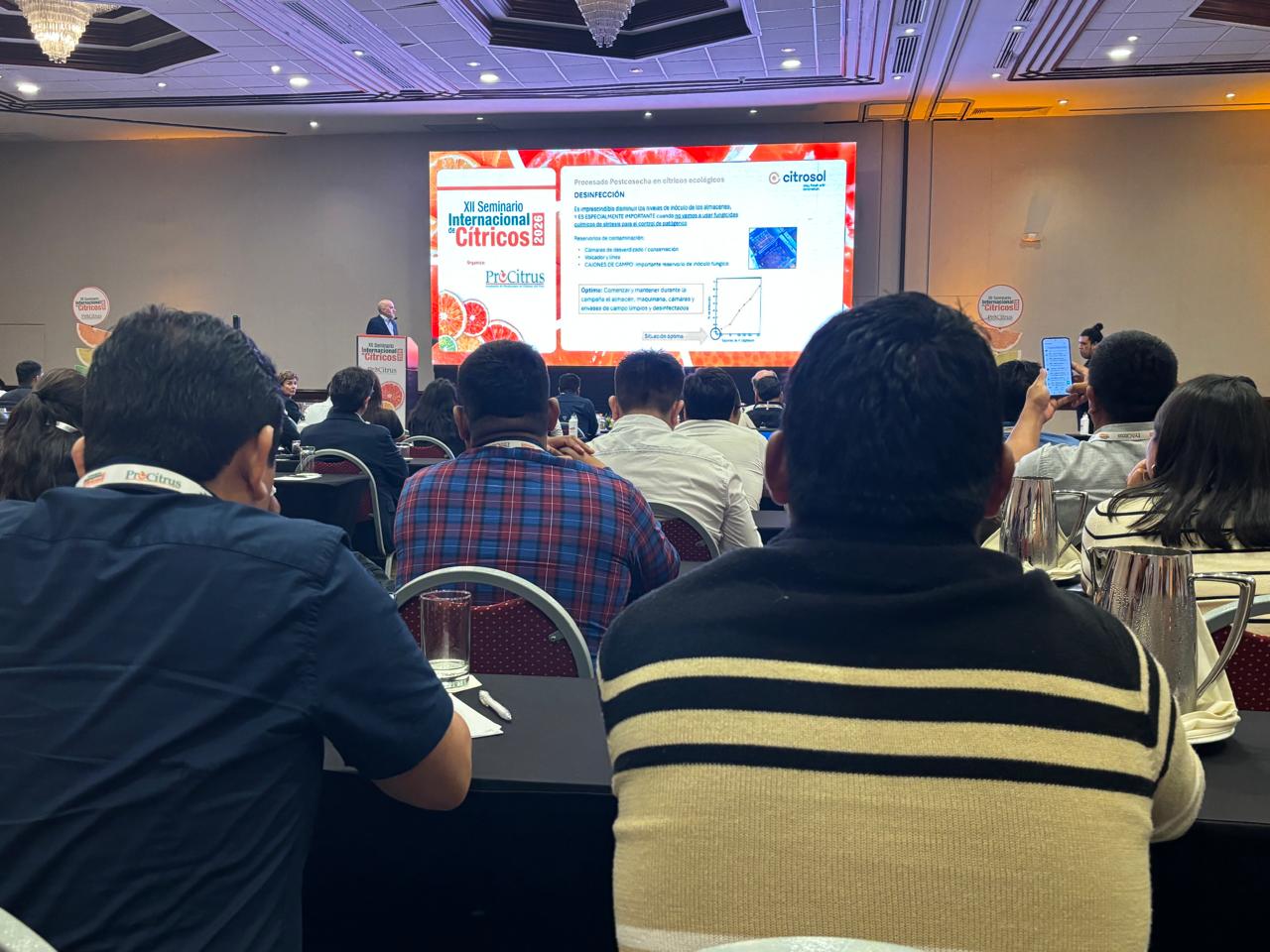
The second presentation, entitled "Postharvest Pathogens and Physiological Disorders in Citrus: Types of Staining, Symptoms, Causes and Action Strategies in Packinghouses to Minimize Their Incidence", addressed the main fungal diseases found in citrus and how to deal with them in the packinghouse. In this context, Daniel Tormo focused on the first drencher treatment and how to carry it out successfully in order to avoid the emergence of resistance and possible rot-related claims. To this end, results from real cases of the Catsystem® were presented, a system developed by Citrosol that keeps fungicide concentrations constant by carrying out in situ and real-time analyses and corrections of the treatment solution, thereby ensuring total rot control and a more rational use of fungicides and other drencher inputs. This unique system on the market will mark a turning point for Peruvian exporters, as it will enable them to reach the most distant markets without claims at destination.
Finally, the different physiological disorders that commonly occur in citrus postharvest were reviewed, including chilling injuries. Regarding this type of cold damage, results were presented for the coatings in the CIC range (Chilling Injury Control), which showed excellent control of these stains in prolonged refrigerated shipments to overseas destinations. These coatings are specifically formulated to control stains resulting from chilling injury, achieving control levels very similar to those obtained with synthetic fungicides usually added to wax for this purpose. In this way, they make it possible to meet the requirements of supermarkets demanding "low chem" strategies.
Among the fungal diseases commonly found in Peruvian citrus production, the issue of the fungus Cladosporium sp. was, of course, also addressed. In this regard, the disease was reviewed, along with the different strategies for its postharvest control, and updated results were presented from the disease monitoring that Citrosol has been carrying out in the country since 2020.