Conditioning
Genetics are changing the rules of blueberry ripeness
The emerging genetic technologies are changing how we understand ripeness and the postharverst period. Let's see how.
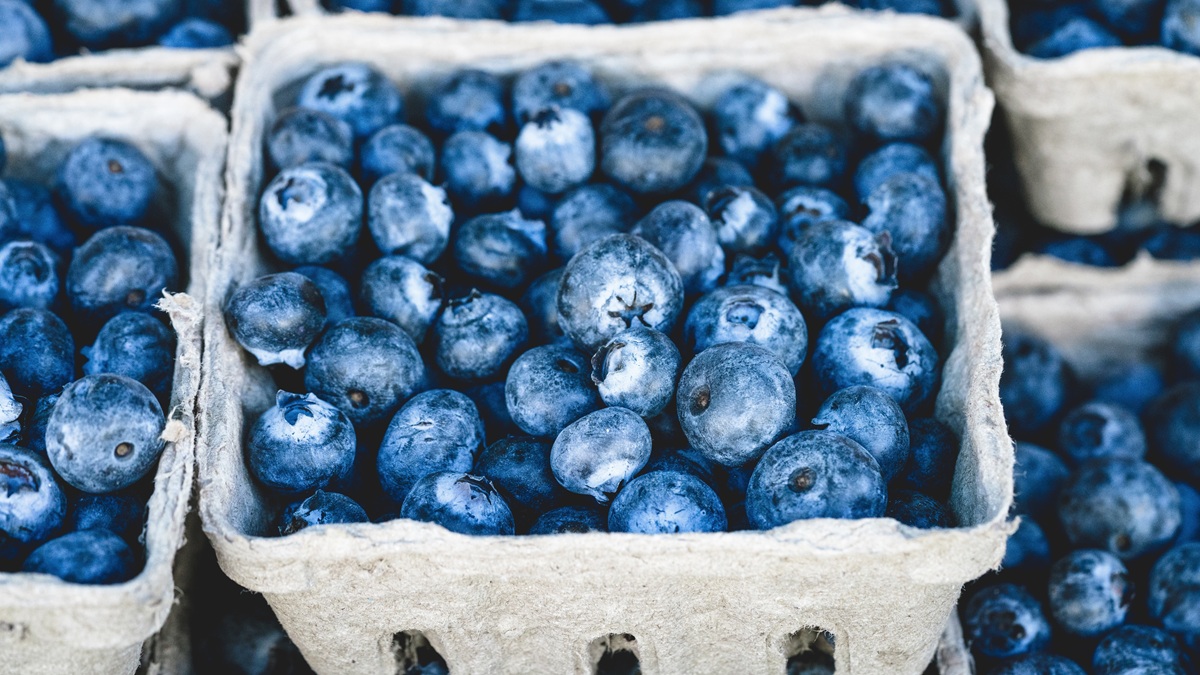
For years, blueberry post-harvest management was based on relatively simple concepts: harvesting at a specific color stage, rapid cooling, maintaining the cold chain, and evaluating firmness, condition, dehydration, and rot.
That model was useful. But today, it is no longer enough.
The arrival of new genetics is profoundly changing blueberry behavior and, with it, the way we must understand their ripeness, physiology, and, ultimately, their postharvest life.
The question is no longer just when a blueberry is ripe. The question is: how much postharvest life potential does that blueberry have when we harvest it?
From visual ripeness to physiological ripeness
For a long time, color was one of the main indicators for determining the harvest time.
Green, pink, turning, blue.
But color tells us only part of the story. Two berries can have virtually the same color and yet behave completely differently during the following weeks of storage. One may maintain firmness, bloom, and condition for 30 or 45 days. The other may rapidly lose firmness, show signs of dehydration, develop browning, become more susceptible to Botrytis, or reach the market in a condition very different from what was expected.
Why?
Because maturity and postharvest behavior are not exactly the same thing. Maturity is a physiological process. Postharvest life is the expression of how that process continues after harvest.
And here’s a variable we need to examine much more closely: genetics.
New genetics don’t just change quality—they change physiology.
New varieties have been selected for traits the market demands: larger size, firmness, crispness, better flavor, productivity, condition, and transportability.
But each genetic line comes with a specific physiological architecture: Not all varieties respire in the same way. Not all produce the same amount of ethylene. Not all respond the same way to ethylene. Not all lose water at the same rate. Not all maintain the same cellular integrity. And, most importantly, not all evolve in the same way after being harvested.
Recent research has demonstrated significant genetic variability in postharvest quality traits. Even within breeding populations, there Significant differences have been found in the ability to maintain firmness during prolonged storage periods. This means that genetics must begin to be considered one of the primary variables in any postharvest strategy. We can no longer continue to use a one-size-fits-all approach for all varieties.
What’s really going on with ethylene?
This is where the story gets particularly interesting.
Traditionally, blueberries have been considered a non-climacteric fruit. However, recent research shows that the reality is much more complex. Some genotypes exhibit increases in respiration during the color transition, as well as increases in ethylene production. Others exhibit much less pronounced behavior.
A recently published scientific review concludes that there is significant variability among blueberry species and genotypes, and that it is still too early to establish a single classification of the ripening process for all blueberries.
Even recent studies from 2026 show that ethylene plays a role in the ripening of highbush blueberries, but without necessarily exhibiting the autocatalytic production characteristic of classic climacteric fruits. This changes the way we must interpret ethylene.
Ethylene should not be viewed simply as “the hormone that ripens the fruit.” We must understand it as part of a physiological network involving genetics, ripeness, temperature, stress, respiration, and storage conditions. And that network may differ for each variety.
Respiratory rate: metabolism that continues after harvest
A harvested blueberry is still alive. It continues to breathe. It consumes oxygen, produces CO₂, uses energy reserves, and maintains metabolic activity that, depending on its intensity, can accelerate or slow down its deterioration.
The respiratory rate is, therefore, a window into the fruit’s metabolic activity. When respiration increases, so does the rate at which the fruit uses its resources. This has consequences for senescence, tissue stability, and the ability to maintain quality attributes. And here we find another reason to abandon one-size-fits-all approaches. A variety with a high respiratory rate will not necessarily behave the same way post-harvest as another variety under exactly the same conditions.
Physiological research on blueberries has shown that some genotypes exhibit respiratory peaks during the color transition, while others display different behaviors. It has also been observed that genotypes with lower respiratory rates may exhibit better postharvest storage life.
Therefore, measuring firmness at harvest alone may be insufficient.
The question should be: How fast is this fruit deteriorating physiologically?
Ripeness is not a single point in time. It is a process. This is probably one of the most important conceptual shifts in modern postharvest science. Ripeness should not be understood as a fixed point. The fruit goes through different physiological stages, and each one has implications for what will happen after harvest.
We can observe:
Stage of ripeness → respiration → ethylene → structural changes → loss of firmness → water loss → susceptibility to pathogens → shelf life.
But this sequence does not occur exactly the same way in all varieties. That is why two varieties harvested at the same color may have two completely different postharvest lives. And this brings us to a concept that I consider fundamental:
Pre-harvest shelf-life
Post-harvest life begins before harvest. It does not begin at the packing house. It does not begin when we place the fruit in cold storage. It begins in the field. Genetics, the environment, crop load, nutrition, water, temperature, radiation, fruit condition, and physiological state at the time of harvest all play a significant role in determining post-harvest potential.
That is why we need to begin characterizing each combination:
field + variety + environment + stage of ripeness + harvest condition.
And translate that information into a prediction of postharvest behavior.
From “harvest firmness” to the evolution of firmness
Firmness remains one of the most important variables. But measuring it only at harvest is not enough either. What is truly relevant is understanding how it evolves. A fruit that starts at 85 Shore and drops to 60 Shore after several weeks does not behave the same way as a fruit that starts at 80 Shore and maintains 75–78 Shore during storage.
The latter may be much more commercially viable. That is why we need to move from a snapshot to a moving picture. Not just: “What is the firmness today?” but: “What will the firmness be in 7, 14, 21, 30, or 45 days?”
Genetics is beginning to offer us tools to answer this question. Recent studies in quantitative genetics and genomic prediction show precisely that it is possible to study and predict postharvest traits over time, opening up a new opportunity to select varieties not only for their initial quality but also for their ability to maintain it.
The new postharvest era requires new indicators
If we truly want to evolve, we must stop evaluating postharvest life solely as an end result. We need to measure the rate of change.
Therefore, a modern characterization should include, among other variables:
• Initial firmness and loss of firmness.
• Respiration rate.
• Ethylene production and sensitivity.
• Weight loss.
• Bloom retention.
• Incidence of Botrytis and other forms of deterioration.
• Mechanical damage.
• Response to cooling.
• Changes in soluble solids.
• Changes in acidity.
• Condition after prolonged storage periods.
• Behavior during shelf life.
The goal is not to generate more data. The goal is to transform physiological data into decision-making capability. What does this mean for the industry?
It means that the post-harvest management of the future cannot be separated from genetic improvement. The breeder needs to know what happens to a variety after 30 or 45 days. The grower needs to know the shelf-life potential of each variety in the field. The packing house needs to know which cooling, handling, and storage protocols each genetic line requires. The exporter needs to know which varieties can actually tolerate a specific logistics route. And retailers need to know which fruits will reach consumers in consistent condition. The new approach to postharvest must connect all these dots: genetics + physiology + handling + technology + data.
A new way to define postharvest life
For a long time, we’ve talked about “shelf life” as if it were just a number: 30 days; 45 days; 60 days. But postharvest life shouldn’t just be a number of days. It should be a fruit’s ability to maintain the attributes that define its commercial value and consumer experience over a given period. And that ability depends on how its physiological processes evolve.
That’s why the future isn’t just about finding firmer varieties—it’s about finding varieties that maintain their firmness. Not just varieties with good bloom. But varieties capable of retaining it. Not just fruit with a low incidence of rot at the start. But fruit that deteriorates more slowly. Not just fruit that holds up well until day 7. But fruit designed to maintain its quality throughout the entire supply chain.
The new era of postharvest has already begun
We are entering a new phase. A phase in which it will no longer be enough to ask: “Which variety yields the most?” Nor: “Which variety is firmer?” The question will be much more strategic: “Which variety has the best physiological performance for the market I want to serve?”
Because a genetic line is not just a fruit. It is a physiological system. And understanding that system allows us to anticipate how it will evolve after harvest. The new approach to postharvest management is precisely that: to stop reacting to deterioration and start predicting it.
To move from measuring quality at a specific moment to understanding its evolution. To move from general protocols to specific strategies tailored to each genetic line. Moving from talking about “post-harvest life” to talking about post-harvest life potential. And perhaps that is one of the greatest challenges facing the blueberry industry in the coming years: not only developing new genetics, but learning to understand them.
Because genetics are changing. And our post-harvest practices must change as well.
Source: Myblueproject
Related news