Conditioning
Edible mushrooms with high nutritional value and bioactive compounds of interest
Edible mushrooms stand out for their nutritional value and for the presence of bioactive compounds such as polysaccharides, terpenoids, phenolic compounds and proteins, although their composition varies according to species and growing conditions
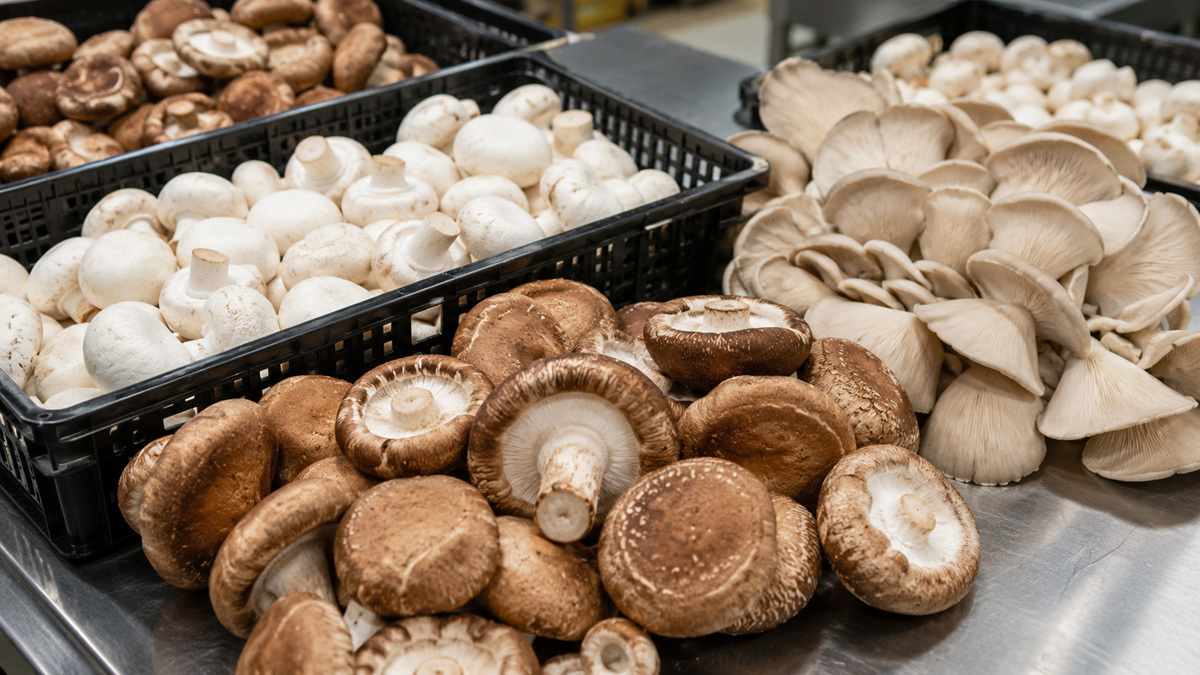
Edible mushrooms are valued for their flavour, nutritional interest and content of bioactive compounds. A review article published in Food Chemistry: X includes a section devoted to the composition of these mushrooms, with particular attention to their nutritional value, minerals and main bioactive components.
A variable composition
The article notes that the composition of edible mushrooms can vary significantly, even within the same species. Factors such as strain, cultivated or wild origin, development stage, substrate, environmental conditions and inoculation density may influence their nutritional profiles.
Species covered in the review include white button mushroom, Agaricus bisporus; shiitake, Lentinula edodes; oyster mushroom, Pleurotus ostreatus; king oyster mushroom, Pleurotus eryngii; enoki, Flammulina velutipes; and Volvariella volvacea.
Water, proteins, carbohydrates and minerals
Edible mushrooms have a very high water content, accounting for 80 to 90% of the fresh weight of fruiting bodies. In most edible mushrooms, carbohydrates can account for 50 to 60% of dry weight, including compounds that are not directly digestible, such as chitin, β-glucans and mannans.
The article also highlights that edible mushrooms are rich in proteins, with levels higher than most fruits and vegetables and comparable to meat. This reinforces their interest as a protein source, particularly for vegetarian diets.
Regarding minerals, the review points to the presence of elements such as potassium, calcium, sodium, phosphorus and magnesium, although their levels vary depending on the mushroom species and growing environment.
Vitamins and bioactive compounds
Edible mushrooms are also a source of B vitamins and vitamin D. Riboflavin, niacin and folic acid are among the main B vitamins found in fruiting bodies. Some wild edible mushrooms also contain significant amounts of vitamin D₂ and its precursor, ergosterol.
Beyond their nutritional value, edible mushrooms contain structurally diverse bioactive compounds. The review mainly groups them into polysaccharides, terpenoids, phenolic compounds and bioactive proteins.
Examples include β-glucans found in species such as Lentinus edodes and Pleurotus ostreatus, as well as other compounds associated with antioxidant, anti-inflammatory, antimicrobial or immunomodulatory activities.
Interest for postharvest preservation
The nutritional and functional interest of edible mushrooms reinforces the importance of properly preserving their quality after harvest. The same article notes that their high moisture content and delicate epidermis make them highly susceptible to deterioration, making postharvest preservation key to maintaining their commercial and food value.
Source: Li S, Wang Y and Fan K. Ultrasound technology for edible mushrooms: A review of postharvest changes, applications and prospects. Food Chemistry: X. DOI: 10.1016/j.fochx.2026.104333.
Related news