Conditioning
New technologies to extend papaya postharvest shelf life
Papaya's rapid ripening and sensitivity to chilling injury, moisture loss and disease limit its commercial shelf life. A review examines advances in preservation treatments, coatings, controlled atmospheres and natural agents to delay deterioration without compromising sensory quality
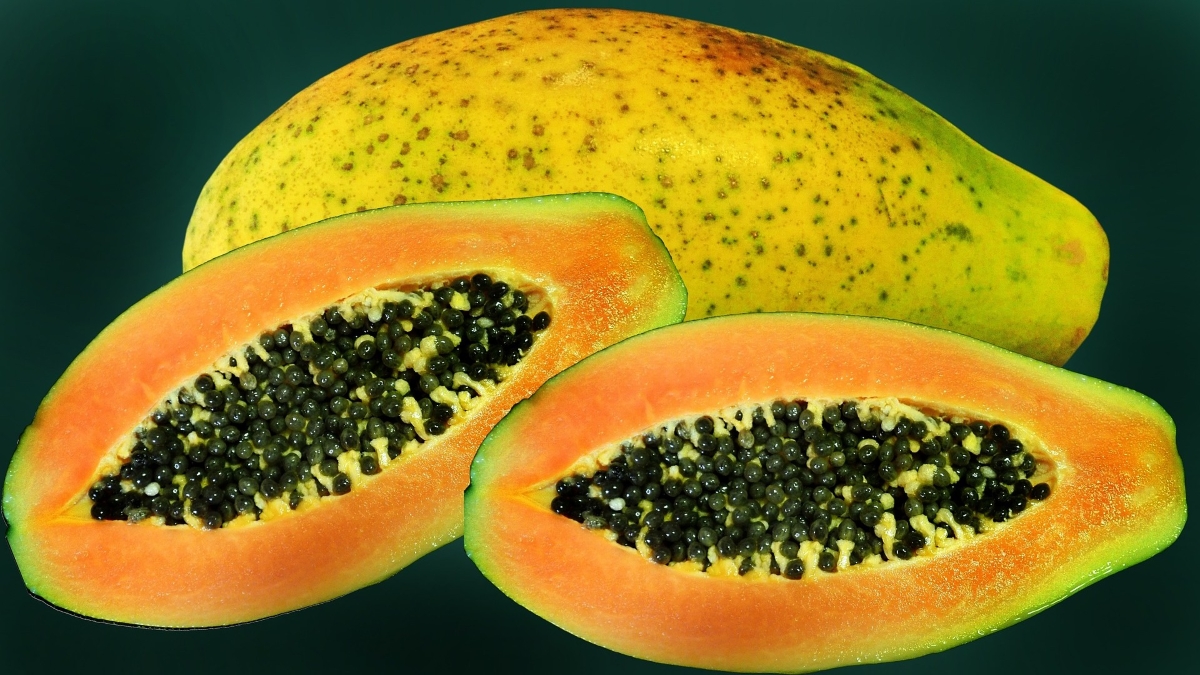
Papaya (Carica papaya L.) is a climacteric tropical fruit whose rapid ripening after harvest makes storage, transportation and marketing challenging. Flesh softening, moisture loss, chilling injury and microbial decay are among the main factors limiting its shelf life.
The article “Advances in postharvest ripening, senescence, and preservation technologies of papaya fruit”, published in 2026 in Guangdong Agricultural Sciences, reviews the physiological and biochemical processes involved in papaya ripening and senescence, as well as the technologies developed to delay deterioration.
During ripening, respiration increases and ethylene biosynthesis is activated. This hormone plays a central role in coordinating the process. Chlorophyll degradation and carotenoid accumulation cause the peel to change from green to yellow. At the same time, soluble sugar levels rise while organic acids decrease, changing the sugar-to-acid ratio. Volatile compounds, including linalool, esters and lactones, are also produced, contributing to the fruit's characteristic aroma.
In parallel, the breakdown of cell wall components, such as pectins, cellulose and hemicellulose, leads to progressive flesh softening.
Hormones and metabolism regulate deterioration
The review highlights that ripening does not depend on a single process, but rather on a network of signals coordinating different metabolic changes. Ethylene acts as one of its main regulators and interacts with other plant hormones, including abscisic acid (ABA), auxins, jasmonic acid and salicylic acid. Calcium ions and several mechanisms regulating gene expression and protein activity are also involved.
These processes are linked both to the development of sensory quality and to the fruit's response to storage conditions. Exposure to low temperatures, for example, can disrupt energy and oxidative metabolism, compromise cell membrane integrity and cause chilling injury. Such damage may lead to abnormal ripening and increase susceptibility to disease.
Technologies to delay ripening and preserve quality
The paper reviews various postharvest strategies designed to control ripening, reduce losses and maintain papaya's commercial quality. These include low-temperature storage, heat-shock treatments, controlled and hypobaric atmosphere storage, and ethylene management.
The review also covers edible coatings and protective film packaging, the application of exogenous regulators, natural antimicrobials and biological control methods. Combining several techniques is considered a potential way to improve preservation, provided that the treatments are compatible with one another and with the characteristics of each variety.
However, the authors point out that several limitations remain. Delaying senescence without preventing normal ripening is still a challenge, as is avoiding chilling injury and aroma loss associated with certain storage conditions. In addition, the effectiveness of natural and biological agents may vary depending on application conditions and plant material.
Towards more precise and sustainable preservation systems
The review suggests that future research should investigate the mechanisms linking hormonal signals, metabolism and stress tolerance in greater depth. To achieve this, the authors propose integrating omics approaches to identify the main regulators of ripening and validate their functions.
The aim is to develop more precise, sustainable preservation systems that can be adapted to different varieties and supply-chain conditions. This approach could make it possible to tailor treatments to the characteristics of each fruit and extend its commercial shelf life without compromising flavour, texture or aroma.
Source