Conditioning
The evolution of optical systems and algorithmic processing are redefining quality standards in packinghouses
Advances in deep learning algorithms make it possible to automate the detection of internal disorders and predict product shelf life non-destructively
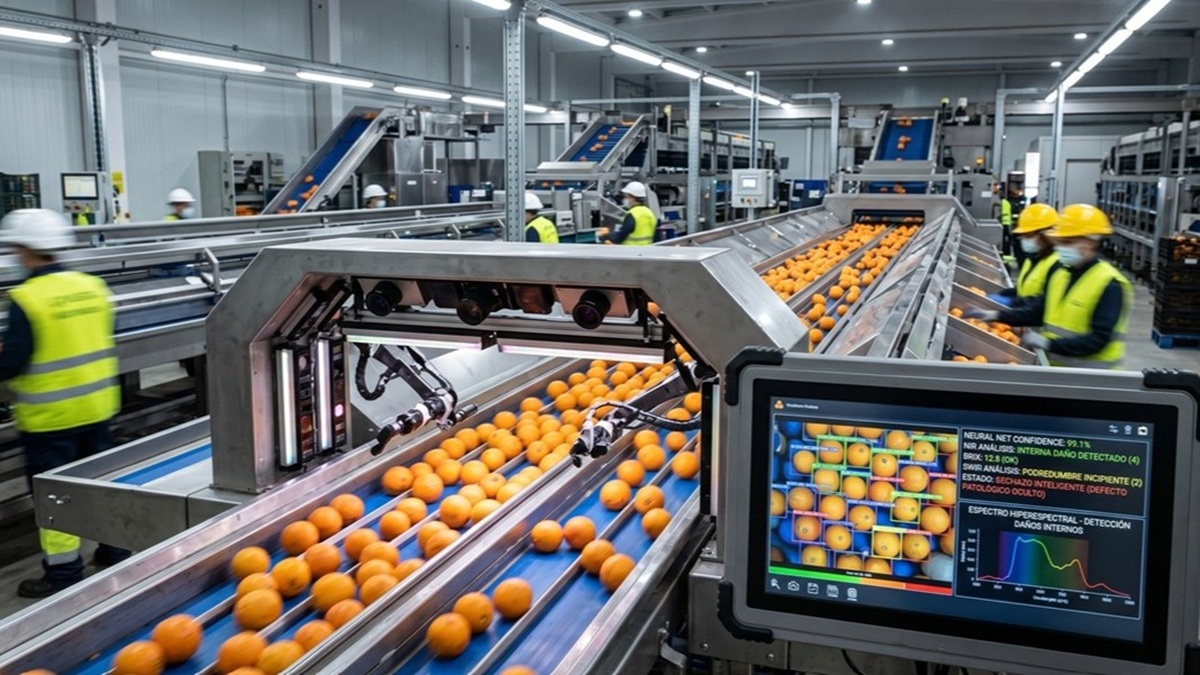
The demands of international markets and supermarkets impose zero-tolerance thresholds for physical and pathological defects in fruits and vegetables. In this context, packing houses face the challenge of processing massive volumes of produce with extreme precision while safeguarding profit margins against rising labor costs.
The technical response to this operational pressure has been the transition from classical visual inspection to smart automation systems based on the combination of hyperspectral sensors and Artificial Intelligence (AI). This integration allows each individual piece to be analyzed in fractions of a second, evaluating variables that are impossible for the human eye to detect.
Beyond the Visible Spectrum: Hyperspectral Analysis
Conventional vision technology (RGB) is limited to recording the colors and shapes of the product's outer surface. However, new-generation optical systems operate in electromagnetic ranges that span near-infrared (NIR) and short-wave infrared (SWIR).
Through specific lighting and multi- or hyperspectral capture, current postharvest machinery can:
- Evaluate internal composition: Non-destructively measure soluble solids content (Brix degrees), acidity, dry matter levels, and pulp firmness.
- Detect hidden damage: Identify internal bruising caused by recent mechanical impacts, freezing, or physiological disorders before they manifest externally on the skin.
- Locate early-stage rots: Capture the light signature or fluorescence emitted by tissues damaged by fungi or bacteria in early phases, isolating the pieces before they contaminate the rest of the lot.
'Deep Learning' Versus the Rigidity of Classical Vision
The true transformation in electronic grading lines lies in how this immense amount of data (optical Big Data) is processed. Traditional vision systems required a computer programmer to define rigid mathematical pixel rules and color thresholds to catalog a defect, which generated frequent errors due to the natural variability of fresh produce.
The introduction of Deep Learning through convolutional neural networks has shifted this paradigm. Current algorithms are capable of training autonomously by being exposed to thousands of supervised sample images. The system learns to recognize complex patterns of textures, shadows, and the evolution of scars or blemishes. This flexibility brings two critical advantages to the packing house:
- Reduction of erroneous sorting: It minimizes the discarding of perfectly commercial fruit that only presents minor aesthetic marks, thereby optimizing the economic yield of the batch.
- Modularity in the face of new defects: If a crop season is affected by an unusual pest or weather alteration, the software can quickly "learn" to classify that new anomaly by incorporating new samples into the detection algorithm.
Impact on Food Waste and Export Logistics
Predictive automation in postharvest has a direct impact on the sustainability and profitability of long-distance supply chains. By ensuring that only fruits with uniform firmness and free of latent pathogens enter transit chambers, the risk of claims or rejections at destination ports is significantly mitigated.
Eliminating pieces destined for accelerated senescence from the line avoids massive losses due to rot during maritime transit. Thus, sorting technology acts not only as a commercial quality filter, but as an indispensable barrier to mitigate global food waste and stabilize operating costs across the sector.
Source
Walsh, K. B., Blasco, J., Zude-Sasse, M., & Sun, X. (2020)
Visible-NIR spectroscopy and hyperspectral imaging in postharvest quality assessment of horticultural produce
Postharvest Biology and Technology, 163, Artículo 111139
https://doi.org/10.1016/j.postharvbio.2020.111139
Bhargava, A., & Bansal, A. (2022)
Fruits and vegetables quality evaluation using computer vision: A review
Journal of King Saud University - Computer and Information Sciences, 34(6), 2435-2457
https://doi.org/10.1016/j.jksuci.2020.06.015
Related news
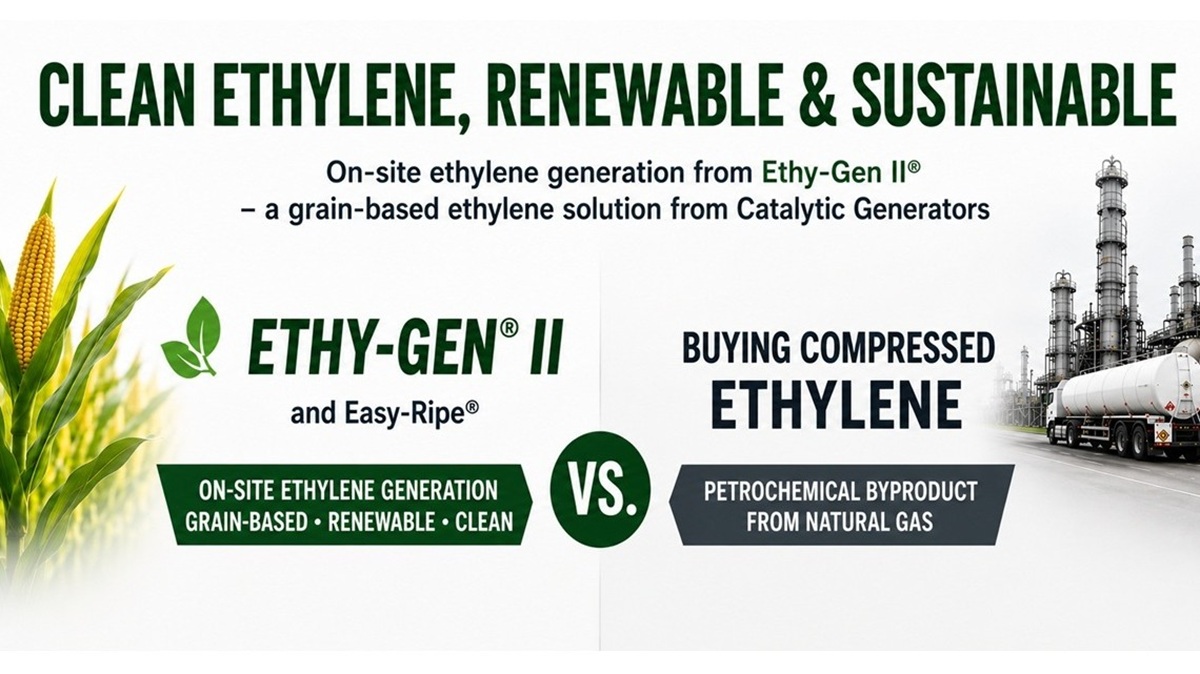
Catalytic Generators offers in situ ethylene production amid industrial supply uncertainty