News
Control of Listeria monocytogenes on berries using ultraviolet light in postharvest
The study evaluates UV C light to reduce Listeria monocytogenes on berries and postharvest water improving food safety without compromising quality.
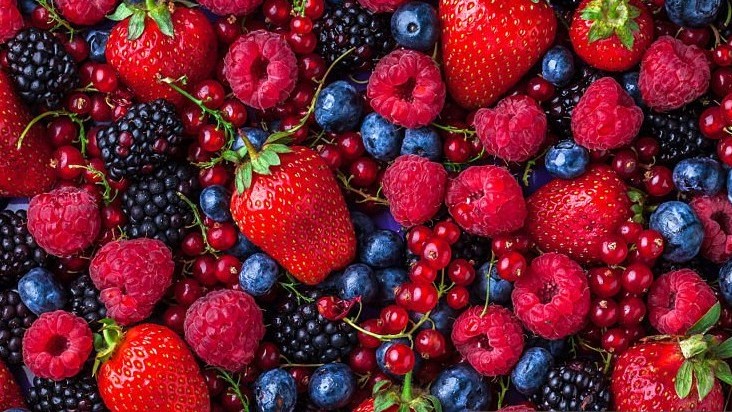
The persistence of Listeria monocytogenes on fresh and frozen berries represents a significant food safety concern, requiring effective interventions that reduce contamination without compromising product quality. This study evaluated the effectiveness of ultraviolet UV-C light (254 nm) in reducing this pathogen on blueberries and raspberries, as well as in postharvest water.
Fresh berries were inoculated with a five-strain cocktail of Listeria monocytogenes at a level of 5.5 log CFU/g. A conveyor belt system equipped with UV-C lamps was used to apply doses of 232, 478, and 843 J/m².
The trials included several scenarios: dry inoculated berries, inoculated berries submerged in postharvest water with different turbidity levels (0, 150, 300, and 450 NTU), and uninoculated berries submerged in contaminated water to simulate cross-contamination.
Results showed that UV-C treatment significantly reduced Listeria monocytogenes on berries, in wash water, and under cross-contamination conditions. The effectiveness increased with higher UV-C doses, achieving reductions of approximately 2 to 3 log CFU/g in blueberries and from 1.5 to 4.2 log CFU/g in raspberries. In wash water, reductions ranged from about 2 to 3.6 log CFU/mL depending on turbidity, with higher doses consistently providing better inactivation.
Although increased turbidity reduced UV-C efficiency in some cases, significant pathogen reductions and mitigation of cross-contamination were still achieved. Modeling confirmed a clear dose-response relationship and the combined effects of turbidity, dosage, and contamination source.
These findings support the optimization of UV-C postharvest protocols to improve the microbial safety of berries while maintaining product quality.
Source
Ruiz-Cuadra, M., & Murphy, C. M. (2026). Control of Listeria monocytogenes on berries and in postharvest water by ultraviolet (UV-C) light. Food Control.
https://www.sciencedirect.com/science/article/pii/S0956713526002306
Related news