Cooling and CA
Bioactive MOF air filters for postharvest storage decontamination
A study demonstrates that incorporating HKUST-1 and ZIF-8 metal-organic frameworks into composite beads drastically prevents fungal spore dissemination
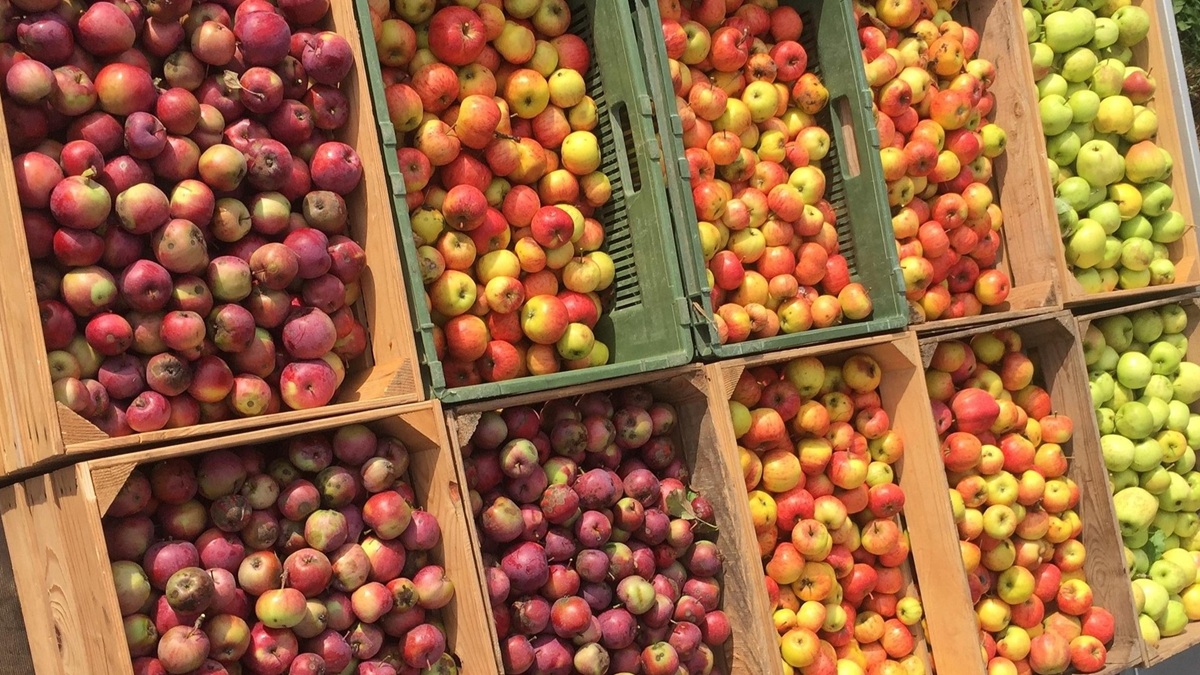
Phytopathogenic fungal infections pose a continuous threat to postharvest produce quality during cold storage. Major pathogens such as Penicillium expansum (causing blue mold in apples and pears) and Botrytis cinerea (gray mold) remain quiescent or multiply actively under controlled atmosphere storage, triggering significant economic losses and risking food safety through potential mycotoxin synthesis. Given the increasing resistance of fungal strains against conventional postharvest fungicides, a research team evaluated metal-organic frameworks (MOFs) as bioactive air-filtration media.
Distinct action mechanisms and in vitro performance
In vitro screenings of zinc- and copper-based frameworks demonstrated strong broad-spectrum antifungal properties closely linked to framework structure and coordinating ligands. HKUST-1 and ZIF-8 emerged as the most active candidates, achieving 100% mycelial growth inhibition (MGI) against Penicillium expansum, Penicillium citrinum, and Colletotrichum gloeosporioides, while maintaining high activity toward Botrytis cinerea and Mucor piriformis.
Mechanistic investigations revealed two complementary pathways:
- HKUST-1 operates primarily through sustained copper ion release (~19.28 ppm), inducing severe cellular metabolic collapse (as verified by XTT reduction assays) without significant intracellular reactive oxygen species (ROS) accumulation.
am-2026-161969.pdf - ZIF-8 releases only trace amounts of zinc (~0.43 ppm) but functions mainly by triggering massive intracellular ROS production, leading to oxidative damage.
Scanning electron microscopy (SEM) confirmed severe structural degradation of treated hyphae and conidiophores, displaying collapsed, wrinkled, and fragmented filaments.
am-2026-161969.pdf
Phase-inversion processing into polysulfone composite beads
To transition from microcrystalline MOF powders to processable macrostructures, the research team immobilized the MOF particles into a polysulfone (PSF) matrix using phase inversion. Dispersed MOF/PSF solutions were dropped into a coagulation bath, rapidly forming spherical composite beads (~2 mm diameter) with enhanced handling stability.
Spectroscopic (FT-IR), thermogravimetric (TGA), and X-ray diffraction (PXRD) analyses verified that the crystalline structure, permanent porosity, and bioactivity of HKUST-1 and ZIF-8 were fully preserved within the polymeric host. The composite beads maintained high BET surface areas of 497 m²/g (HKUST-1@PSF) and 744 m²/g (ZIF-8@PSF), supporting industrial scalability.
am-2026-161969.pdf
High prototype air-filtration efficiency and crop protection
The MOF@PSF composite beads also restricted reproductive propagules (spores and conidia). Assays confirmed significant suppression of conidial viability and germ tube formation, with SEM displaying distorted, shrunken, and structurally damaged spores.
am-2026-161969.pdf
To evaluate performance under real-world airflow conditions, a dual-chamber air-filtration prototype was developed with continuous air circulation (10 mL/s). While control filters containing pristine PSF beads allowed widespread fungal transfer and produce rot, filters filled with MOF@PSF composite beads reduced airborne spore transfer by 95.2% to 96.7% for P. expansum, and by 99.4% to 99.6% for B. cinerea.
This technology provides a dual mechanism: it physically intercepts airborne spores while biologically inactivating them, offering a residue-free approach to preventing fungal cross-contamination in postharvest storage environments.
Sources
Xhafa, S., Marchetti, F., Di Nicola, C., Pettinari, R., Pettinari, C., Domasevitch, K. V., Grappasonni, I., Acito, M., Giangrossi, M., & Tombesi, A. (2026). Metal-Organic Framework@Polysulfone Composite Beads for Air Filtration of Postharvest Pathogenic Fungal Spores. ACS Applied Materials & Interfaces, 18(43), 59010–59024. https://doi.org/10.1021/acsami.6c16196
Image: Pixabay https://pixabay.com/es/photos/manzanas-cosecha-manzanas-rojas-1814042/