News
Glycine betaine (GB) improves cold resistance in postharvest blueberry fruit
The paper by Yu Zhang et al. provides new insights into the storage and preservation of blueberries; the results showed that betaine maintained the quality of blueberries by activating proline metabolism and delaying cell wall and sugar degradation. It provides new insights into the postharvest preservation of blueberries
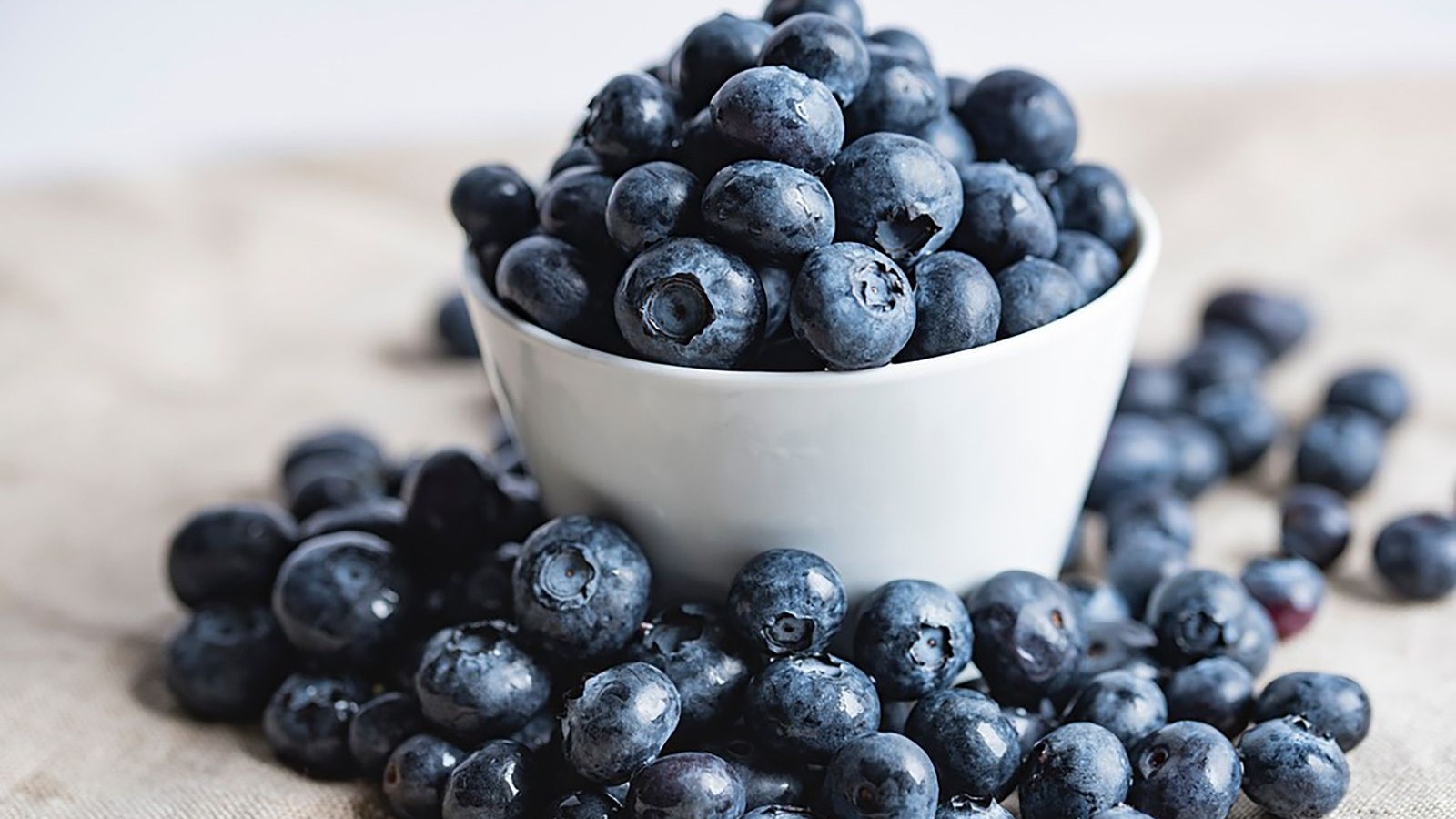
Few studies have investigated the use of exogenous glycine betaine (GB) to regulate sugar and proline metabolism in order to maintain postharvest blueberry quality.
The findings of the research indicated that 10 mmol L−1 GB application increased proline content and pyrroline-5-carboxylate synthase (P5CS) enzyme activity, while the activities of proline dehydrogenase (ProDH), pyruvate dehydrogenase (PDH), and ornithine acetyltransferase (OAT) were reduced.
In addition, GB maintained TA, VC and reducing sugars content and reduced cellulase (Cx), pectin methylesterase (PME), polygalacturonase (PG) and β-Galactosidase (β-Gal) activities and protopectin (PP) content and maintained soluble pectin (SP), pectin and cellulose content in blueberries, which had higher soluble sugar, sucrose, fructose and glucose contents.
It down-regulated Amylase activity, increased β-1,3-glucanase (β-1,3-Glu) activity, and decreased acid invertase (AI), neutralinvertase (NI), and Hexokinase (HK) levels while maintaining high sucrose synthase (SS), sucrose phosphate synthase (SPS), phosphofructokinase (FK), 6-phosphogluconate dehydrogenase (6PGDH), and glucose-6-phosphate dehydrogenase (G6PDH) levels. VaPG, VaPME, Vaβ-Gal, VaPDH, VaProDH and VaNI were downregulated, VaSS and VaSPS genes were upregulated.
The results showed that betaine maintained the quality of blueberries by activating proline metabolism and delaying cell wall and sugar degradation. It provides new insights into the postharvest preservation of blueberries.
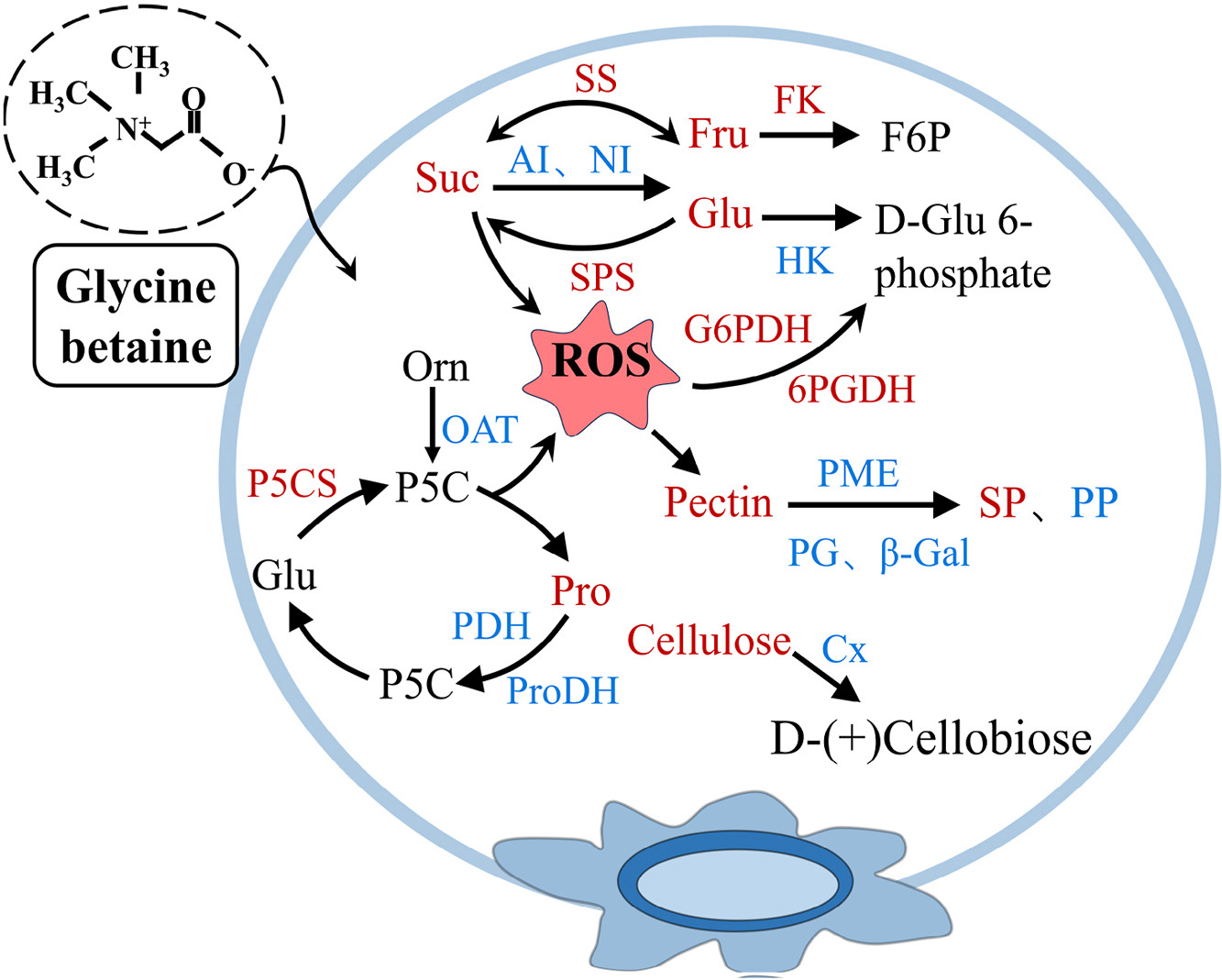
Graphical abstract
Introduction
Blueberries (Vaccinium spp., Ericaceae) are nutrient-dense fruit rich in anthocyanins, vitamins, and polyphenols, making them highly favored by consumers.
Moreover, their beneficial roles in anti-aging, immune system enhancement, and the prevention of cardiovascular diseases have been well documented, which has led the Food and Agriculture Organization of the United Nations to recognize blueberries as one of the top five health-promoting fruits (Cao et al., 2025; Silva et al., 2020; Yang et al., 2018).
However, blueberry fruit ripen during summer and are inherently soft with a high water content, making them highly susceptible to decay caused by pathogenic bacteria. This results in poor storage stability and significantly compromises their commercial value (Ye et al., 2023).
Cell wall metabolism and fruit quality
Ye et al. (2024) treated blueberries with thymol and found that the quality of blueberries was related to their cell wall metabolism; Wang et al. (2017) found that γ-radiation treatment reduced the degradation of blueberry fruit cell wall polysaccharides, which in turn reduced softening and maintained the quality of blueberries during storage.
Meanwhile, cell wall degradation is closely associated with pectin metabolism, as the structural integrity of the cell wall is progressively compromised through the breakdown of pectin and cellulose during fruit ripening.
Pectin methylesterase (PME), polygalacturonase (PG), cellulase (Cx), and β-galactosidase (β-Gal) are the key enzymes involved in cell wall degradation (Peng et al., 2022; Chargot et al., 2019).
Thus, the cell wall is strongly correlated with blueberry quality and is regarded as a key determinant of fruit softening.
Sugar metabolism and fruit quality
Several studies have demonstrated that alterations in fruit quality are closely linked to sugar metabolism and proline dynamics (Qiu et al., 2022; Zhou et al., 2021; Islam et al., 2022).
As both energy sources and signaling molecules, sugars regulate fruit sweetness and a range of physiological processes, including ripening, senescence, and stress responses.
Treatments to improve postharvest behaviour
Zhang et al. (2023) found that exogenous melatonin maintained kiwifruit postharvest quality by regulating sugar metabolism during the chilling process.
Similarly, Li et al. (2021) demonstrated that methyl jasmonate improved postharvest fruit quality in tomatoes by modulating sugar metabolism. Proline is recognized as an important bioactive compound in the regulation of physiological processes in plants, and it plays a crucial role in cellular functions by activating the phenylpropanoid and Shikimic acid pathway (Huang et al., 2021).
Proline, Glycine betaine (GB), and tolerance to stresses
Proline enhances tolerance to various stresses by upregulating the activity of multiple enzymes and improving cellular redox potential. Proline dehydrogenase (PDH), pyrroline-5-carboxylate synthase (P5CS), and ornithine aminotransferase (OAT) are the key regulatory enzymes in proline metabolism.
PDH is a key enzyme involved in proline catabolism. By enhancing P5CS activity and reducing PDH activity in fruit and vegetables, proline content can be maintained at higher levels, thereby preserving fruit quality.
This mechanism has been demonstrated in fruit such as papaya and loquat (Huang et al., 2021; Cao et al., 2012).
Free proline content in plants is generally low under normal conditions, but it increases rapidly in response to cold stress (Liu et al., 2020). These results indicate that modulating cell wall, sugar, and proline metabolic pathways could contribute to preserving fruit quality after harvest.
Glycine betaine (GB) is an important osmoregulator in plants, essential for maintaining cellular osmotic pressure and increasing tolerance to abiotic stress in higher plants (Luo et al., 2022). It has been demonstrated to exert positive regulatory effects on a wide variety of fruit and vegetables, including cotton, sweet cherries, and peaches (Wang et al., 2019a; Gonçalves et al., 2020, 2019b). Meanwhile, GB has been demonstrated to reduce fruit damage by modulating sugar metabolism in ‘Nanguo’ pears and peaches (Wang et al., 2020, 2019c).
This research examined the physiological effects of glycine betaine on postharvest blueberries and evaluated its influence on cell wall integrity, sugar metabolism, and proline metabolism, aiming to elucidate the potential mechanisms involved in delaying blueberry deterioration and providing insights into a novel strategy for maintaining postharvest fruit quality.
Sources
Glycine betaine maintains postharvest quality of blueberries by increasing proline metabolism and thereby retarding cell wall and sugar metabolism
Yu Zhang, Jiaying Jin, Tianxin Yang, Guohe Zhang, Liangjie Ba, Zhibing Zhao, Su Xu, Lingshuai Meng, Sen Cao
Plant Physiology and Biochemistry Volume 229, Part C, December 2025, 110593
https://doi.org/10.1016/j.plaphy.2025.110593
https://www.sciencedirect.com/science/article/abs/pii/S0981942825011210
Picture
Diario de Sevilla, Cuna de Platero estrena su variedad de arándanos
https://www.diariodesevilla.es/agr_andalucia/Cuna-Platero-estrena-variedad-arandanos_0_1527747472.html

.jpg)