
Ilerfred
Cooling and CA
Hydrocooling in postharvest lettuce as a strategy to preserve quality and extend shelf life
The application of hydrocooling improves cooling efficiency, reduces respiration rates, and enhances postharvest quality in leafy vegetables
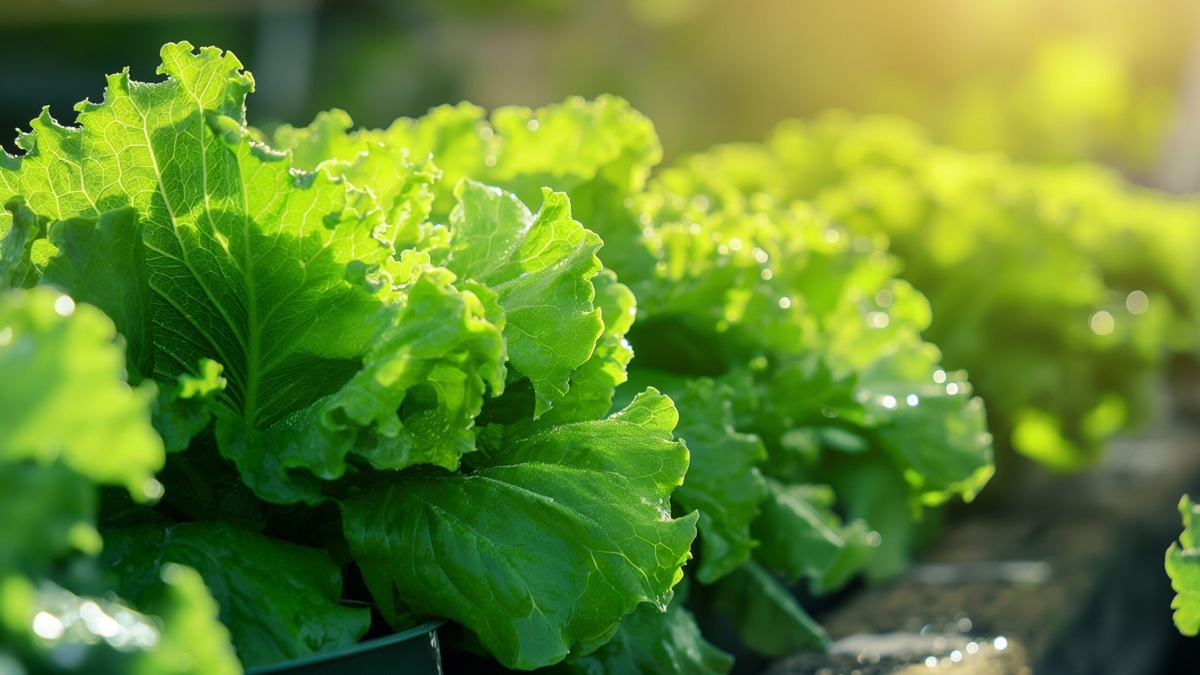
Hydrocooling has become one of the most effective technologies for precooling leafy vegetables. In this context, Ilerfred, a company specialized in refrigeration and postharvest technologies, highlights its application in lettuce as a strategy to preserve product quality and extend shelf life.
Leafy vegetables, particularly lettuce, exhibit a physiology highly susceptible to dehydration and rapid deterioration after harvest. Postharvest water loss is one of the main drivers of quality degradation, leading to weight loss, reduced turgidity, wilting, and diminished textural quality. In this context, temperature management is a key factor in handling raw materials destined for both whole fresh products and fresh-cut (IV range) applications.
Precooling is a critical step to rapidly remove field heat and reduce the respiration rate, directly impacting shelf life and quality retention. Under high harvest temperatures, any delay in cooling significantly accelerates quality loss. Among available technologies (room cooling, forced air, vacuum cooling, and hydrocooling), hydrocooling (HC) stands out for lettuce due to its high thermal efficiency, hydration capacity, and robustness under variable environmental conditions.
Cooling efficiency and temperature reduction rate
Hydrocooling is based on heat transfer through direct contact with cold water, enabling significantly higher cooling rates than air-based systems.
Rapid field heat removal
Trials on iceberg lettuce ‘Lucy Brown’ show that most of the field heat is removed within the first 10 minutes at 4 °C. In butterhead lettuce ‘Vitória de Santo Antão’, 5 minutes of hydrocooling at 4 °C reduced internal temperature from 20 °C to 8.1 °C, demonstrating high effective thermal conductivity.
Reduction of respiration rate
Hydrocooling and vacuum cooling (VC) are the most efficient systems for reducing temperature throughout the product mass, which is essential for lowering respiration rates. During spring–summer campaigns, when harvest temperatures are high, both methods significantly reduced respiration activity. The cooling kinetics of HC are comparable to VC (~30 minutes) and considerably faster than forced-air cooling, which may require more than 20 hours to reach optimal conditions.
Hydration maintenance and shelf life extension
One of the main advantages of hydrocooling in leafy vegetables is its ability to maintain product hydration.
Prevention of dehydration and maintenance of turgidity
Direct contact with cold water reduces moisture loss and can partially rehydrate leaf tissues, restoring turgidity in samples showing early wilting symptoms and maintaining a fresher appearance.
Water content preservation
Lettuce subjected to hydrocooling and stored at 5 °C maintained significantly higher leaf moisture levels compared to non-precooled samples.
Shelf life extension
The combined effects of hydrocooling on hydration and metabolic activity result in measurable improvements:
- In butterhead lettuce, HC combined with storage at 5 °C increased shelf life by approximately 20% (from 5 to 6 days).
- At 22 °C, hydrocooling doubled shelf life (from 1.5 to 3 days).
- In iceberg lettuce ‘Lucy Brown’, external wilting was delayed by up to 3 days at 5 °C and 2 days at 22 °C.
Improvement of visual parameters
Samples treated with HC or VC showed higher color saturation (chroma) after processing, consistent with higher water content in the tissue.
Qualitative advantages and varietal compatibility
Preservation of cellular integrity
Although vacuum cooling provides similar cooling rates, it may cause structural damage or visual deterioration in delicate leaves due to internal desiccation. Hydrocooling did not show these effects, demonstrating better compatibility with sensitive tissues.
Microbial control
The washing effect during hydrocooling significantly reduced Pseudomonas counts without promoting subsequent microbial growth. Even in the presence of residual water, no increase in decay or microbial development was observed.
Adaptation to different cultivars
For varieties such as ‘Great Lakes 54’, ‘Trocadero’, and ‘Gigante degli Ortolani’, hydrocooling has proven to be the most suitable method, reducing discard rates and maintaining firmness at the end of the commercial period.
Conclusion
The application of hydrocooling immediately after harvest is an effective strategy for improving the postharvest management of lettuce, particularly under high ambient temperatures. Its main advantages include:
- Rapid removal of field heat
- Product hydration and preservation of turgidity
- Significant extension of shelf life under both refrigerated and ambient conditions
- Protection of structural integrity compared to technologies such as vacuum cooling
The integration of hydrocooling with a stable cold chain at 5 °C represents an efficient approach to optimize quality, reduce losses, and improve product management throughout the supply chain.
Sources
França, C. F. M., Santos, M. N. S., Ribeiro, W. S., Cecon, P. R., & Finger, F. L. (2018). Shelf life of iceberg lettuce affected by hydro cooling and temperature of storage. Advances in Horticultural Science, 32(3), 319–324. https://doi.org/10.13128/ahs-21978
Kongwong, P., Boonyakiat, D., & Poonlarp, P. (2019). Extending the shelf life and quality of baby cos lettuce using commercial precooling systems. Postharvest Biology and Technology, 150, 60–70. https://doi.org/10.1016/j.postharvbio.2018.12.012
Garrido, Y., Tudela, J. A., & Gil, M. I. (2015). Comparison of industrial precooling systems for minimally processed baby spinach. Postharvest Biology and Technology, 102, 1–8. https://doi.org/10.1016/j.postharvbio.2014.12.003
França, C. F. M., Ribeiro, W. S., Silva, F. C., Costa, L. C., Rêgo, E. R., & Finger, F. L. (2015). Hydrocooling on postharvest conservation of butter lettuce. Horticultura Brasileira, 33, 383–387. https://doi.org/10.1590/S0102-053620150000300018
Gorini, F., Borinelli, G., & Uncini, L. (1974). Some trials of salad precooling. Acta Horticulturae, 38. https://doi.org/10.17660/ActaHortic.1974.38.37
News of Ilerfred