Measurements
Harvest maturity shapes light responses in cranberries
Research shows that blue light promotes anthocyanin accumulation in early-harvested cranberries, while other light spectra also enhance pigmentation in more mature fruit
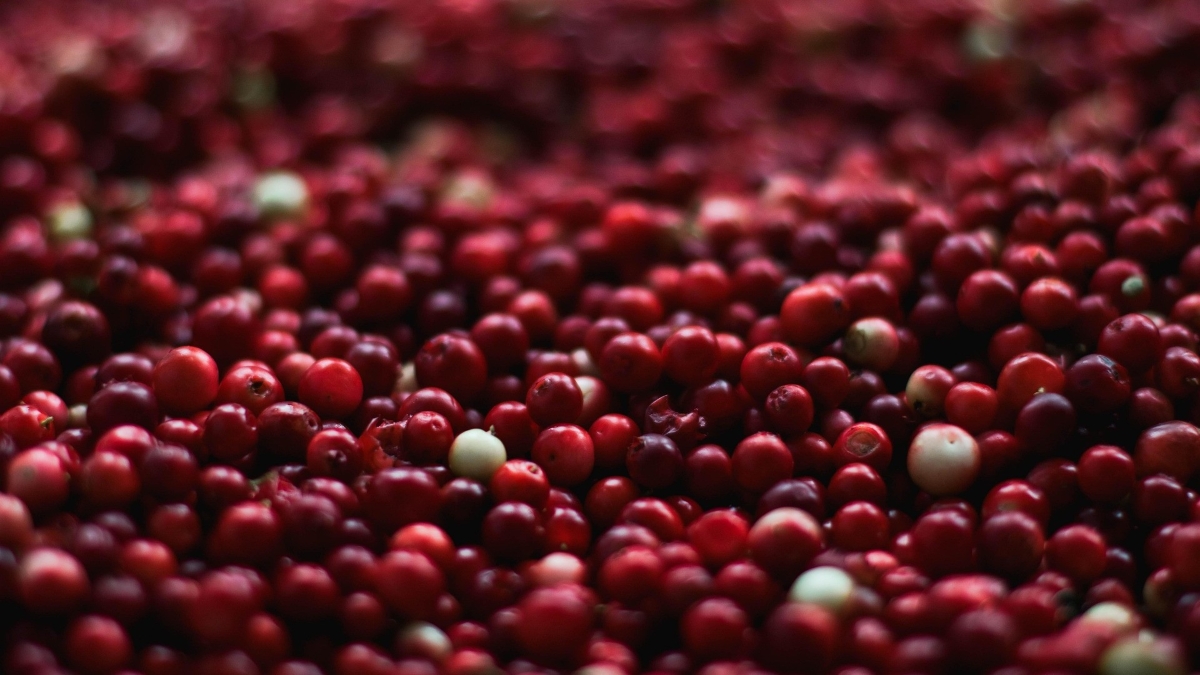
A study published in Postharvest Biology and Technology has shown that the response of cranberry (Vaccinium macrocarpon) fruit to postharvest illumination depends on its maturity at harvest. Blue light particularly enhanced anthocyanin accumulation in fruit harvested at early developmental stages, while fruit picked during the transition to red responded positively to all the light spectra tested.
The researchers compared blue, red and broad-spectrum white light treatments applied for seven or fourteen days. The fruit was harvested at three developmental stages: green, white and turning, when the skin begins to change colour.
Harvest maturity determines the response to light
The results showed that blue light produced the greatest increase in anthocyanin accumulation in green and white fruit. This increase was accompanied by higher expression of the ANS and UFGT genes, which are involved in the final stages of anthocyanin biosynthesis.
In fruit harvested at the turning stage, all three light treatments increased anthocyanin accumulation compared with fruit kept in darkness. Changes in skin colour also closely reflected variations in the concentration of these pigments.
Anthocyanins are pigments responsible for much of the red and purple colouring found in many fruits. They also belong to the flavonoid group, a class of phenolic compounds studied for their biological properties.
Different effects on phenolic compounds
Metabolite analysis revealed that not all compound groups responded to light in the same way. While anthocyanins showed a strong response to postharvest illumination, proanthocyanidins were mainly influenced by fruit maturity and showed limited responsiveness to the light treatments.
Flavonols displayed intermediate responses that varied depending on the compound analysed. By contrast, total phenolics, soluble solids and titratable acidity were only minimally affected by illumination and were mainly determined by fruit development.
The study also identified changes in ethylene production. All light treatments stimulated ethylene evolution in green fruit. In white fruit, a temporary increase occurred under blue light, while no changes were detected in fruit harvested at the turning stage.
A strategy for controlling postharvest pigmentation
The findings indicate that postharvest illumination could be used to modify cranberry pigmentation, although the response depends on both the light spectrum and the maturity stage at harvest. Blue light was particularly effective in early-harvested fruit, while blue, red and white light all enhanced pigmentation in turning-stage fruit.
This information could support the development of postharvest strategies to manage fruit colour. However, the study found limited effects on other quality parameters, and further research will be needed to determine how these treatments could be applied under commercial conditions.
Source
Simovaara, S., Kurunsaari, J., Peltoniemi, I., Sipari, N., Jaakola, L., & Palonen, P. (2026). Harvest maturity modulates light-induced anthocyanin biosynthesis in postharvest cranberry (Vaccinium macrocarpon) fruit. Postharvest Biology and Technology. https://doi.org/10.1016/j.postharvbio.2026.114777